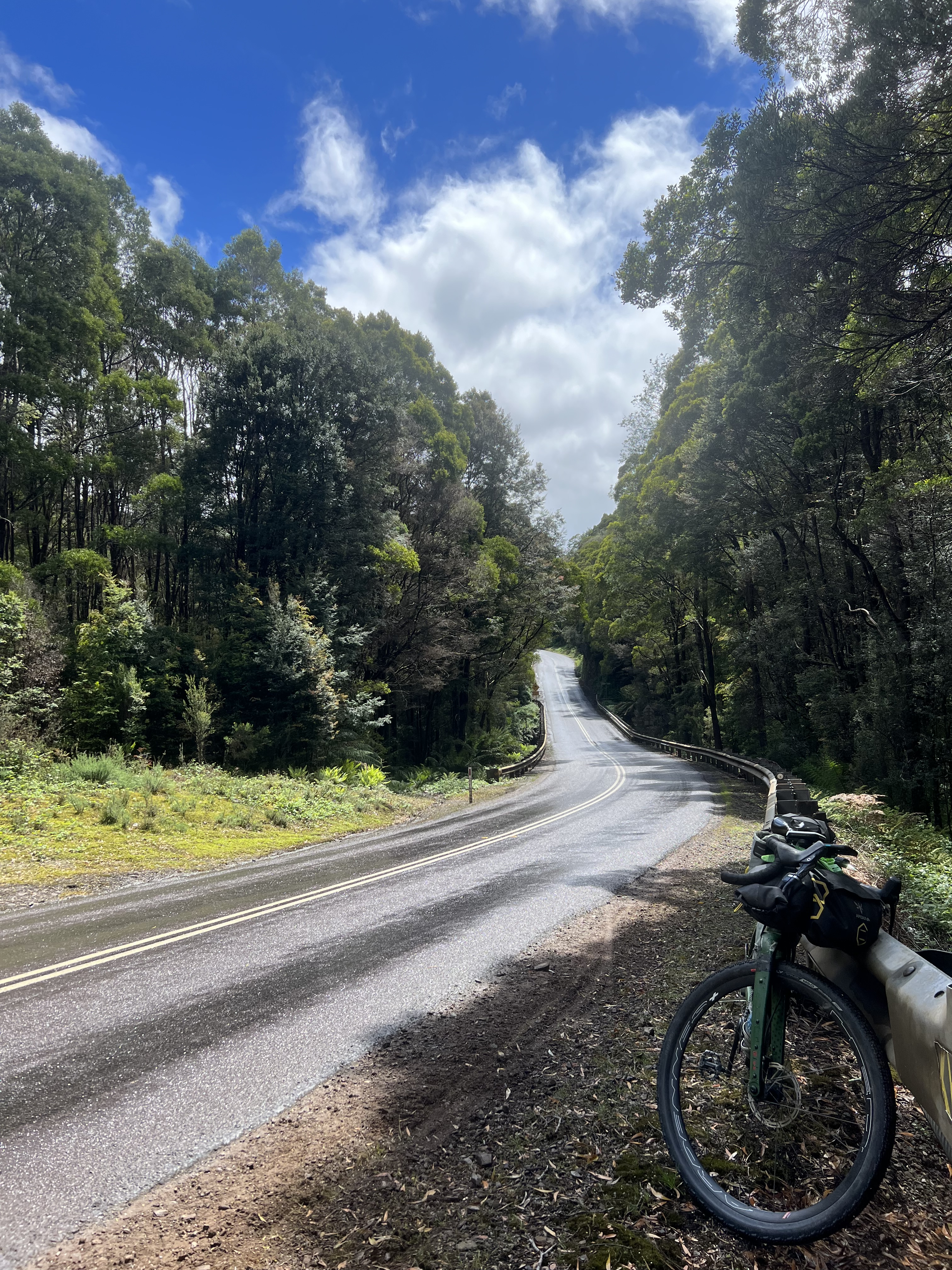
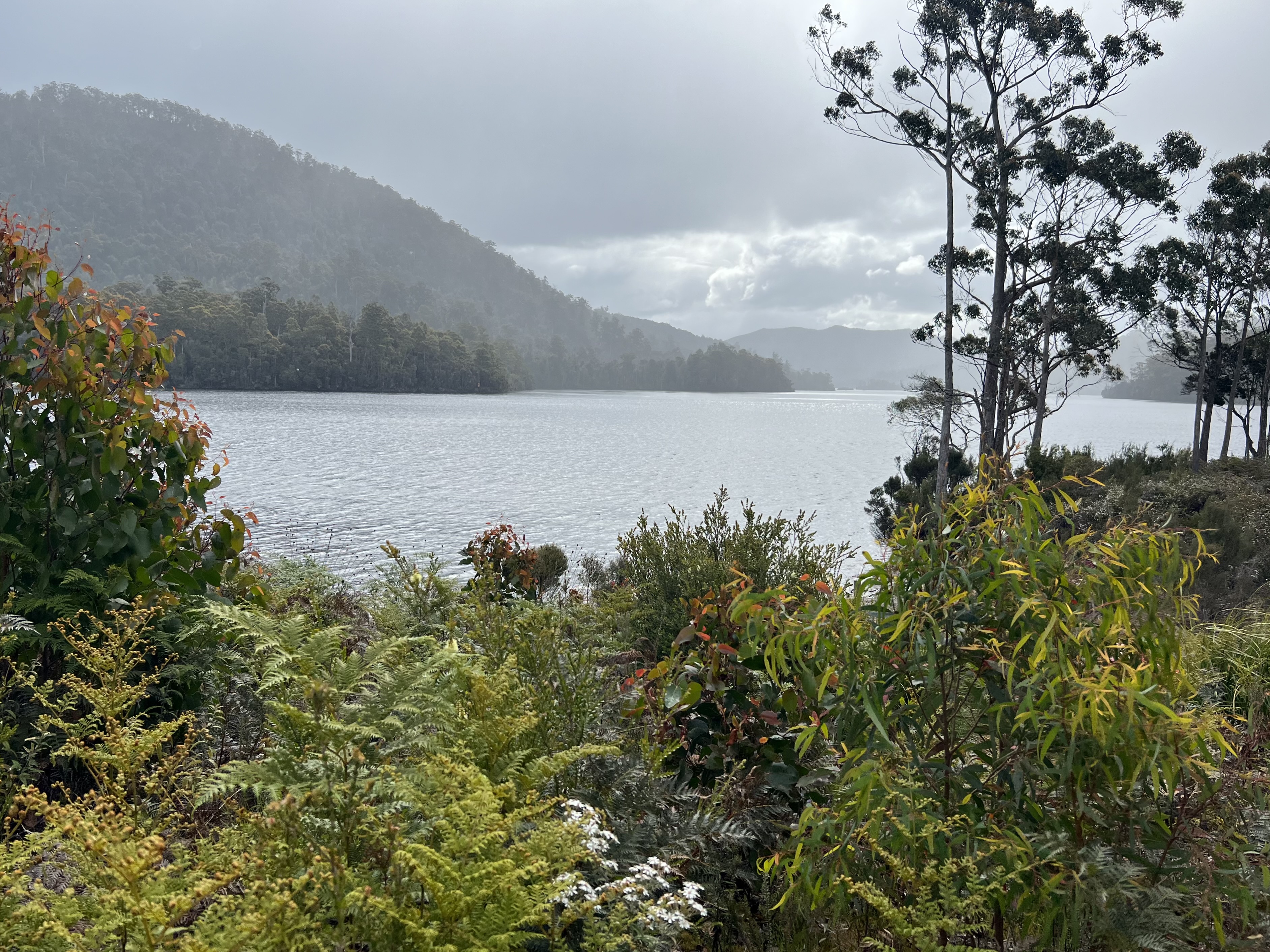
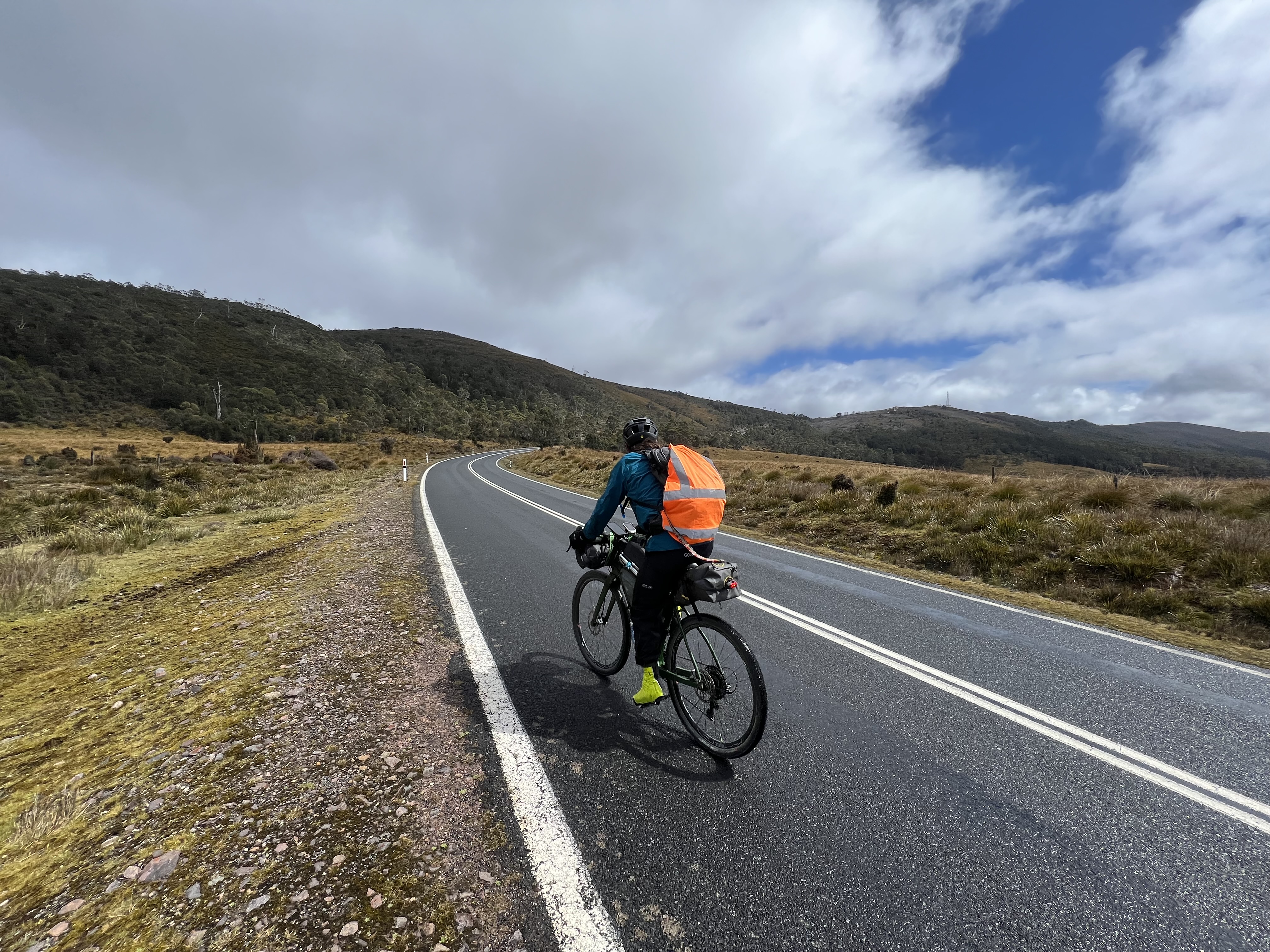
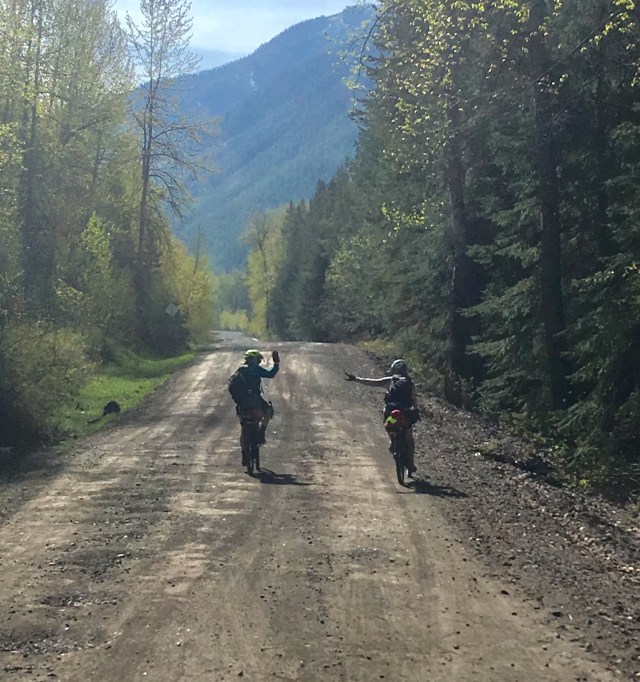
Tasmania – Steep Hills, Tiny Towns, Scant Traffic….Loved it.

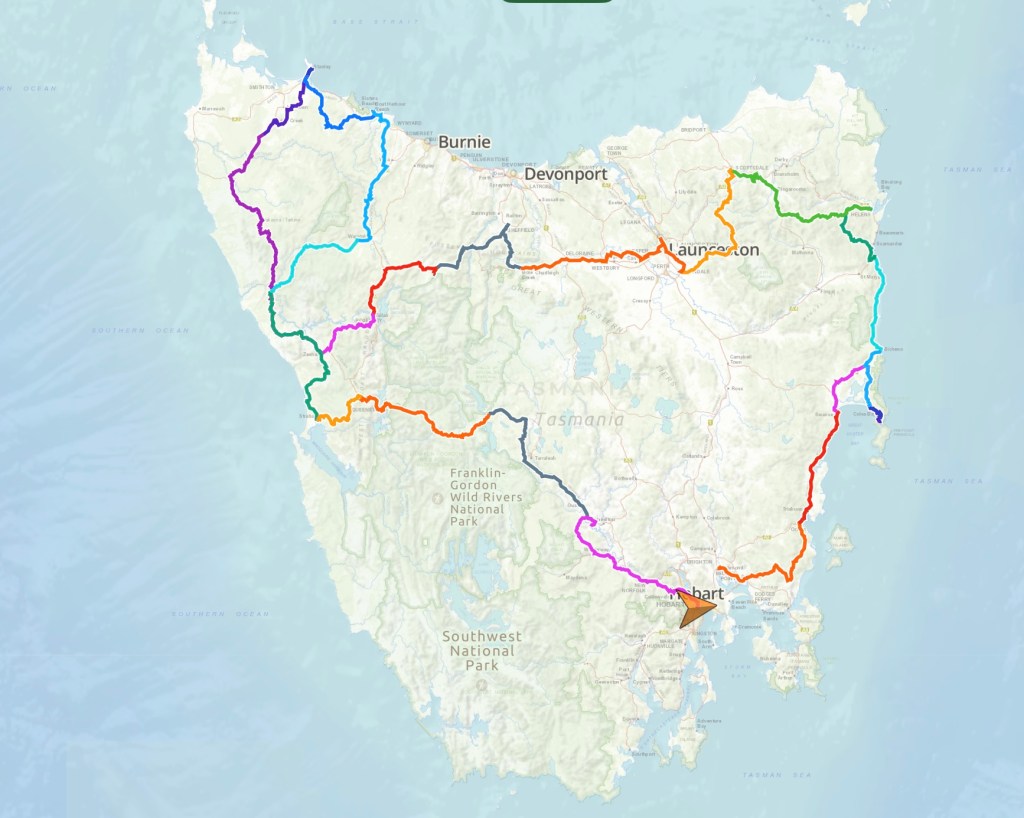
  • Boost Day Zeehan to Roger River 160kms 1700m
  • Roger River to Stanley 49 kms 433 m
  • Stanley River to Boat Harbour 63kms 804m
  • Boat Harbour to Waratah 90kms 1450m
  • Waratah to Corinna 63kms 695 m
  • Corinna to Strahan. 95kms 1100 m
  • Strahan to Queenstown 43 km 812 m
  • Queenstown to Derwent Bridge 89km 1673 m
  • Derwent Bridge to Ouse 91kms 871m
  • Ouse – Hobart 94kms 1210m
  • TOTAL TASSIE 1540 kms 19,600vm
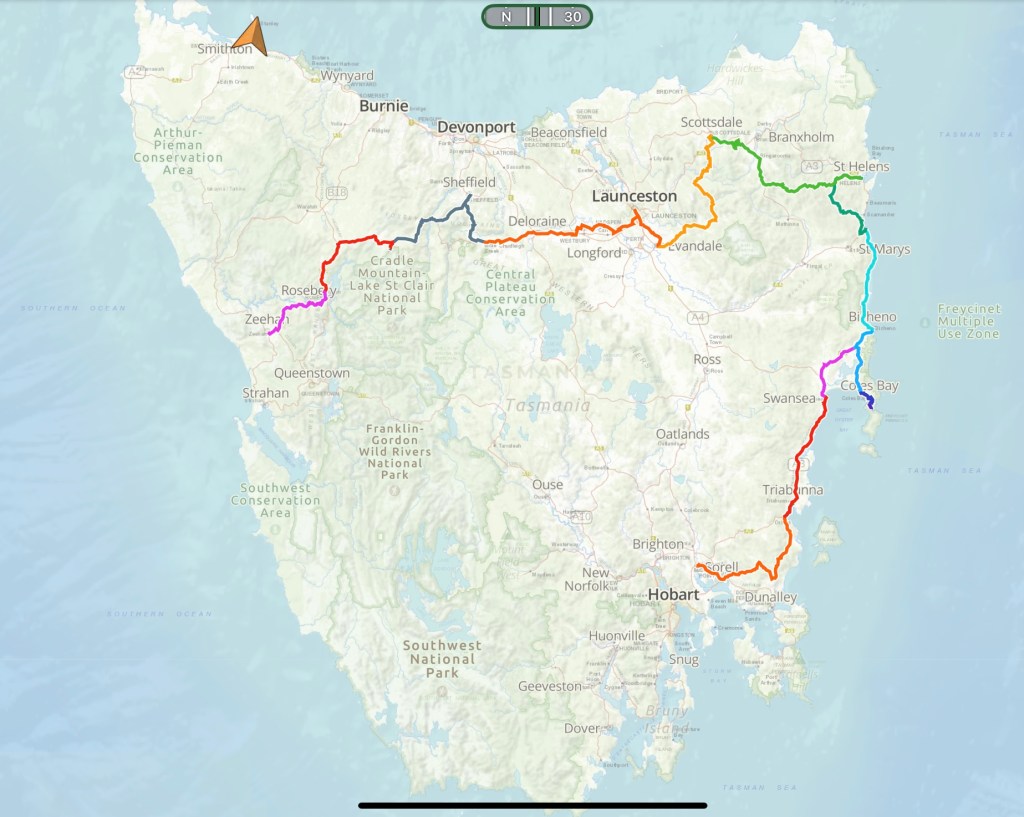
Sometimes circumnavigators take modified figure 8 routes – Counter-clockwise we went starting from Hobart.

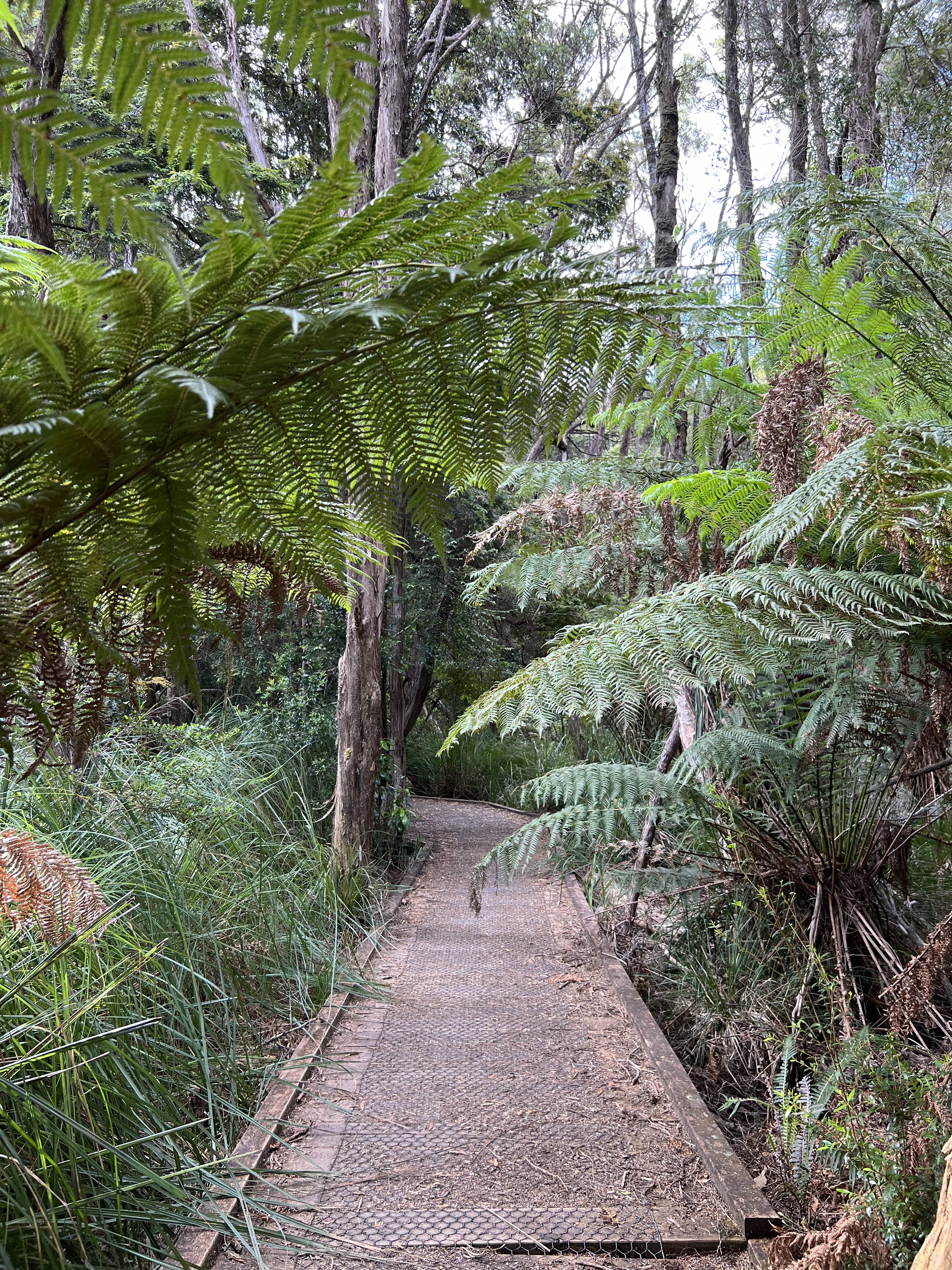
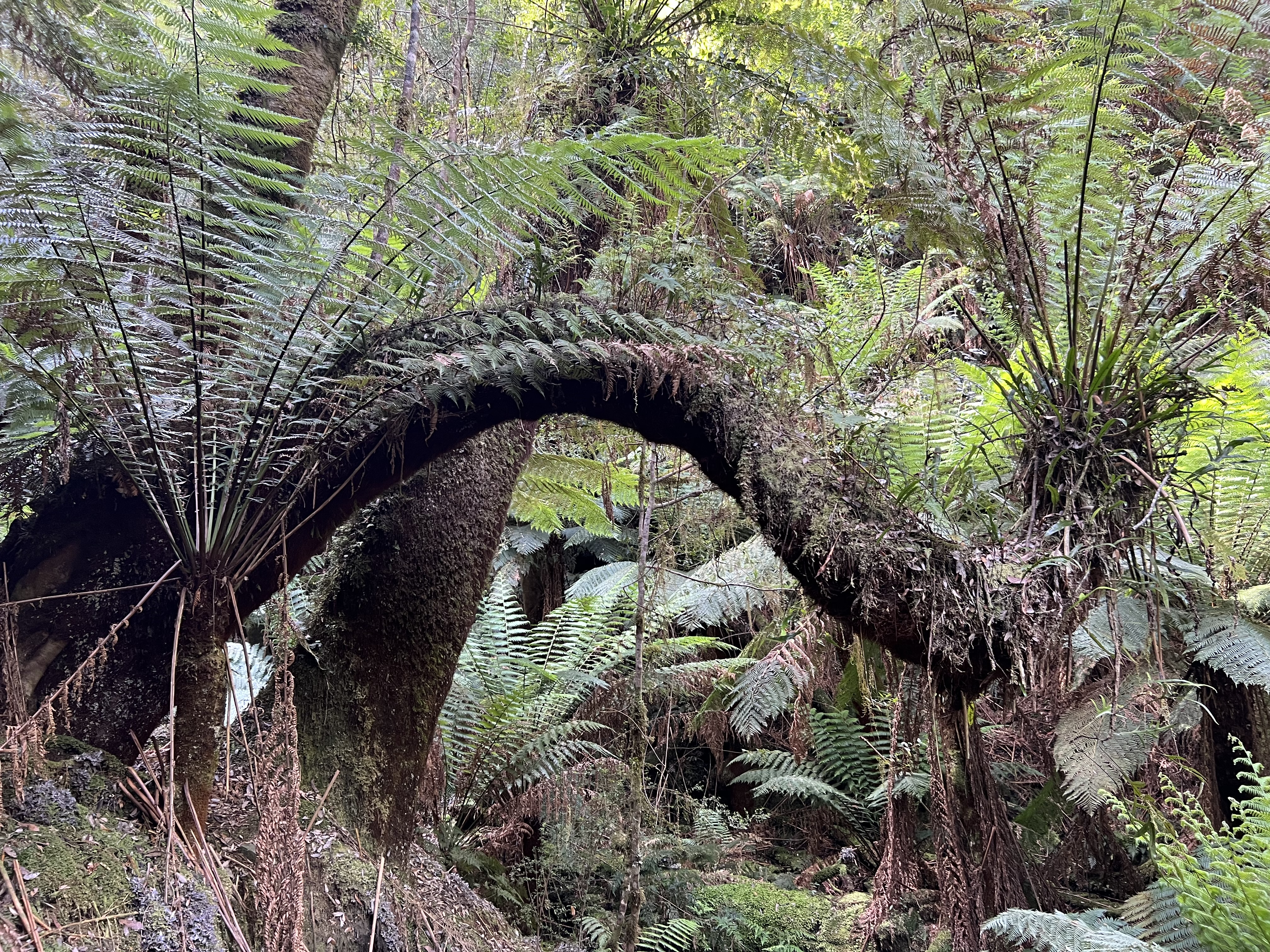
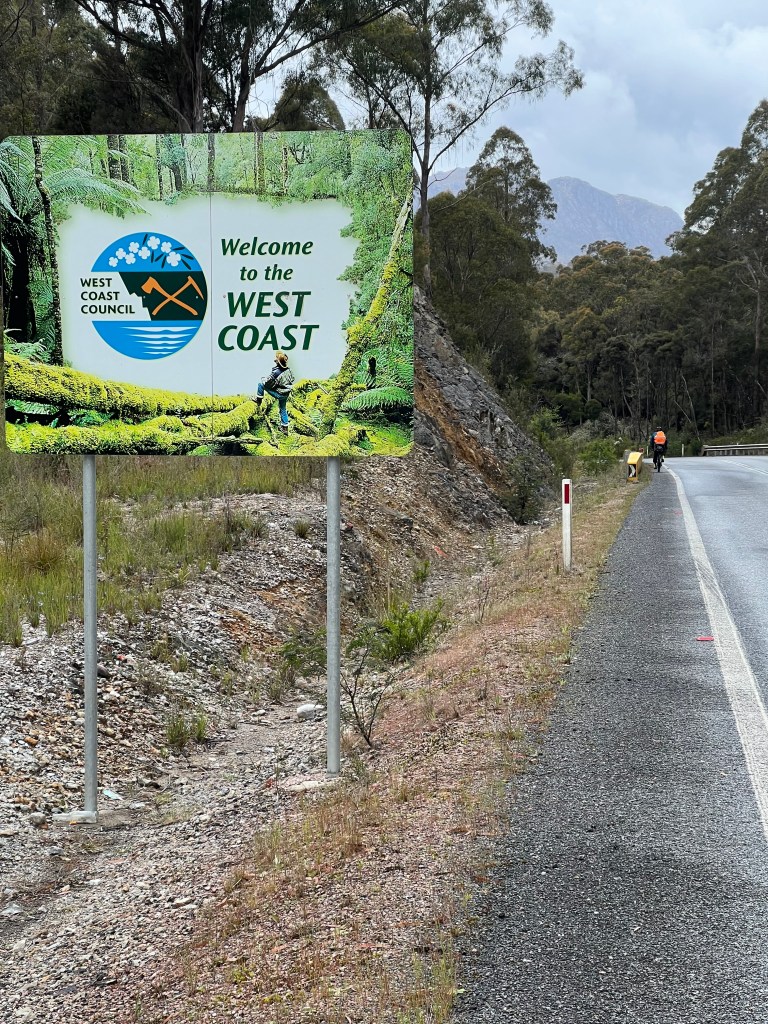
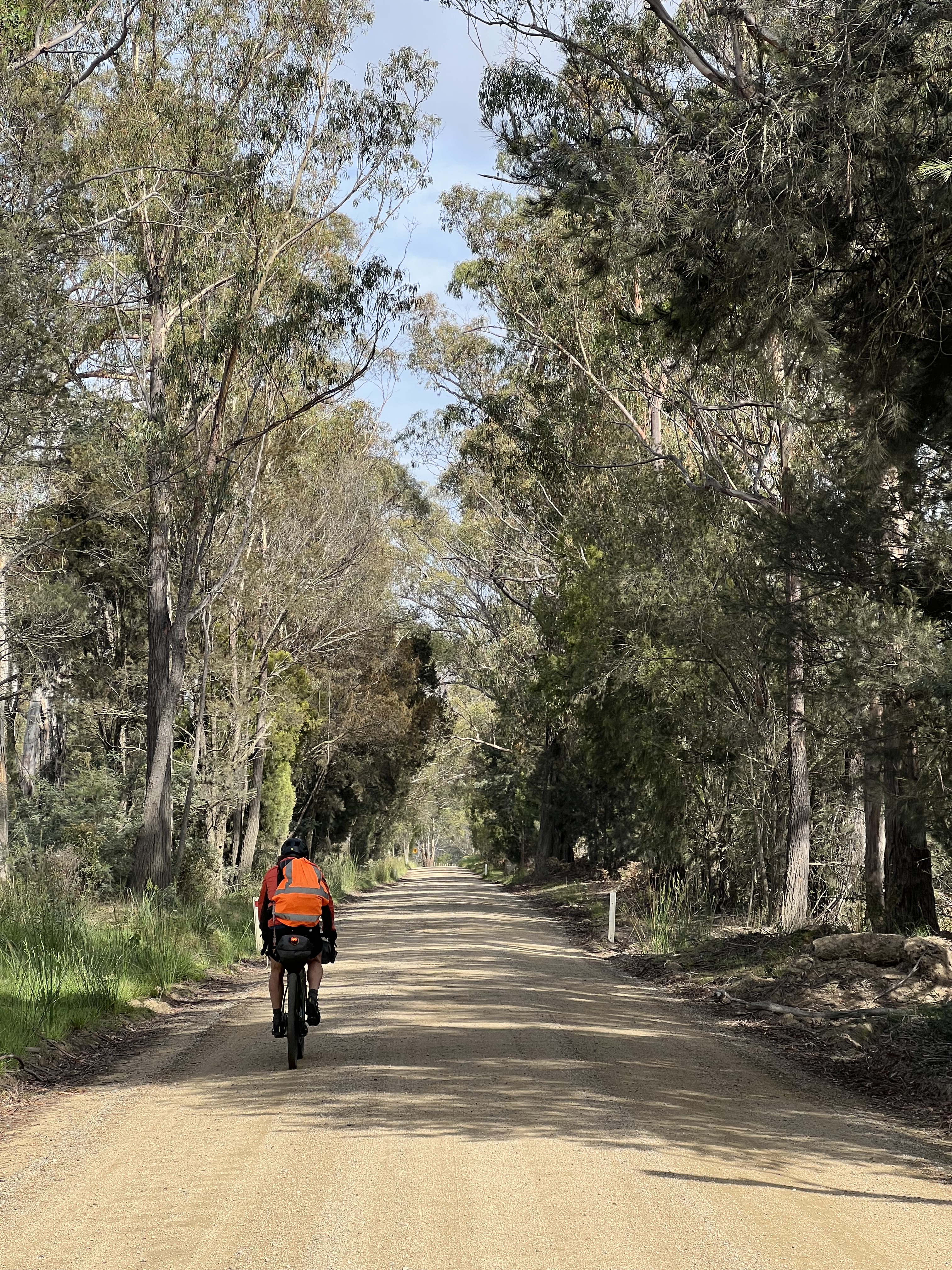
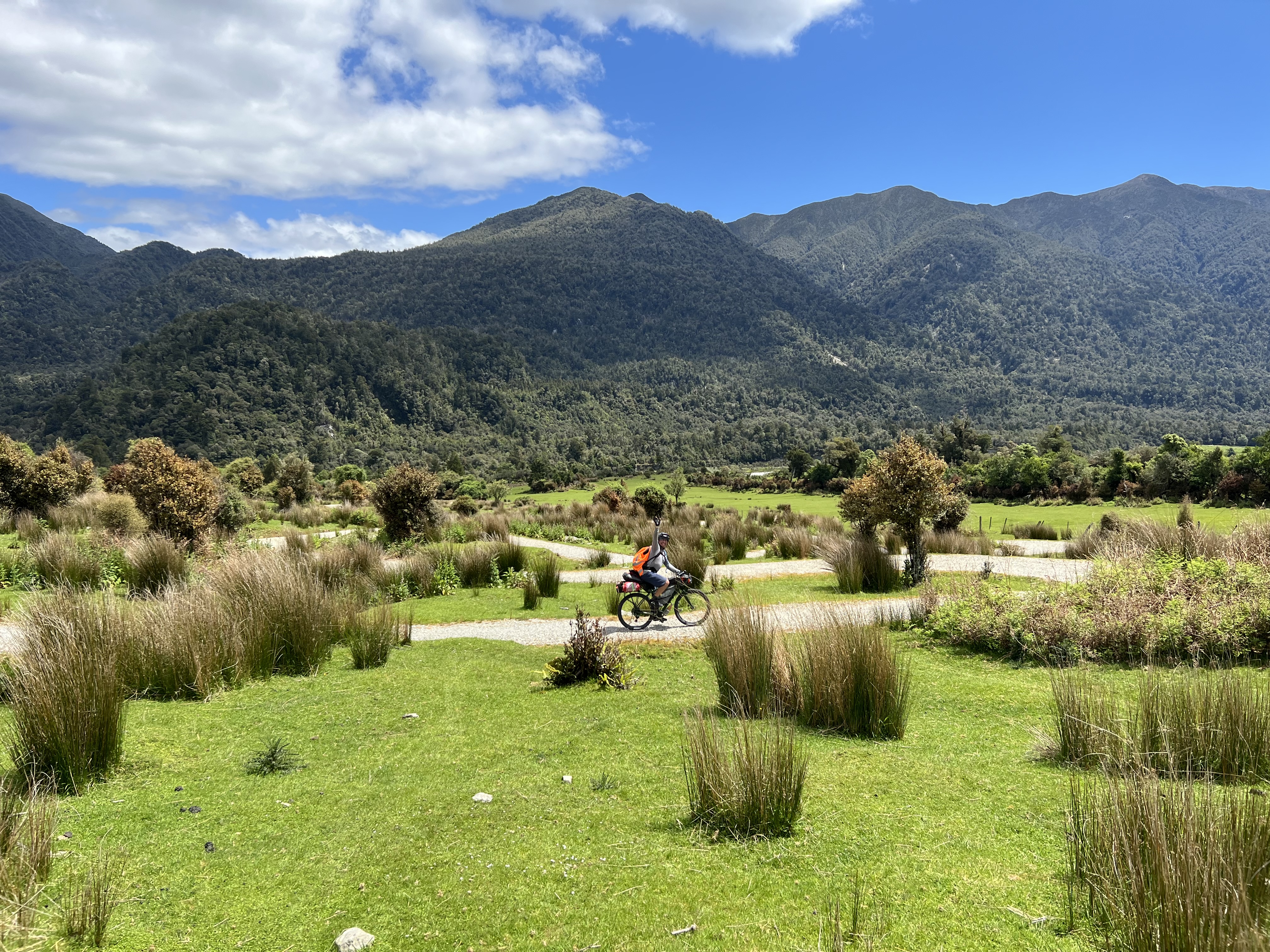
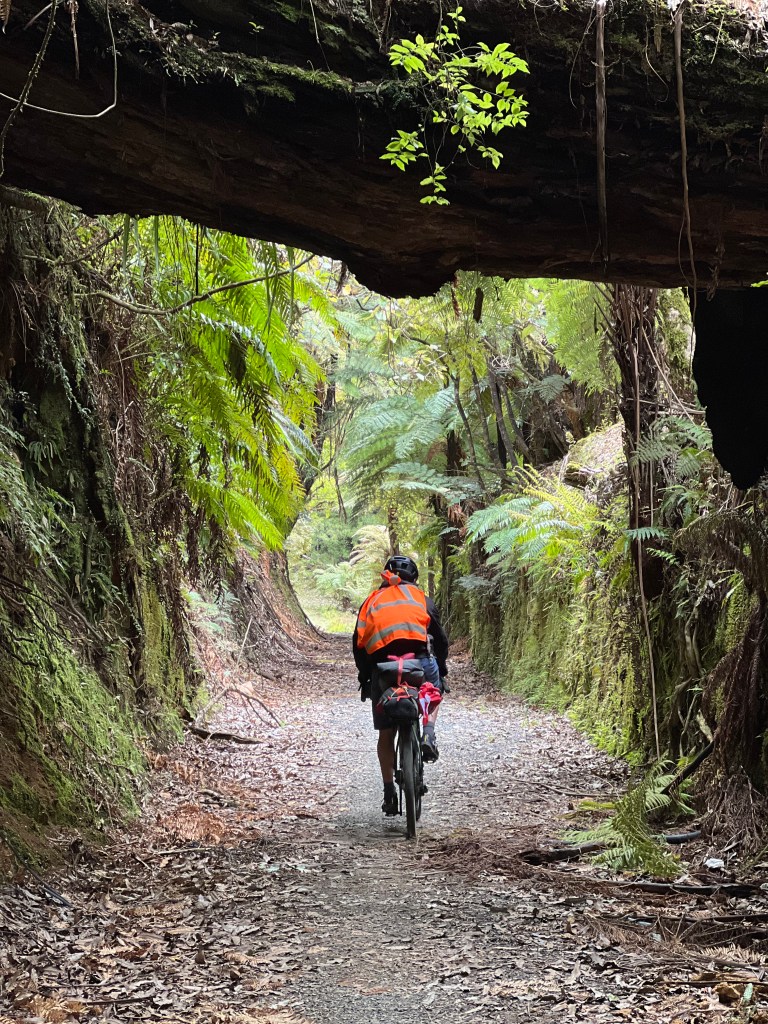
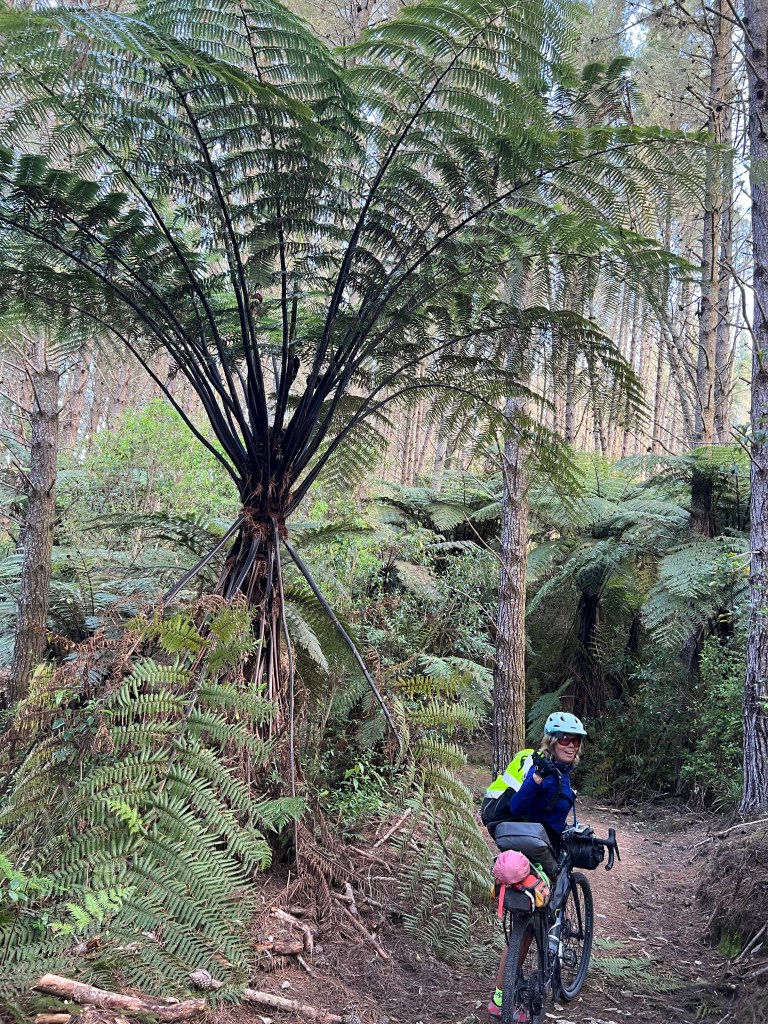
The Tarkine Wilderness, located in the Tassie NW corner, is either the second largest temperate rainforest in the world or the largest temperate rainforest in NW Tasmania (depending on who you believe). Regardless, it is impressive, huge, and remote. Our lollipop routing took us on the only “navigable” routes in the area.
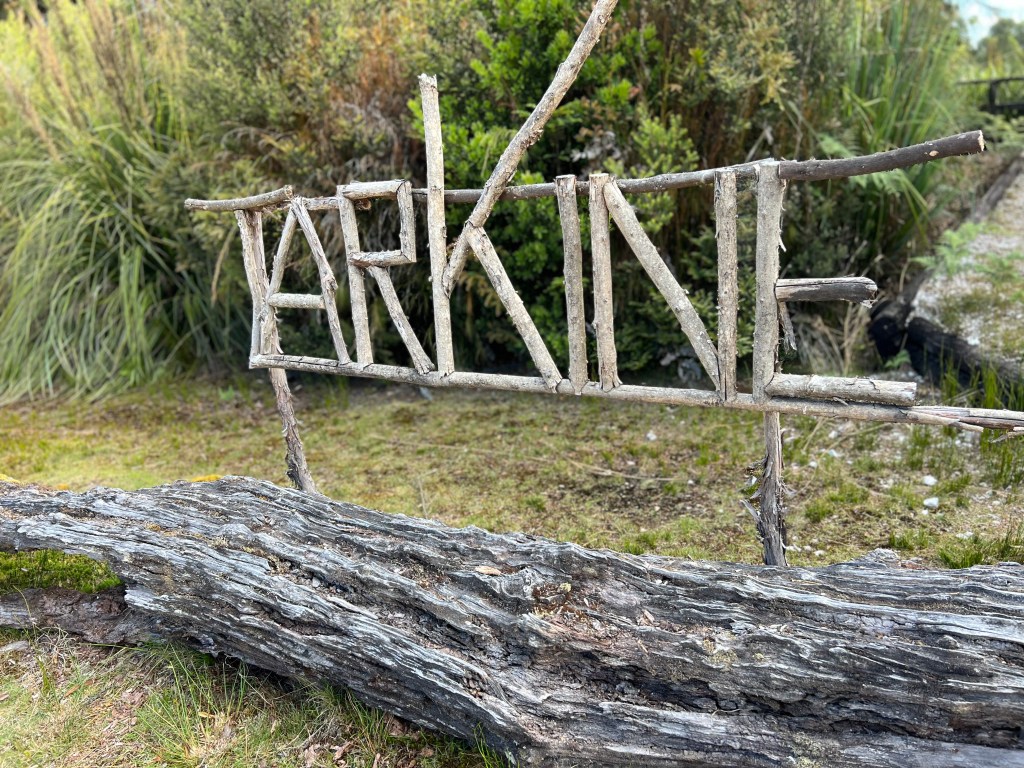
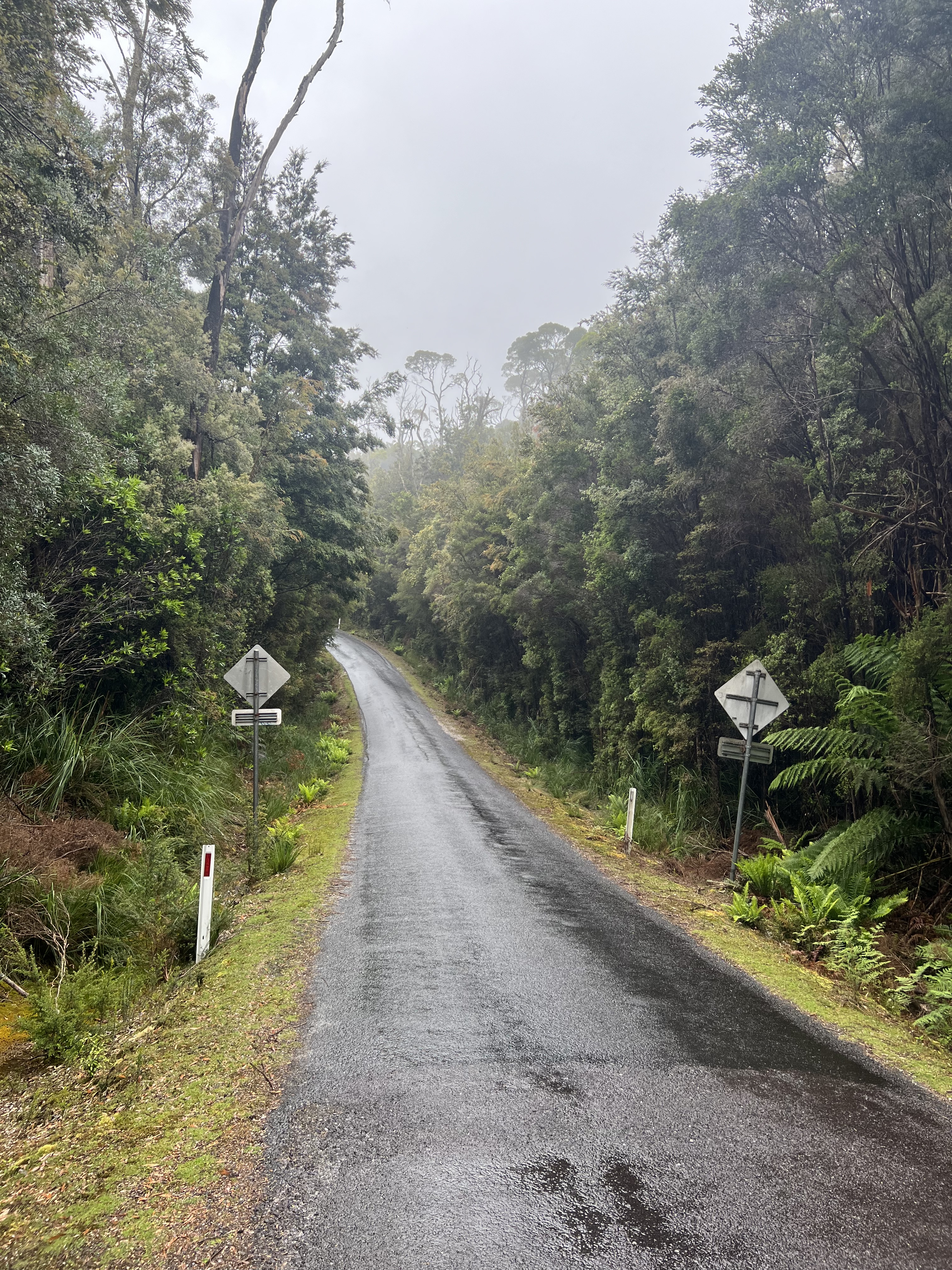
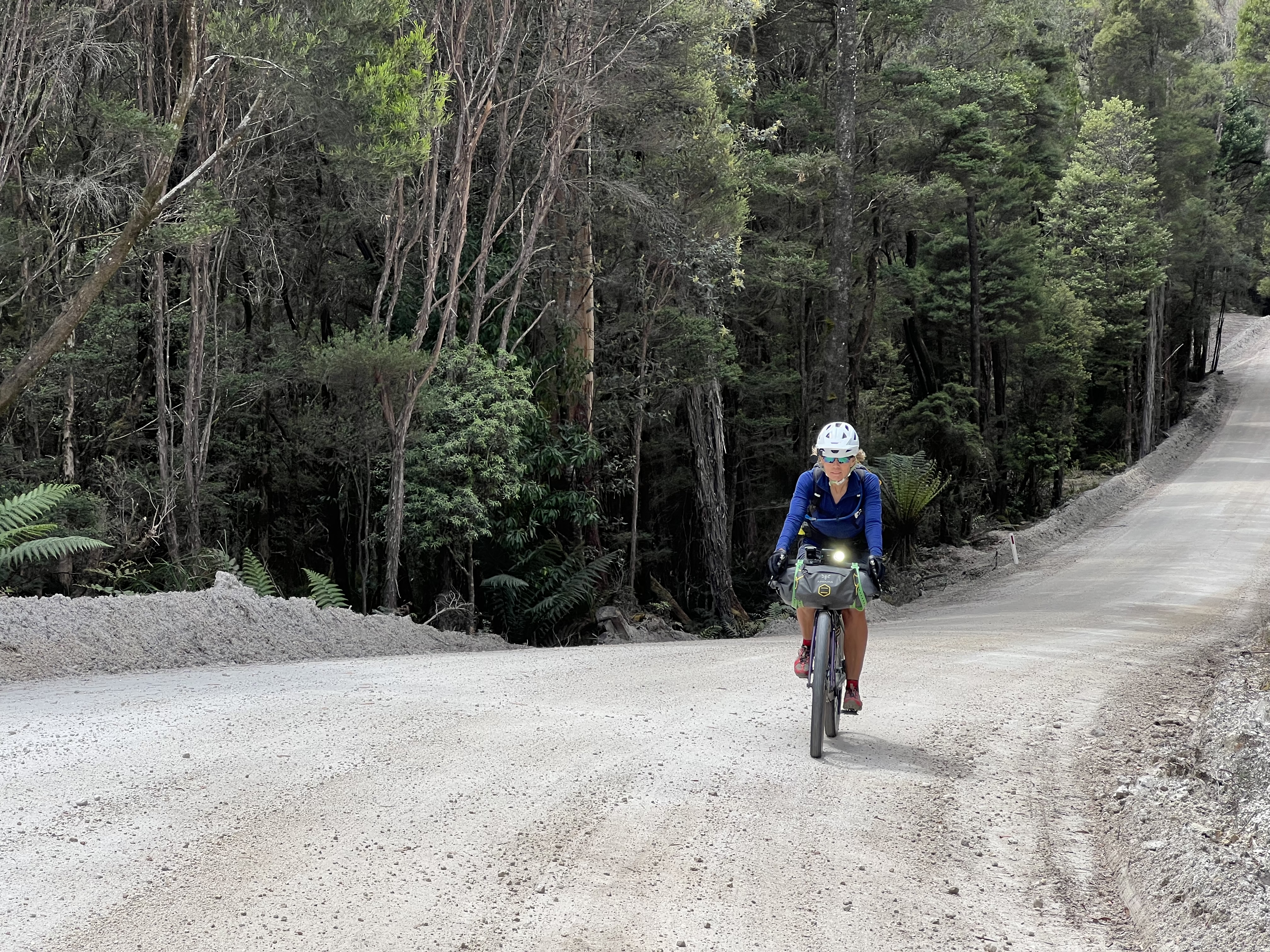
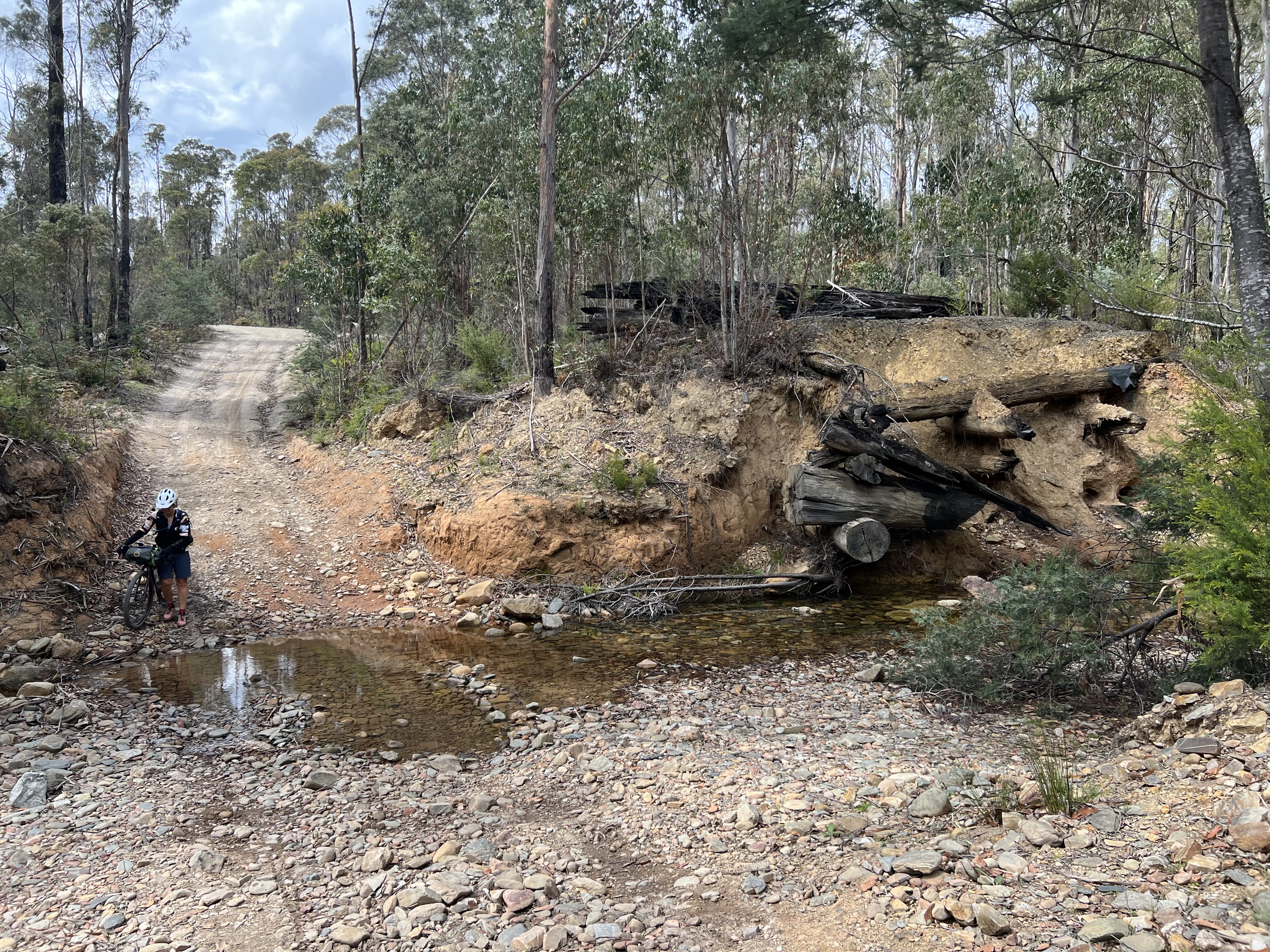
Heading north out of Zeehan, our rough “plan” was to arrange for a ride on the infamous Western Explorer Route in the Tarkine to shorten our 170km day (estimated 2,000 vertical meters of elevation). This was to make it rideable in one day. But when our local driver, the incomparable Doug, took 3 hours to cover the first 50kms in his van we decided this route was not safely passable on bike in one day. Perhaps not even two. At least not without a tent. And food. And water. Do I need to remind you of Gear Guy Bike Packing rule number 1? The only time you need a tent is when you don’t have one. This road was out there. Remote doesn’t quite describe it. No cell coverage. No vehicle traffic. No road really. It was just a meandering double track of holes, gravel and dust. For 170 km. All I could think was: “Thank heaven we didn’t bring the damn tent!” Doug kindly offered and we quickly accepted a boost to our next accommodation – Roger River. Roger River isn’t even on the map. No Roger. No River. But a noice farm house to stay in, with a noice fireplace. Routing disaster averted. Doug is an example of the often heard about West Tassies’ willingness – no, eagerness, to selflessly help folks.
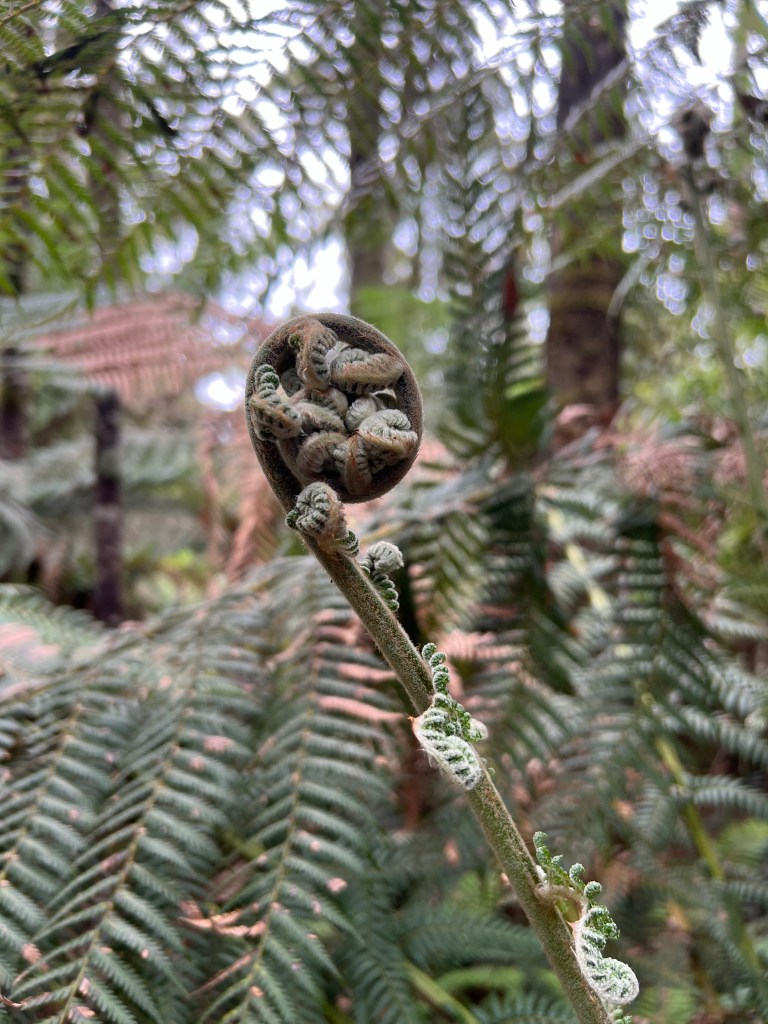
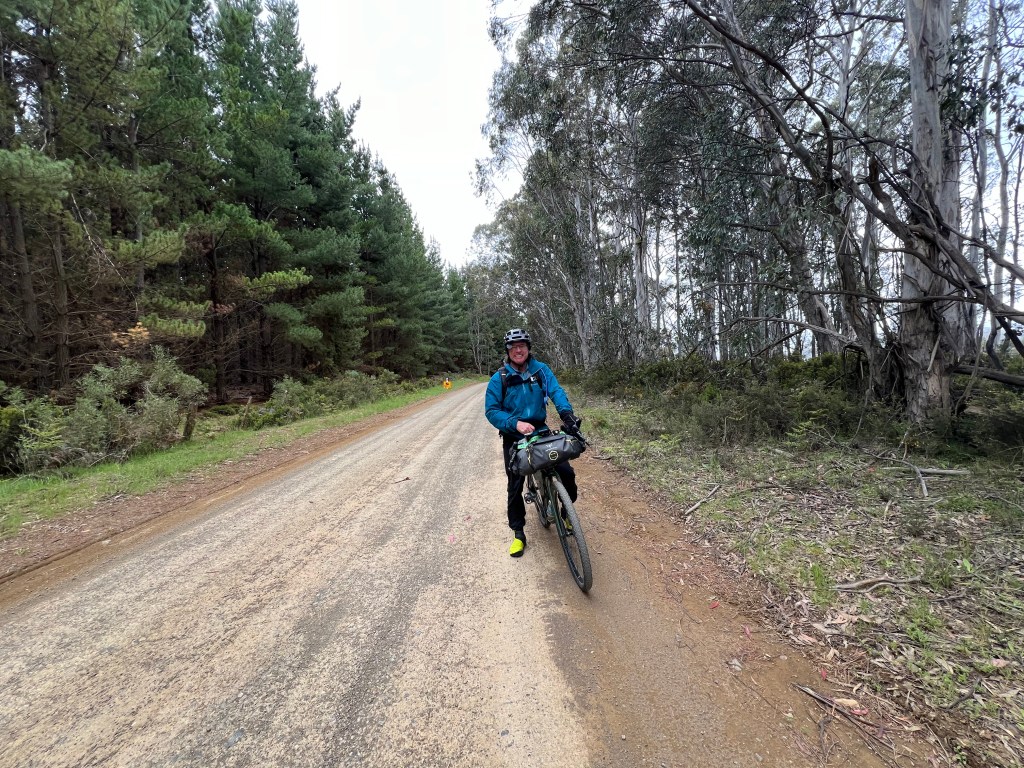
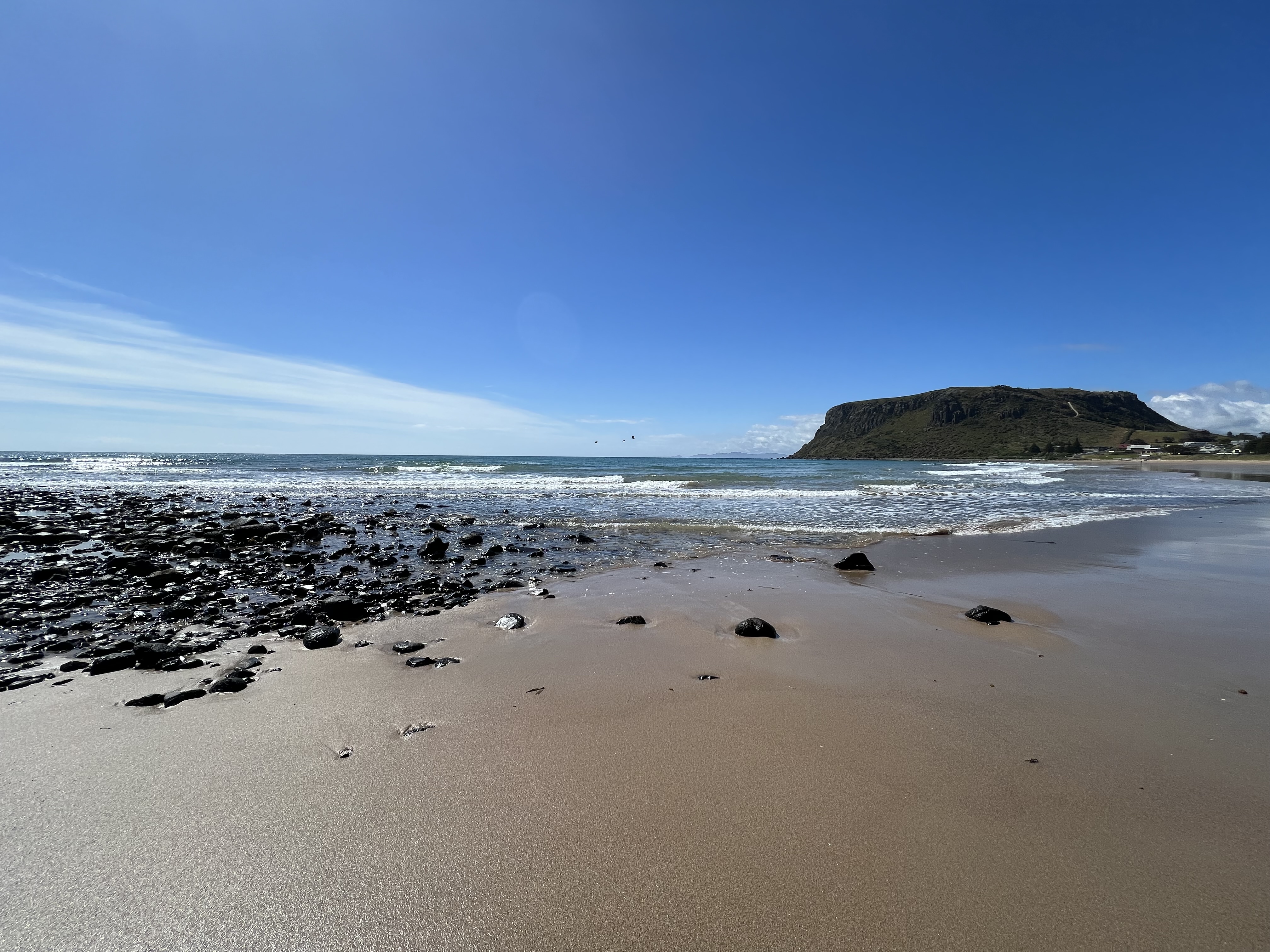
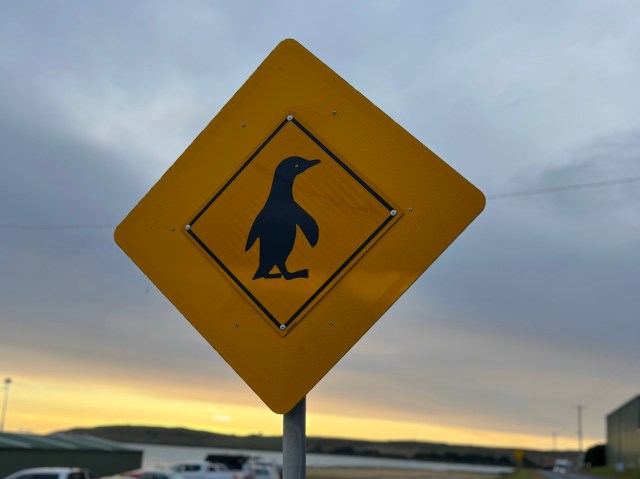
Reset, back in the saddle, next stop – back to civilization and one of our favorite towns, Stanley. Stanley is a North coastal town of 595 residents known for the “Nut”, an ancient volcanic plug that overshadows the town. They have a wonderful seafood restaurant, fresh fish market, a fantastic cafe, guaranteed penguin sightings (none) and a great walk on the top of The Nut.
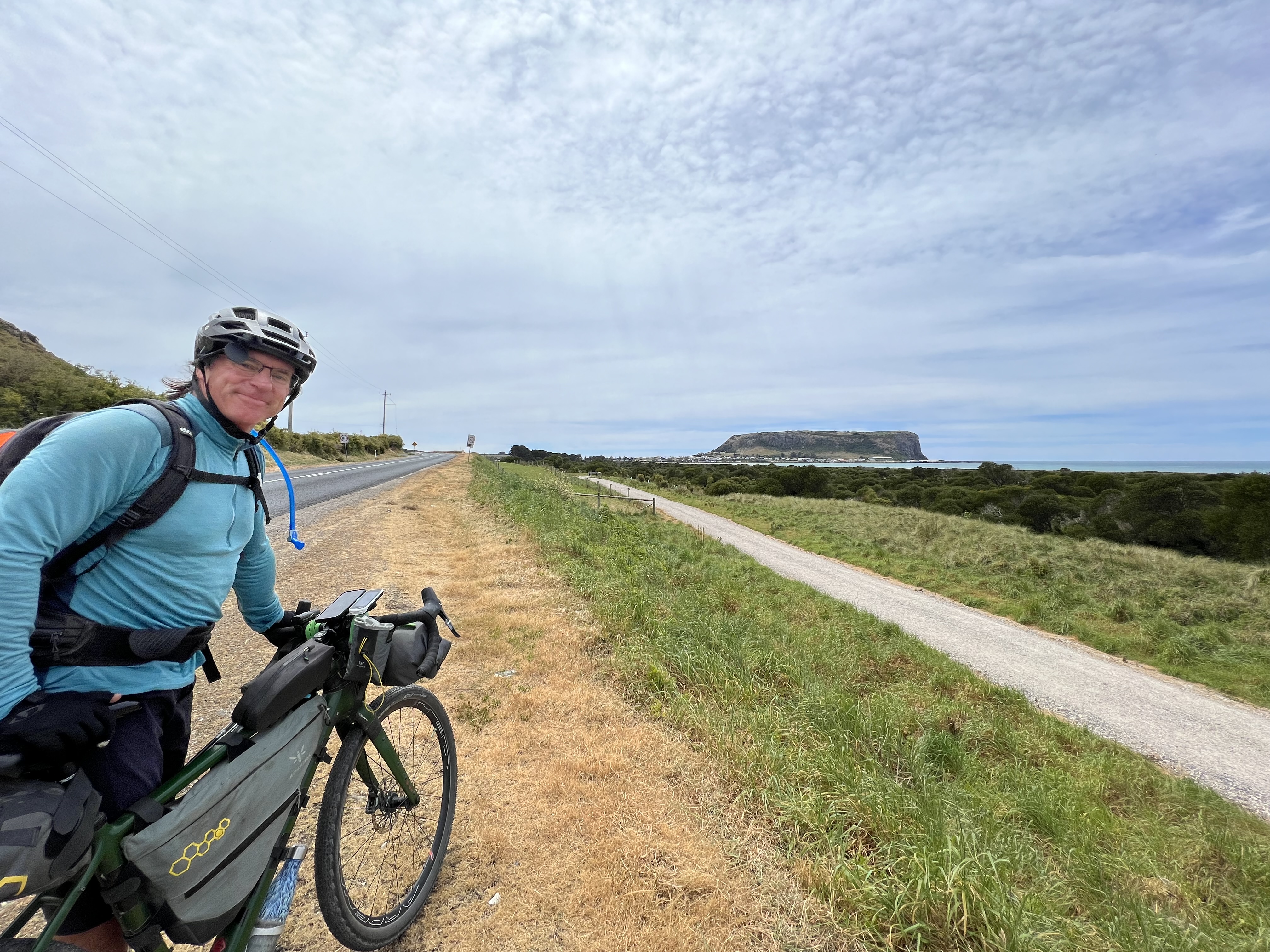
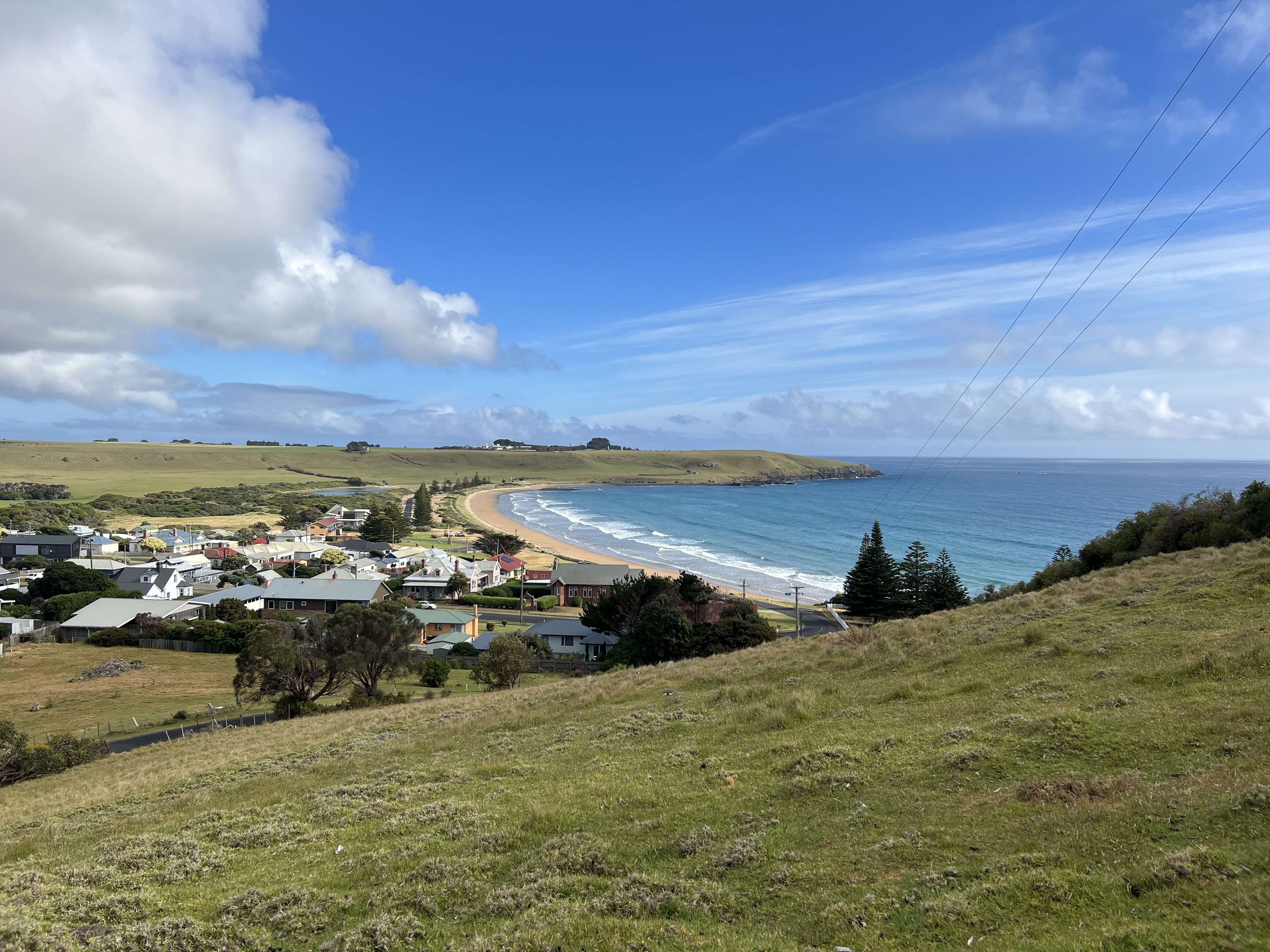
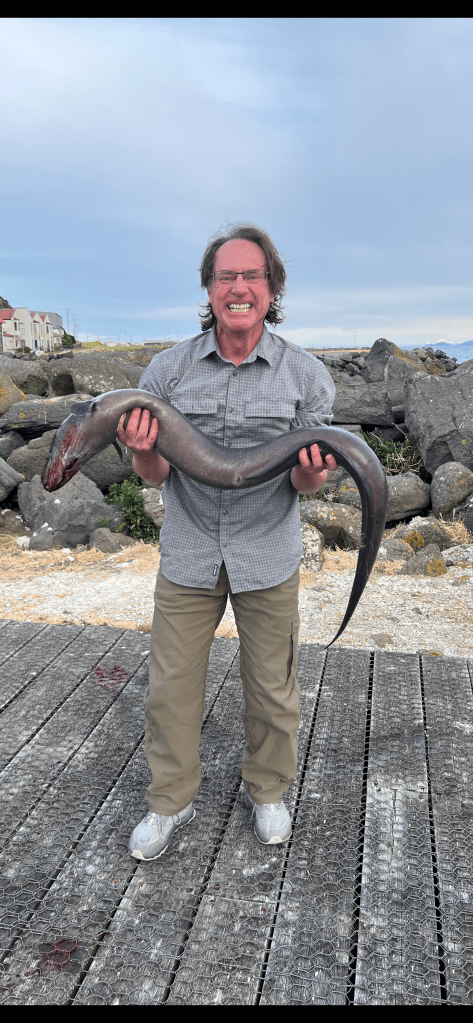
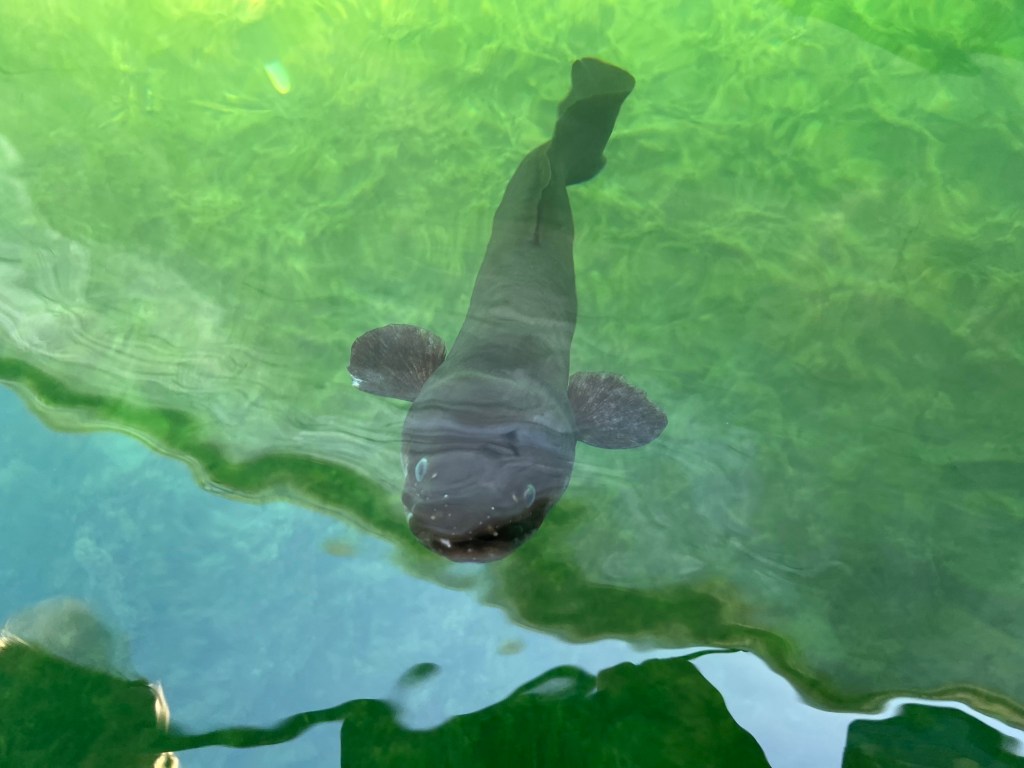
Eel fishing – better luck than penguin hunting

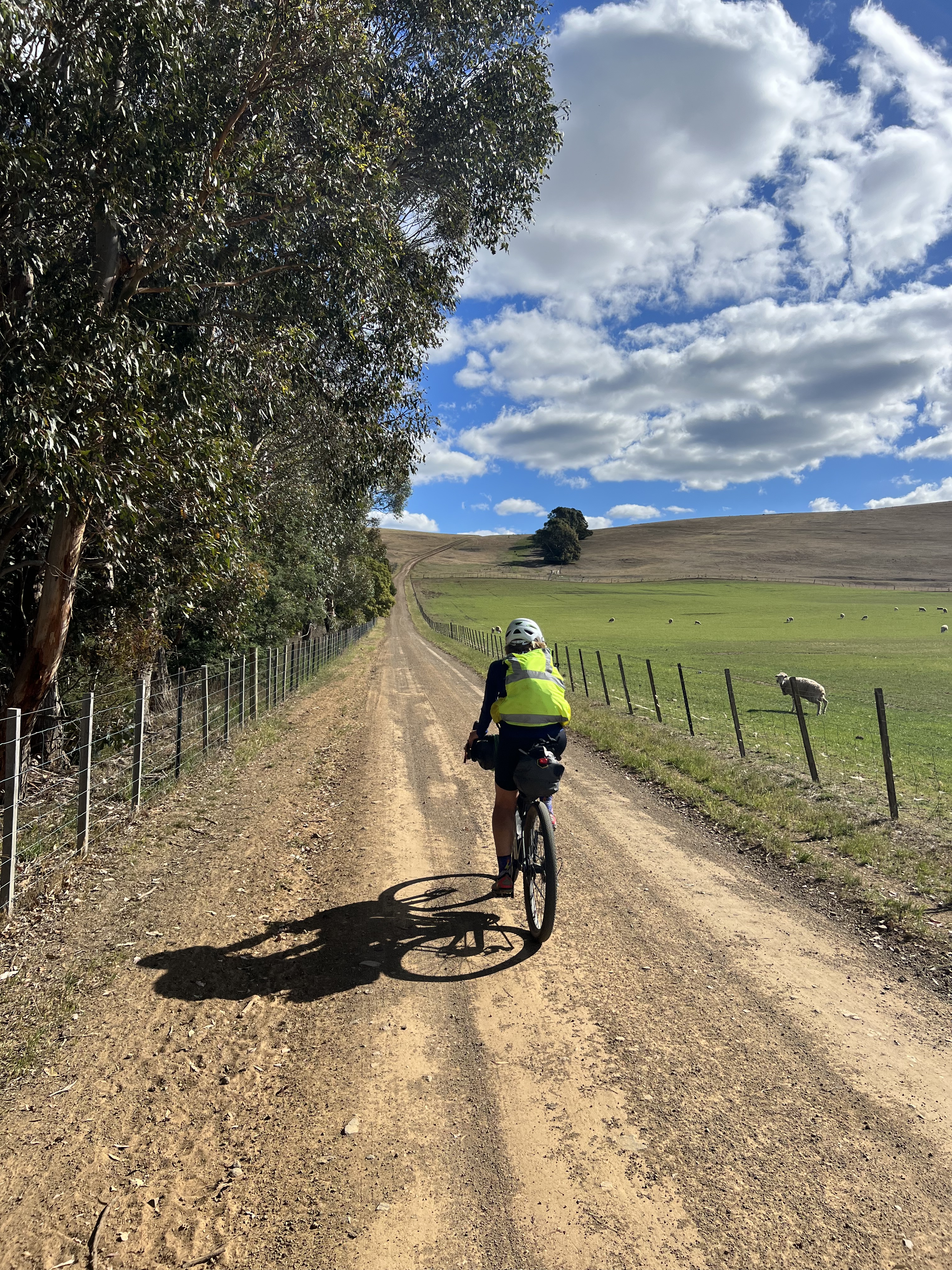
Along the way…..Gear Guy loves honey. Who doesn’t love honey? Mandatory Blue Hills Honey Farm stop. A fluke find along our route. We learned about honey, tasted honey, and of course bought honey. Honey’s health benefits are well known globally, and Manuka honey is often touted as the best of the best. Manuka comes from honey bees foraging on the Leptospermum shrub. Australia has 80 species of the plant and New Zealand has but 1, and it aledgedly derived from the Aussie shrub. Also, European honey bees (essential to the process) were introduced to Tasmania in 1831, 8 years prior to New Zealand. So Tassies want the world to know, Manuka is their term and their honey! The Tassie bees have also produced a Leatherwood honey with a very unique flavour. The Leatherwood tree is only found in Tasmania, and only produces a regular supply of nectar after 70 years!
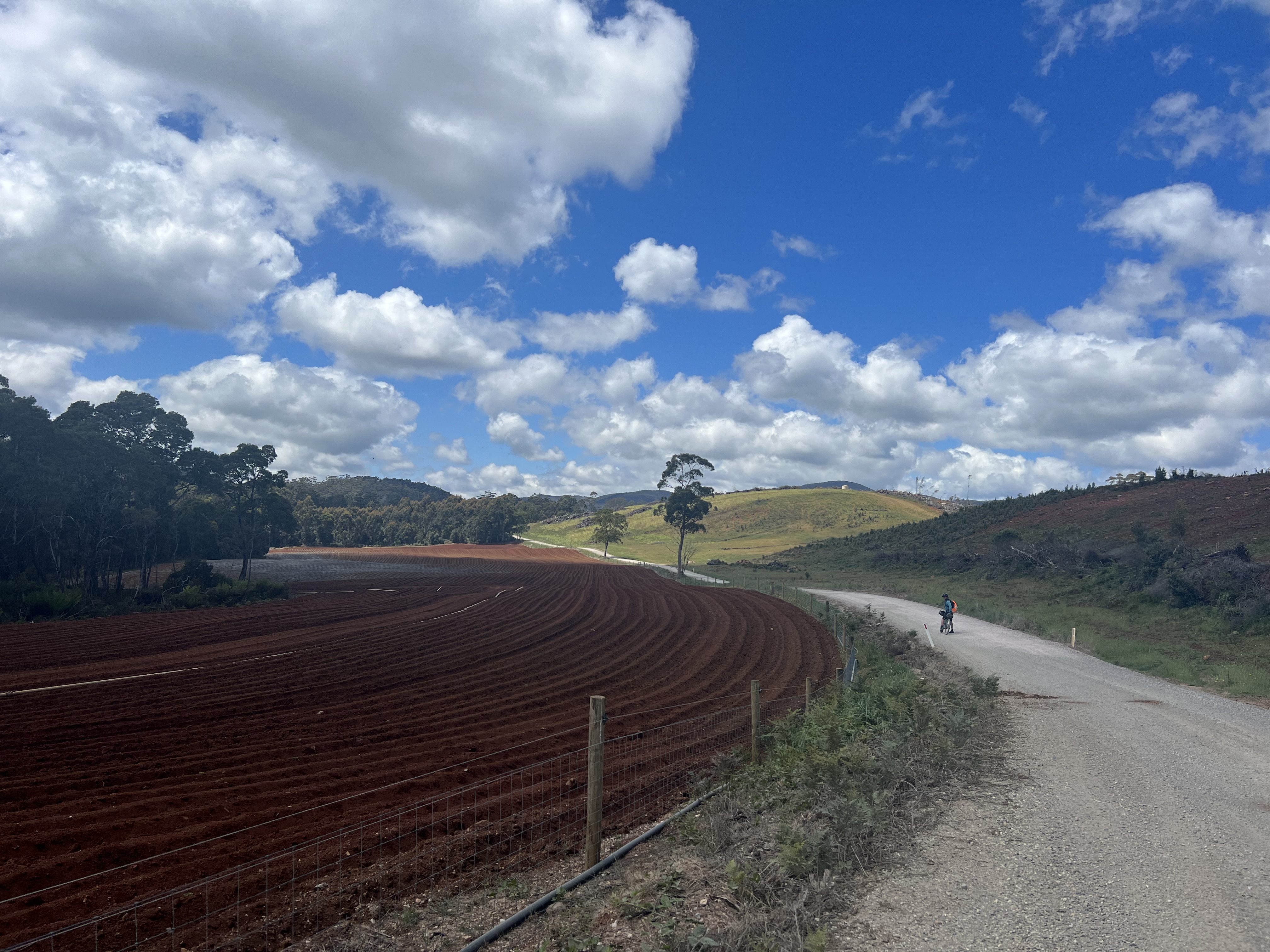
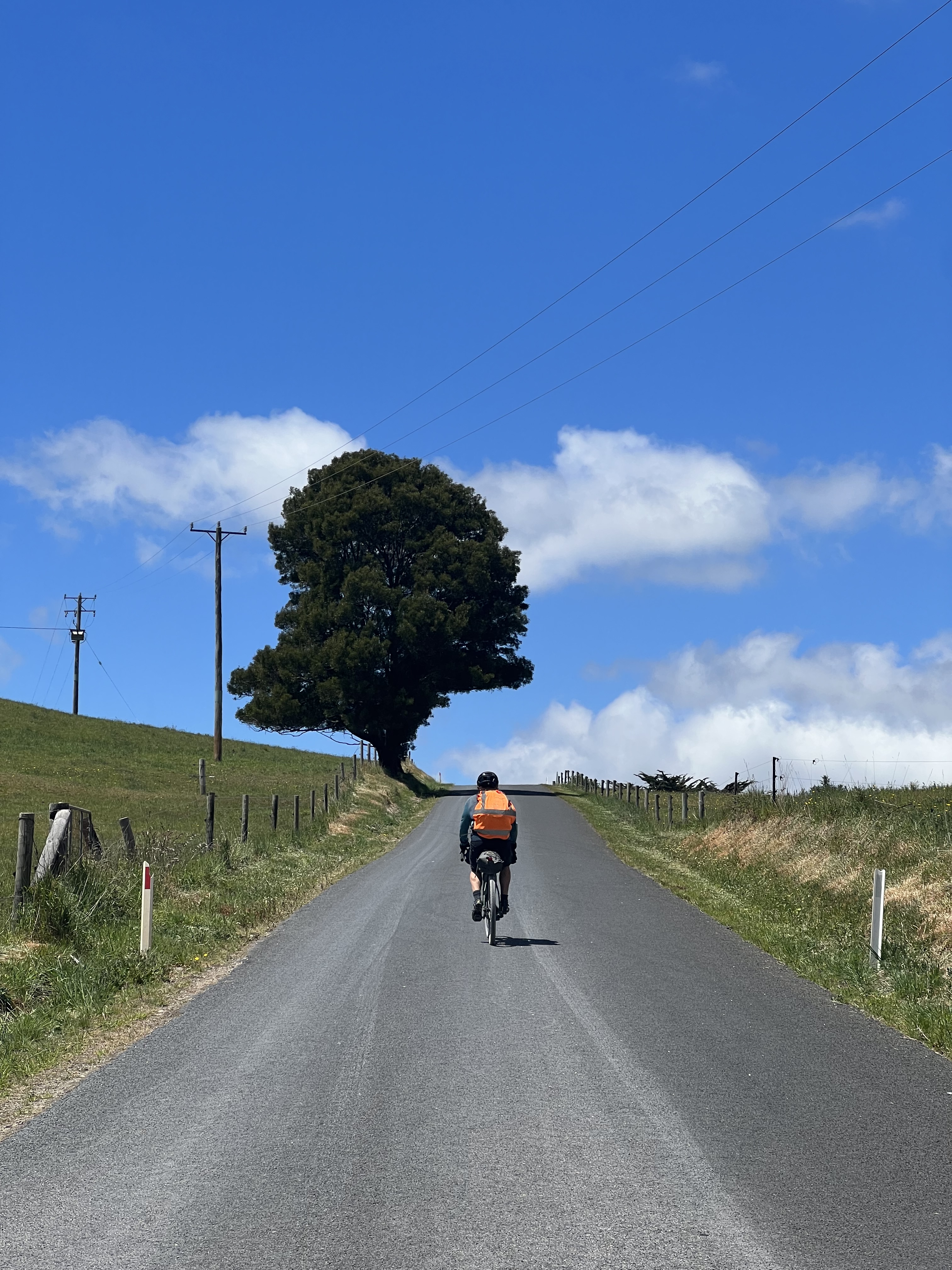
On our figure 8 route, we looped back south through the Tarkine. Corinna (a town on the map only) is in the heart of the Tarkine. The heart and some would say the soul of the Tassie Rain Forest. Folklore lives here with heaps of history of “piners and miners”. (The former being loggers). There are several former piners, miners and salty dogs (sea faring retirees) inhabiting Corinna working on the river as guides, on the river ferry, in local maintenance or all three. They speak with a uniquely thick West Tassie dialect that is hard to follow but is captivating nonetheless. It’s like listening to a bad recording of an old Johnny Cash song – you can’t quite make it out – but it reeks with depth of subject and passion. We caught ourselves transfixed by our Salty Dog river boat guide as he unwound for us the story of a local river boat sinking which happened over 100 years ago as he pointed out the wreckage. He gruffed about the importance of the many tree species unique to Tasmania and how crucial the river and the rainforest is to all of Tasmania. He left you no doubt on this. Truly, this was a guy that would be full of stories over a beer, or ten.

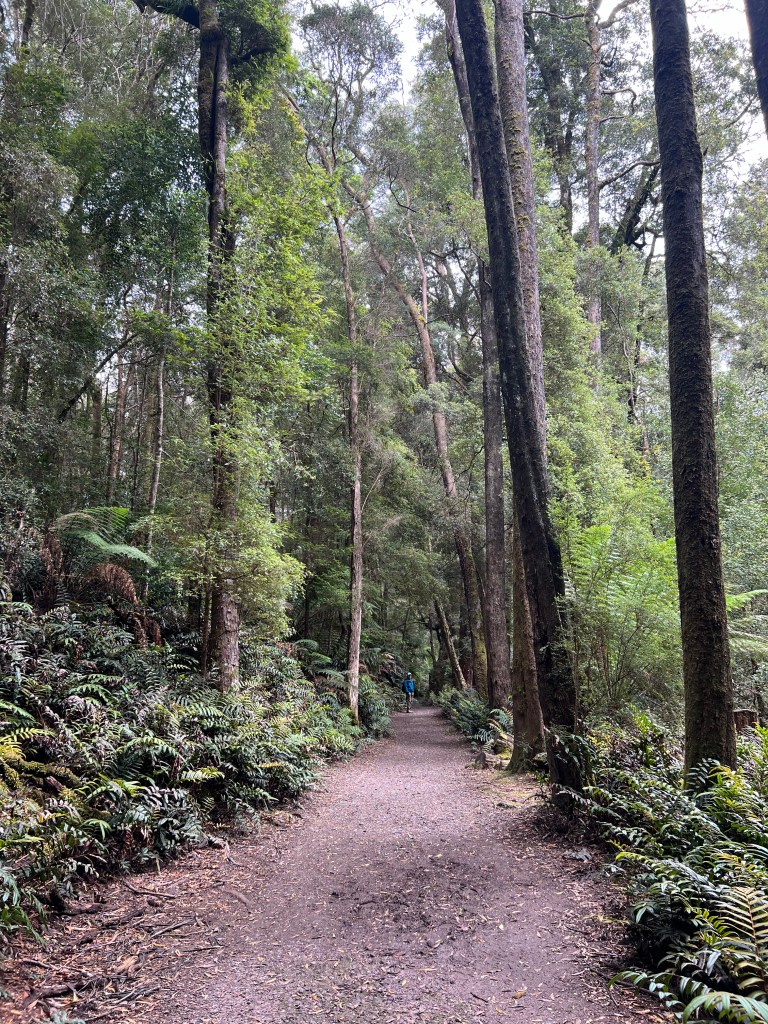
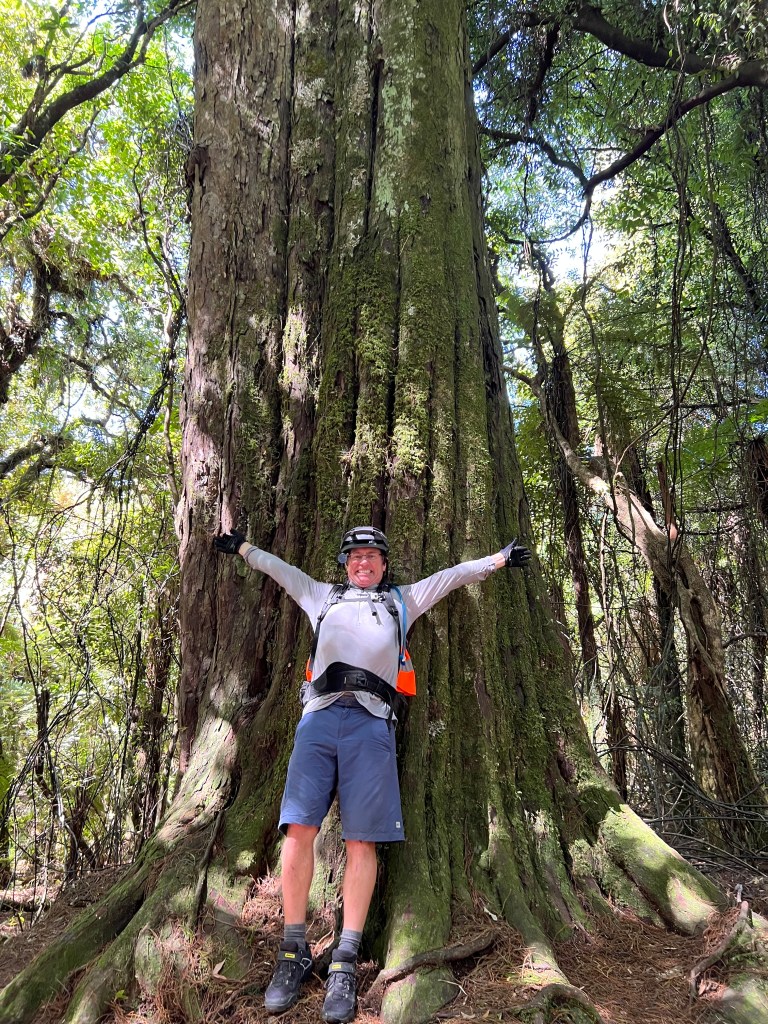
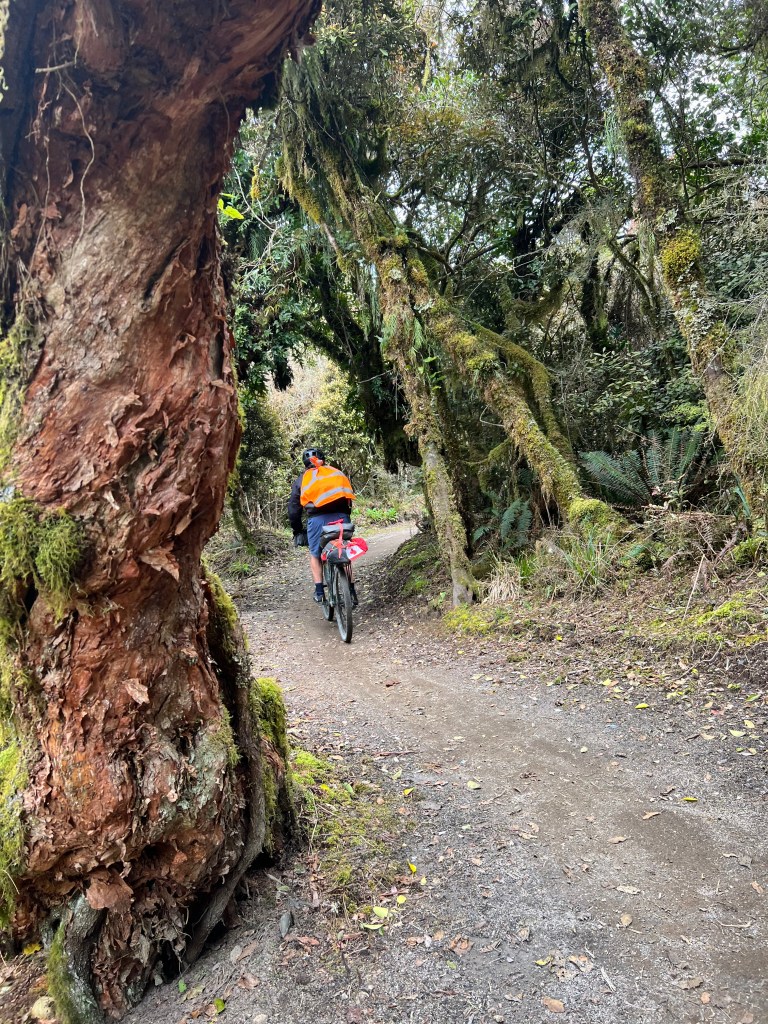
The island state claims to have the world’s freshest air from the Roaring Forties and plenty of rainfall. This gives rise to the second tallest trees on Earth, temperate rainforests and a stunning array of endemic plant species. The Huon Pine is perhaps the most famous here. It grows incredibly slowly at only one millimetre of girth per year, can live up to 2,500 years and only begins to reproduce at the age of 600 to 800. This tree has an incredible sappy perfume from a high oil content, which means the timber can be bent, sculpted, shaped and worked. It’s also waterproof and its sap repels insects. The tree’s massive size and pliability made the Huon Pine prized timber for the shipbuilders of yesteryear. As a result, it has been timbered almost to extinction and today is protected. There are 690 species of Eucalyptus or Gum Tree, 29 found throughout Tasmania and 16 of those found no where else in the world. The pleasing scent we are all familiar with, followed us on every route on this green island. It was serene.
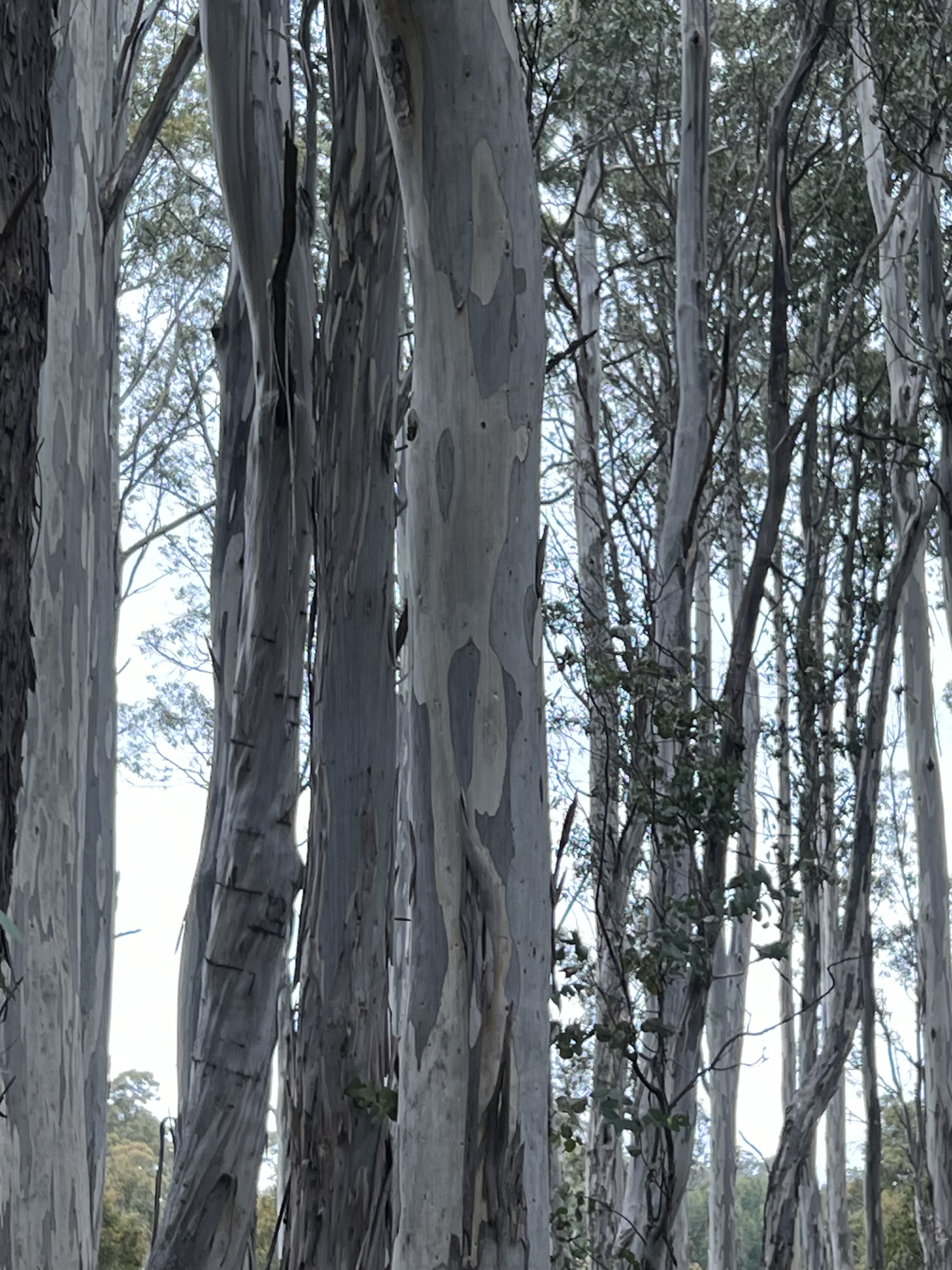
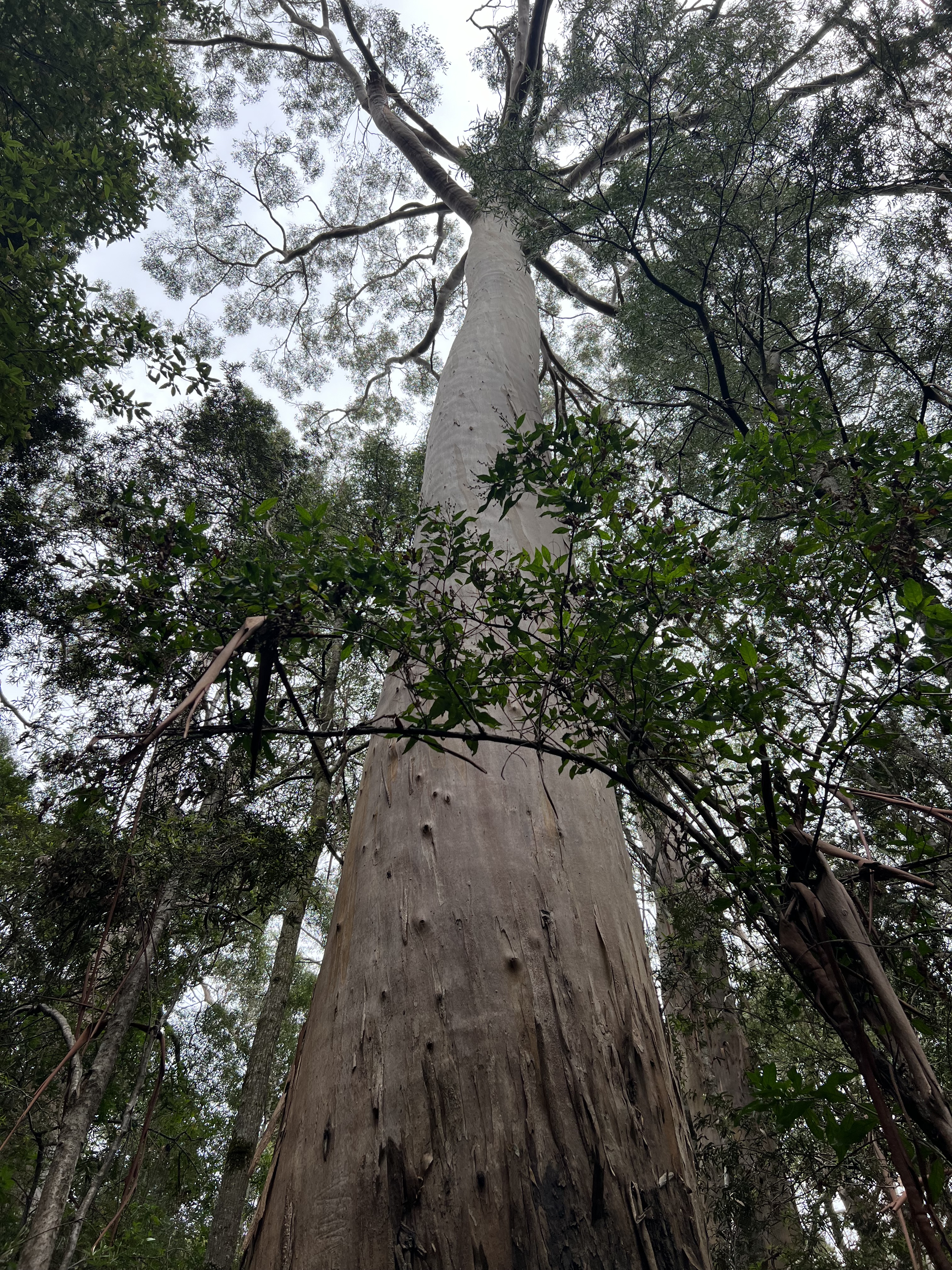
Other towns of the Tarkine – Mawbanna, where they advertise that the “Last known Tasmanian Tiger (Thylacine) was shot in 1930. Here’s some local folklore – some Tassies believe the Tasmanian Tiger still exists and some have even said they’ve even seen one. But no one will say so publicly for fear that trophy hunters will come to the area.

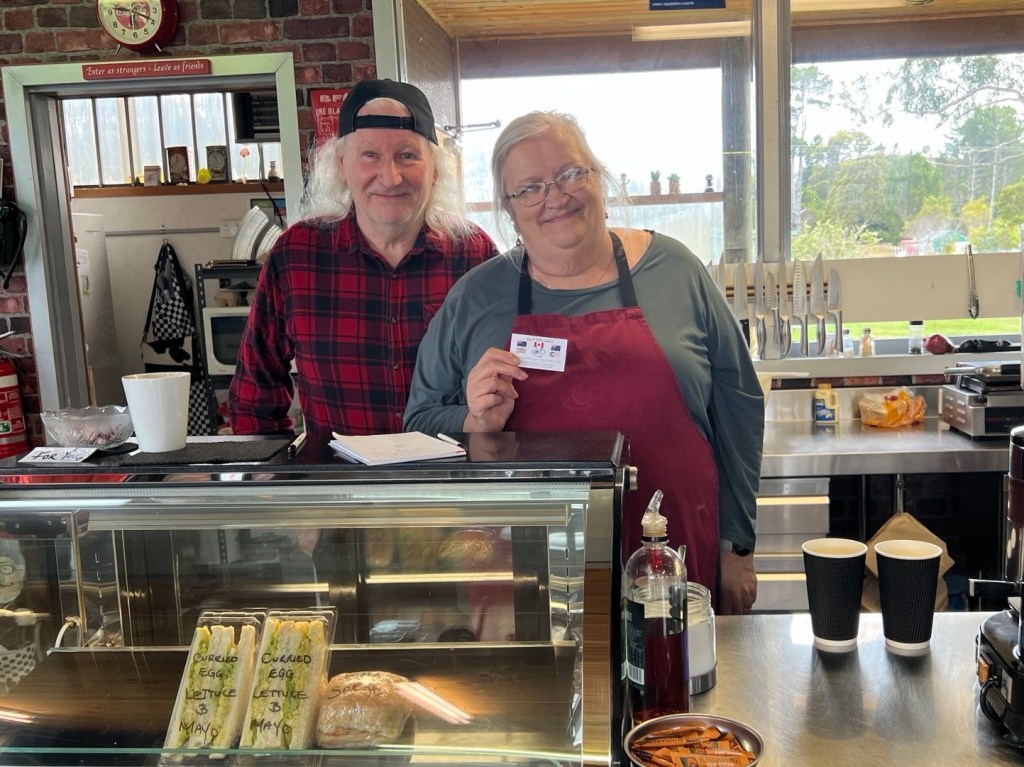
Zeehan – home of The Pitstop – a fantastic cafe where we took refuge to dry out from 4 hours of relentless rainforest rain and to chat with owners Sue and husband Ian. Sue made fun of Gear Guy’s unbrushed long hair. She said he should “Do somting wit it”. Perhaps like Ian’s?
Zeehan is also home of a wonderful museum dedicated to mining in the area. Really, a fascinating walk through a well appointed and thought out museum complete with many samples and antiquated machinery and, of course, facts and folklore. Our geology loving friends Jane (from Fernie) and Stephen (From NZ) would love this museum.

Flowerdale had a road sign and 4 lovely ladies congregated near a corner that stared at us in a Monty Python sort of way as we rounded into their view. “Are you lost luv?” Nav Guy tried to assure them that we weren’t but, just to be sure, clarified directions as a conversation starter. Nav Guy, “We’re heading toward Flowerdale”. Main Lady, “You’re in Flowerdale Luv”. Nav Guy had Flowerday, well, nowhere near there. When we explained that we were on that particular road in order to avoid traffic to our destination they just stared at us and offered, “That route is a beet long and very cuuuurvy.” They all shook their heads and concurred on a different (and better) route that would save us 50km. We boiked off, “Thank you Ladies!” “Roid safe you twos”.

At some point we realized that we had not been in a town larger than 495 people for over 3 weeks. It was marvelous AND we were getting very good at creating dinner from 7- 11 type stores. Something to be said of the annual Tasmanian competition for the Tassie Tiny Tidy Town award (really a thing).
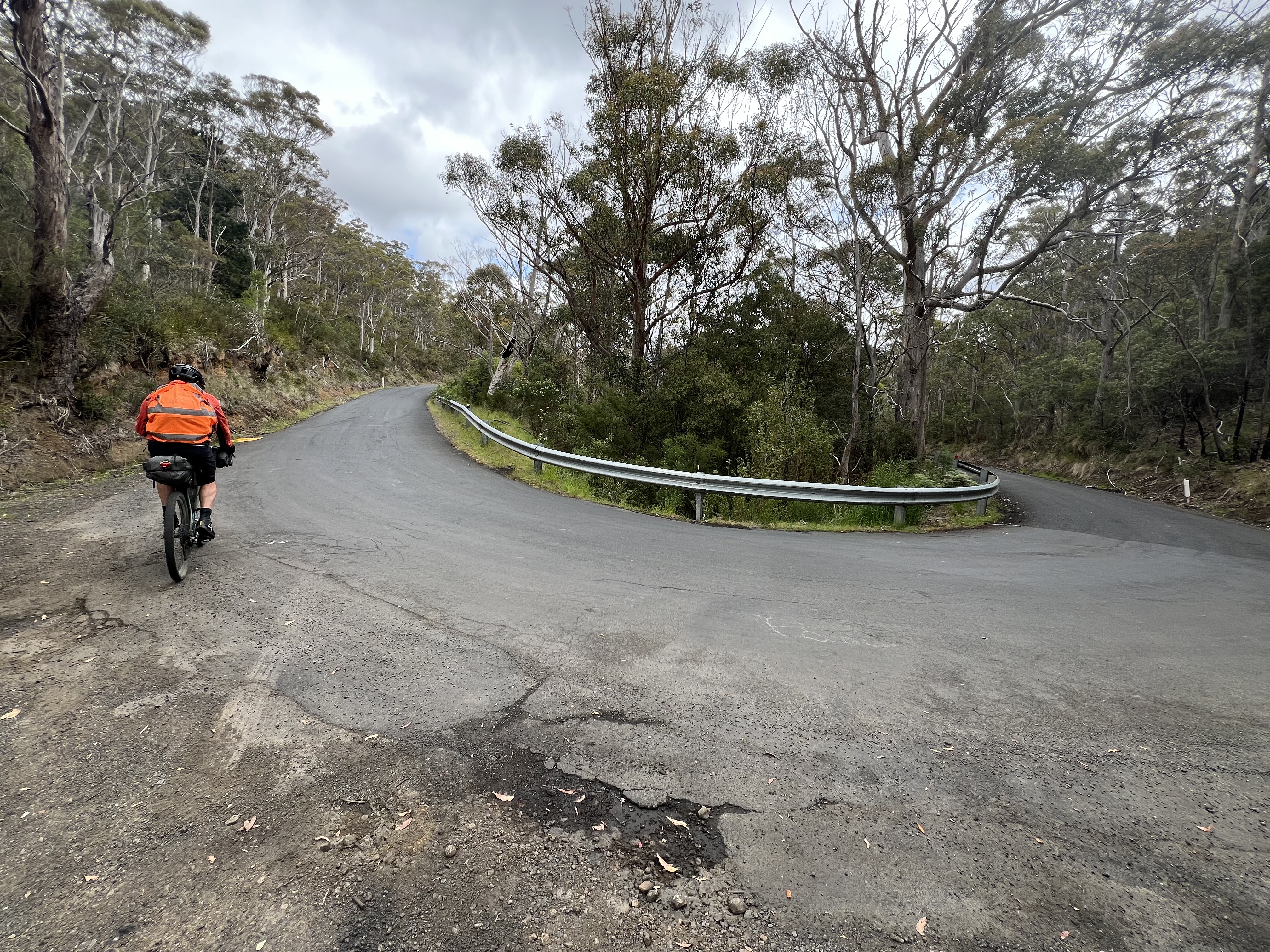
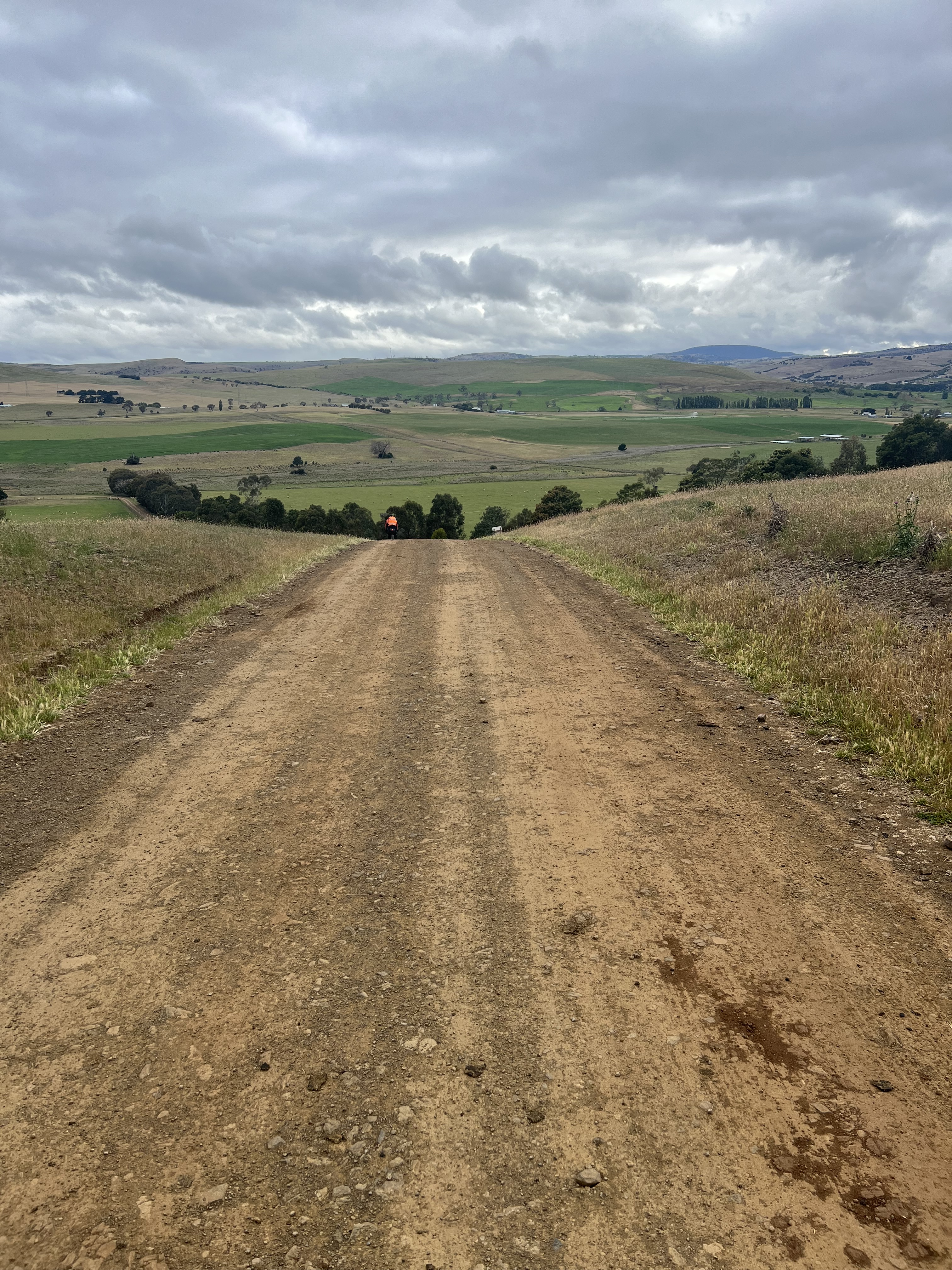
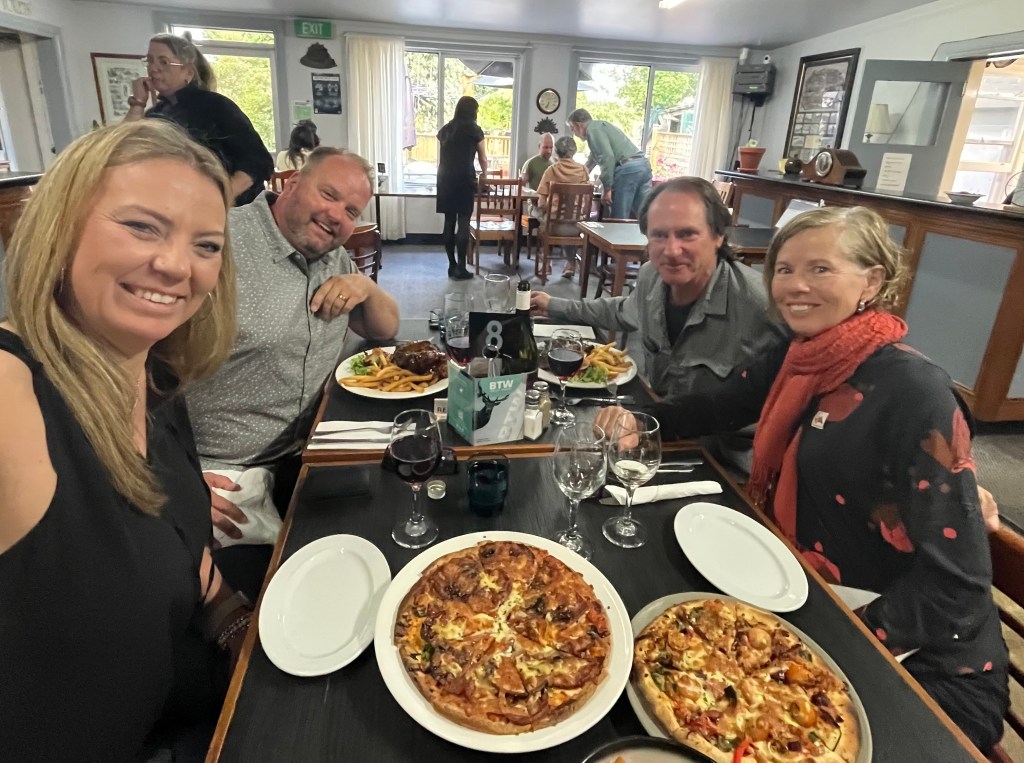
We rolled into Hobart after a beautiful back country ride that our Tassie friend Rod helped us with. The route took us directly into a bike path that we followed to our lovely harbour side hotel in the middle of Hobart, where we proceeded to gorge on delicious sea food, beer and wine!

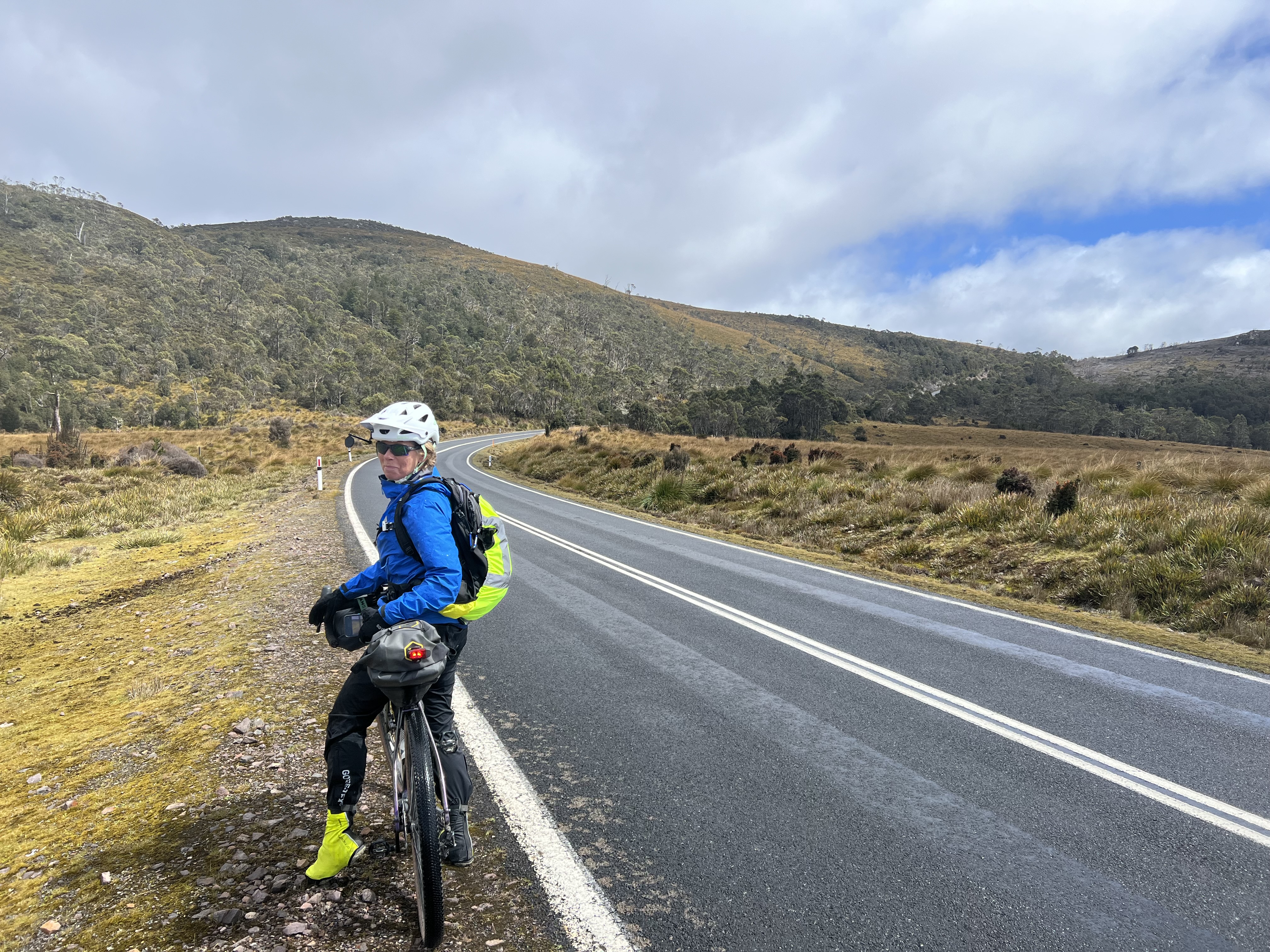
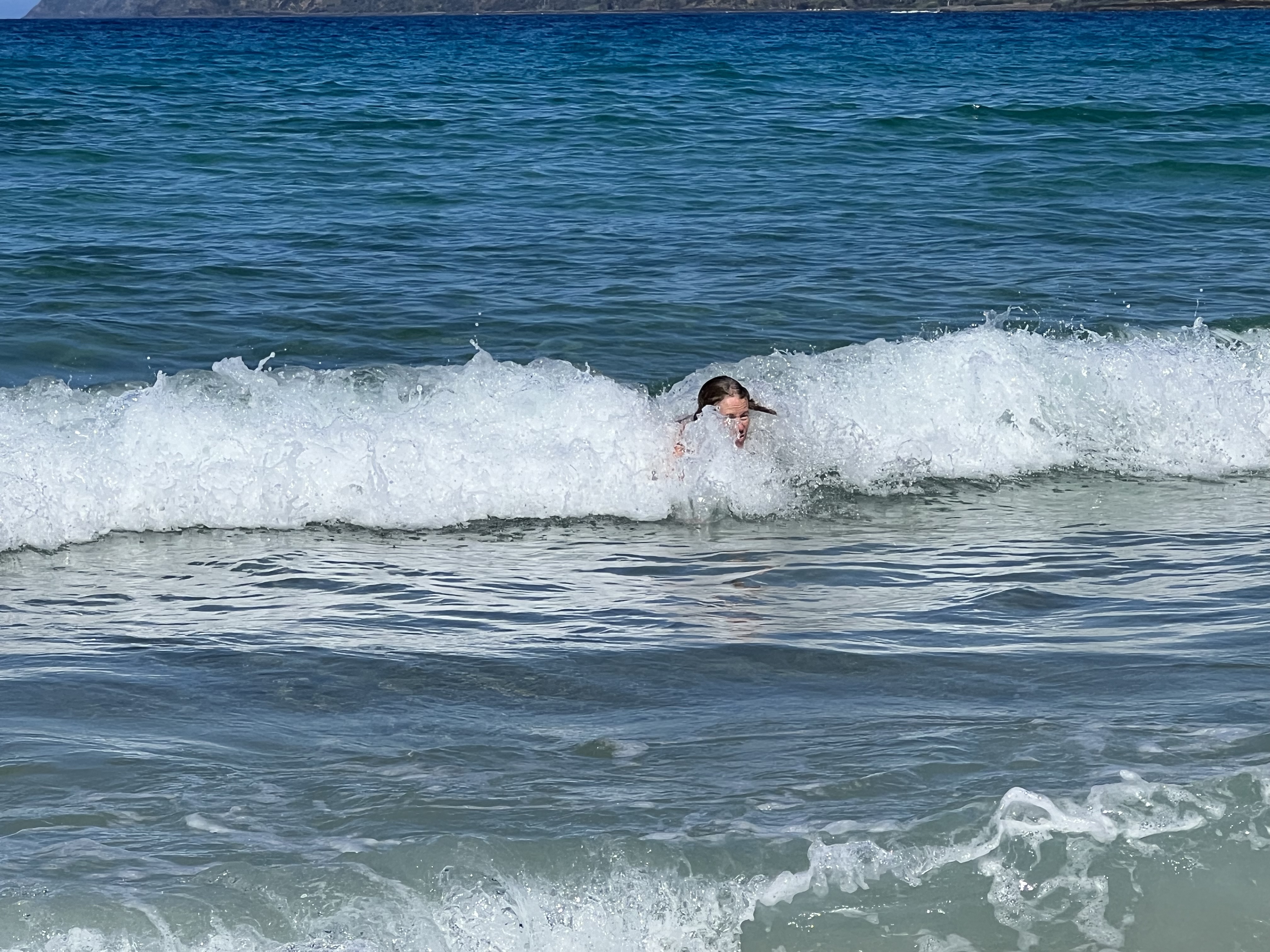
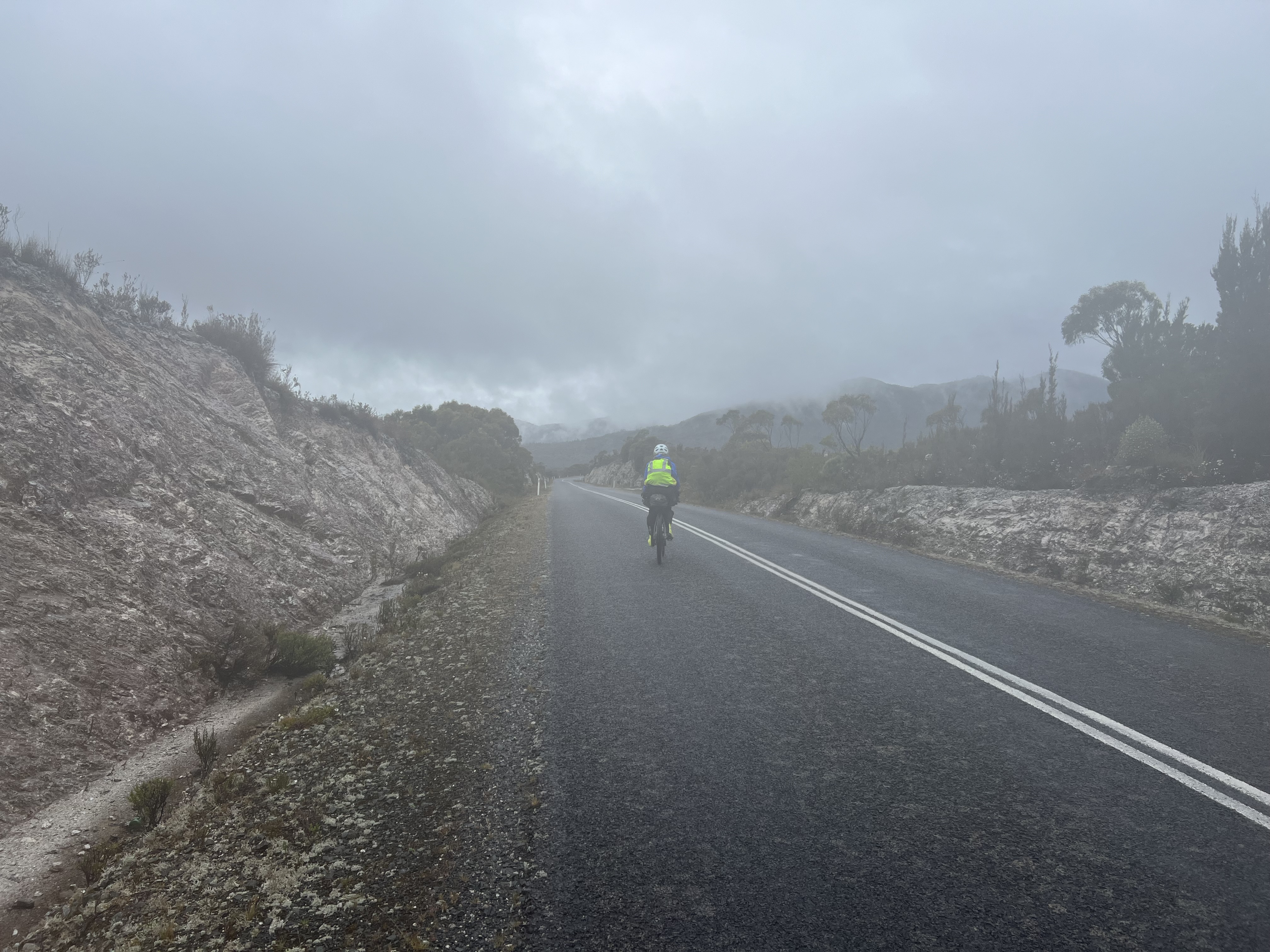
“You’ll get all 4 seasons in 1 day mate.” We heard and experienced this frequently. Twice while cycling over 800m in elevation it was about 3 degrees Celsius, but then other days, especially at sea level, we had swimming days! Well, just one swimming day. Tassies like to boast about it not being too hot in Tassie, “a good place to get away from the mainland heat”. Almost all marketing pictures include some with snow, supposedly an unusual event in most of the state. Decidedly, you don’t come here for hot weather.
Tasmania feels like it is on the verge of a tourism surge, so many people are coming for so many reasons. There aren’t many Bike Packers that we encountered. One or two. But there heaps and heaps of vehicles wheeling around with high end mountain bikes in tow. Mountain Biking is exploding in Tassie. Here’s just one downhill run from a Mountain Bike park for our Fernie mountain bike friends:
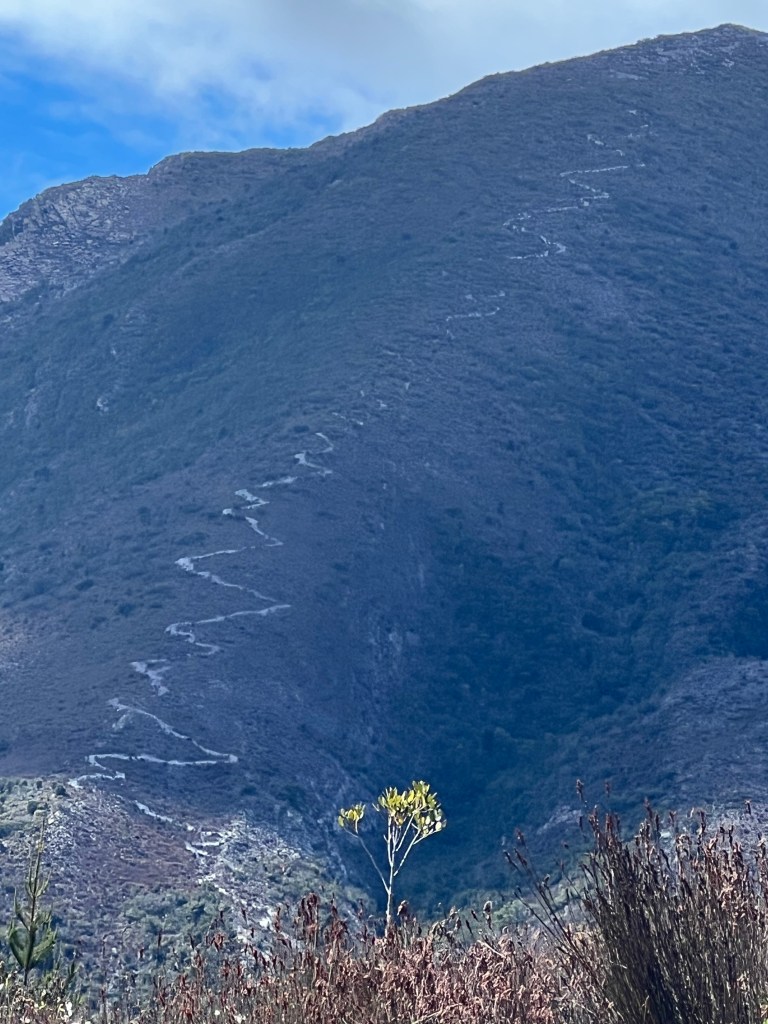
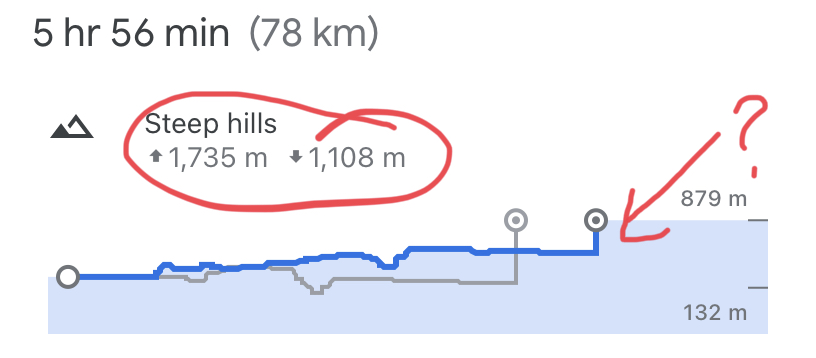
Nav Guy – “Our main nav tool in Tassie is Gaia. We still monitor with Google but Google needs to spend more time in Tassie, as it was wrong 50% of the time.” Non-existent routes, private property, dead ends… But between Gaia and our planned route and generous Tassies, we mostly avoided unnecessary penalizing kilometers and hills.

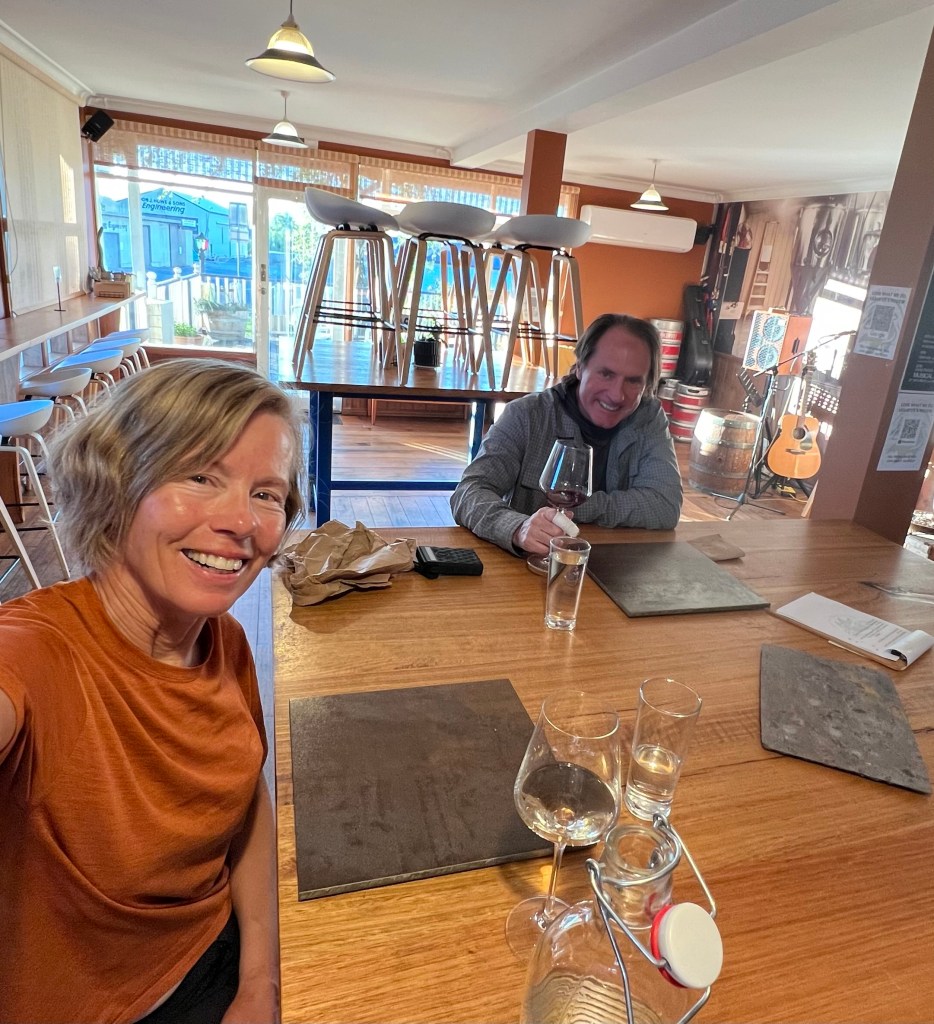
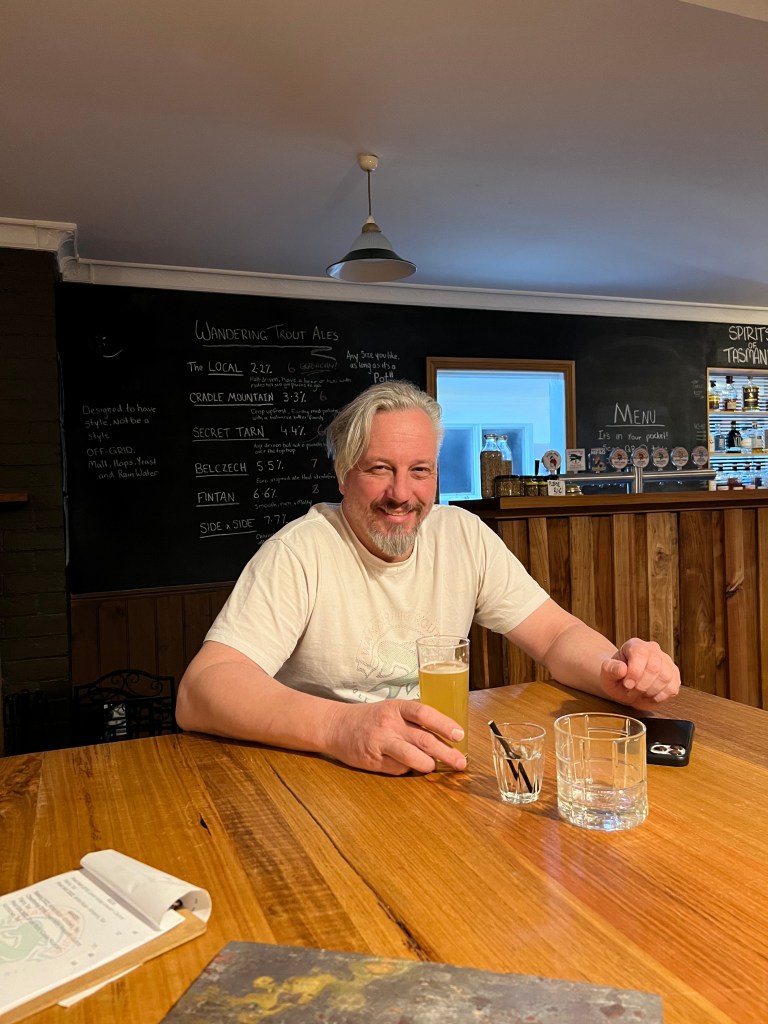
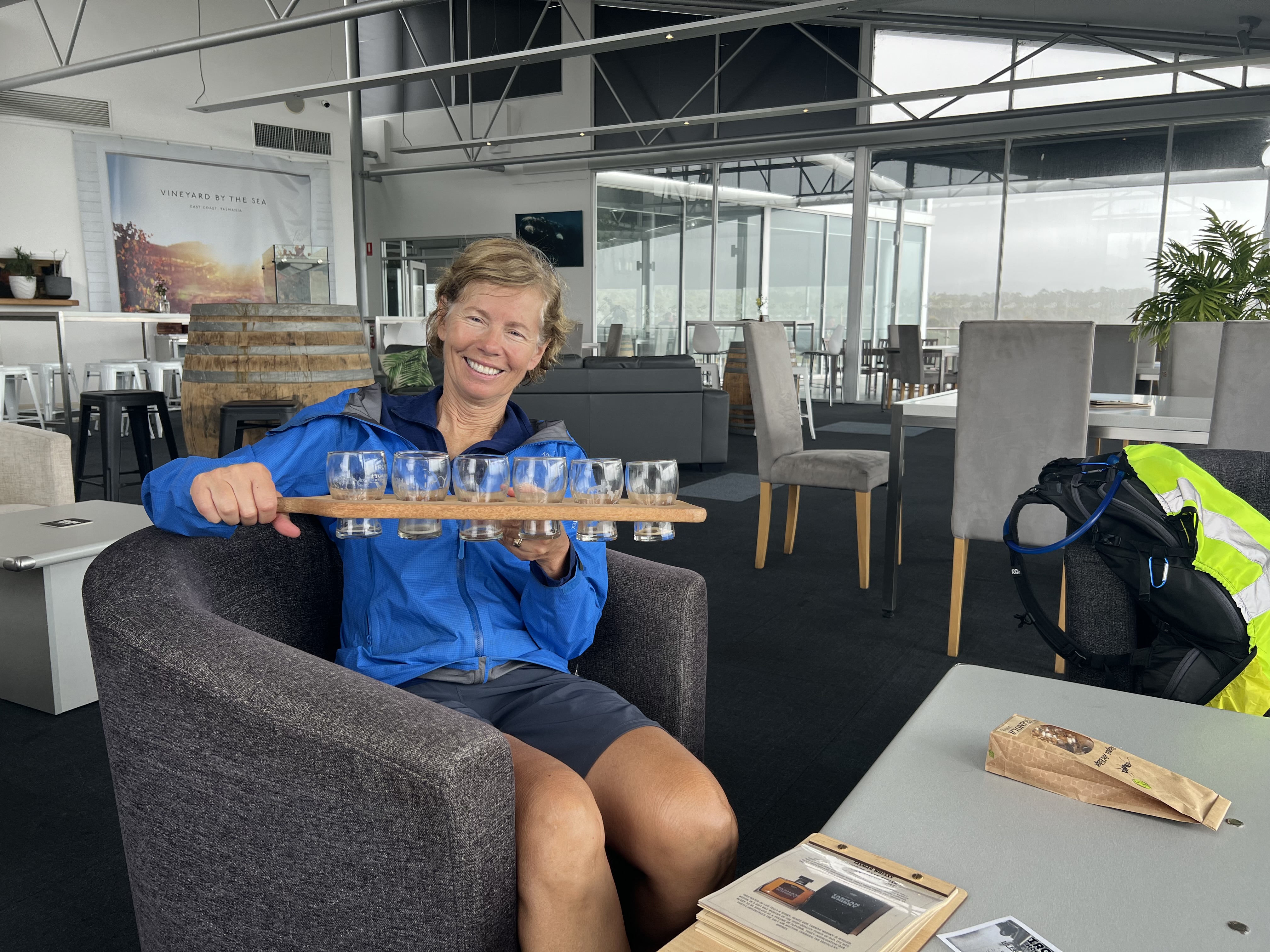
Tassie wine and beer – outstanding! Any white wine we bought was outstanding! But like Red Rose tea, it seems it is “Only in Tasmania” – definitely a pity. There were countless vineyards and craft breweries throughout the island. None of them large and happy to stay that way. Tassies drink all their product. Doesn’t quite seem fair they don’t share.
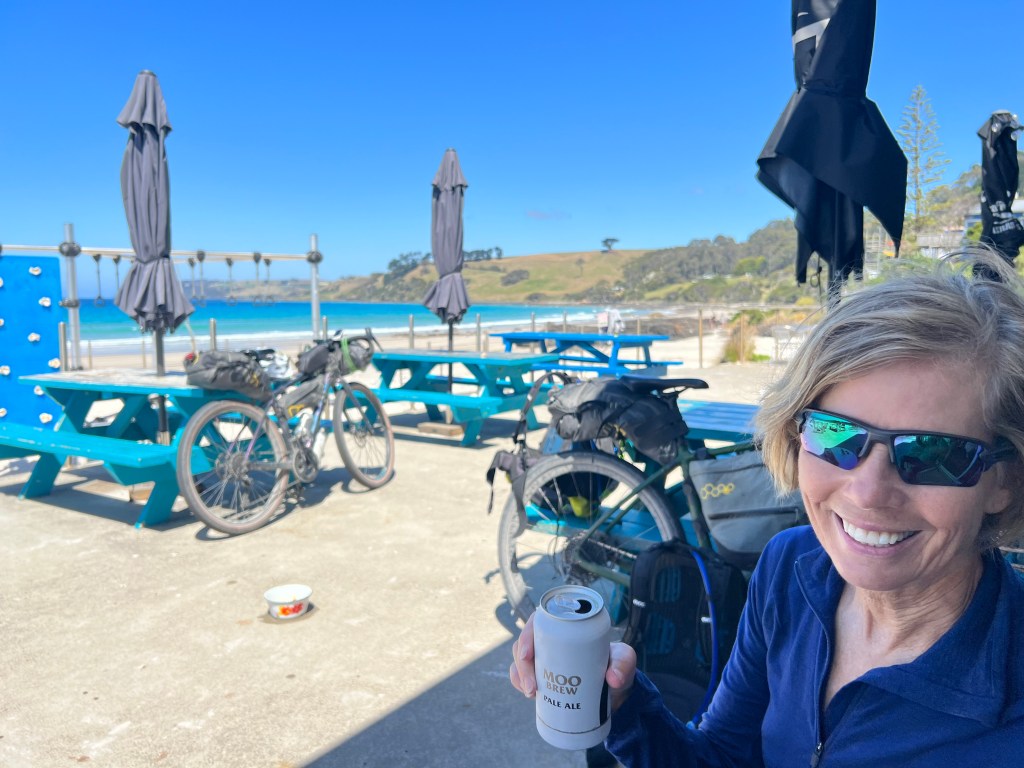
My favorite Tassie Craft Beer: Moo Brew.
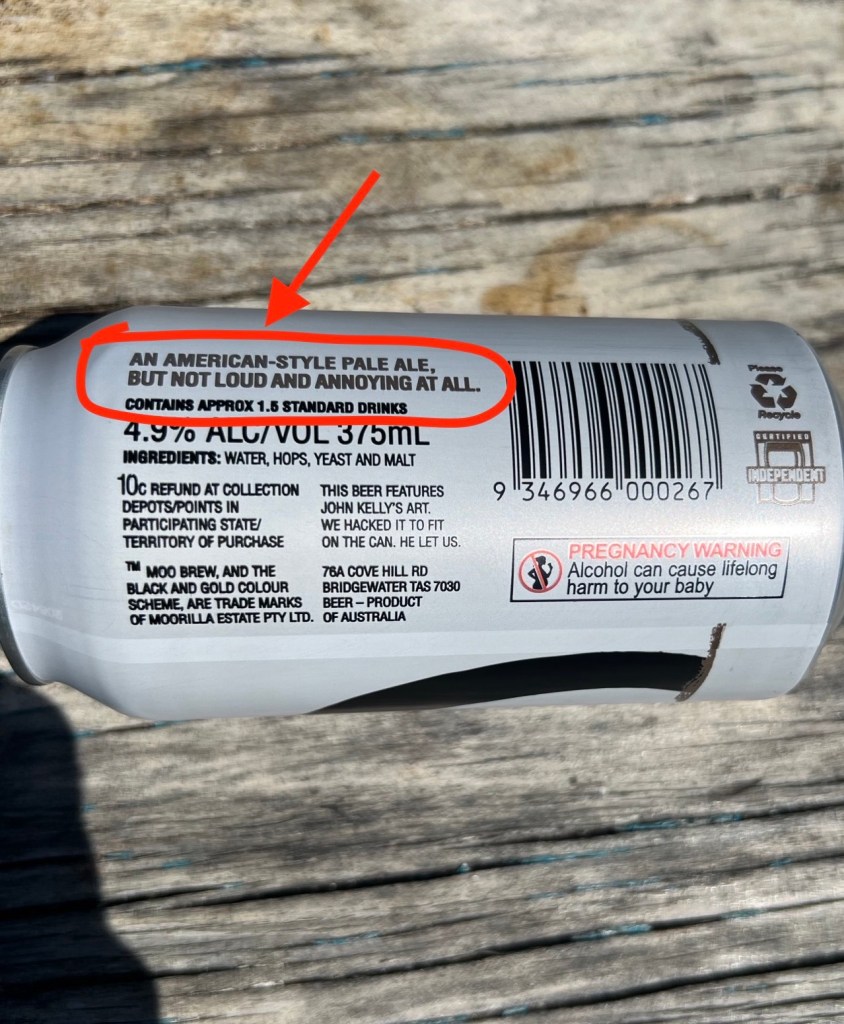
Creative Aussie marketing!

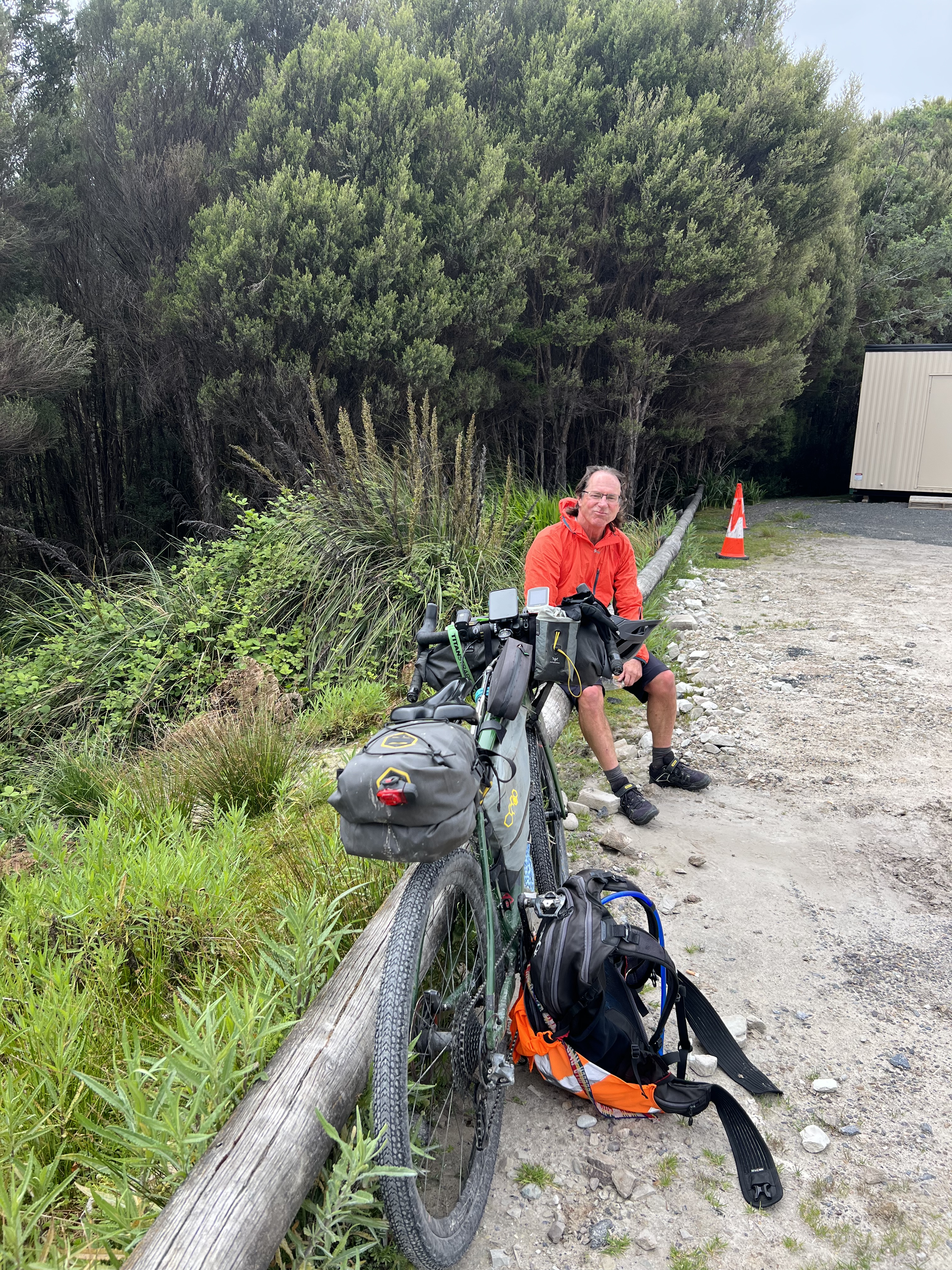
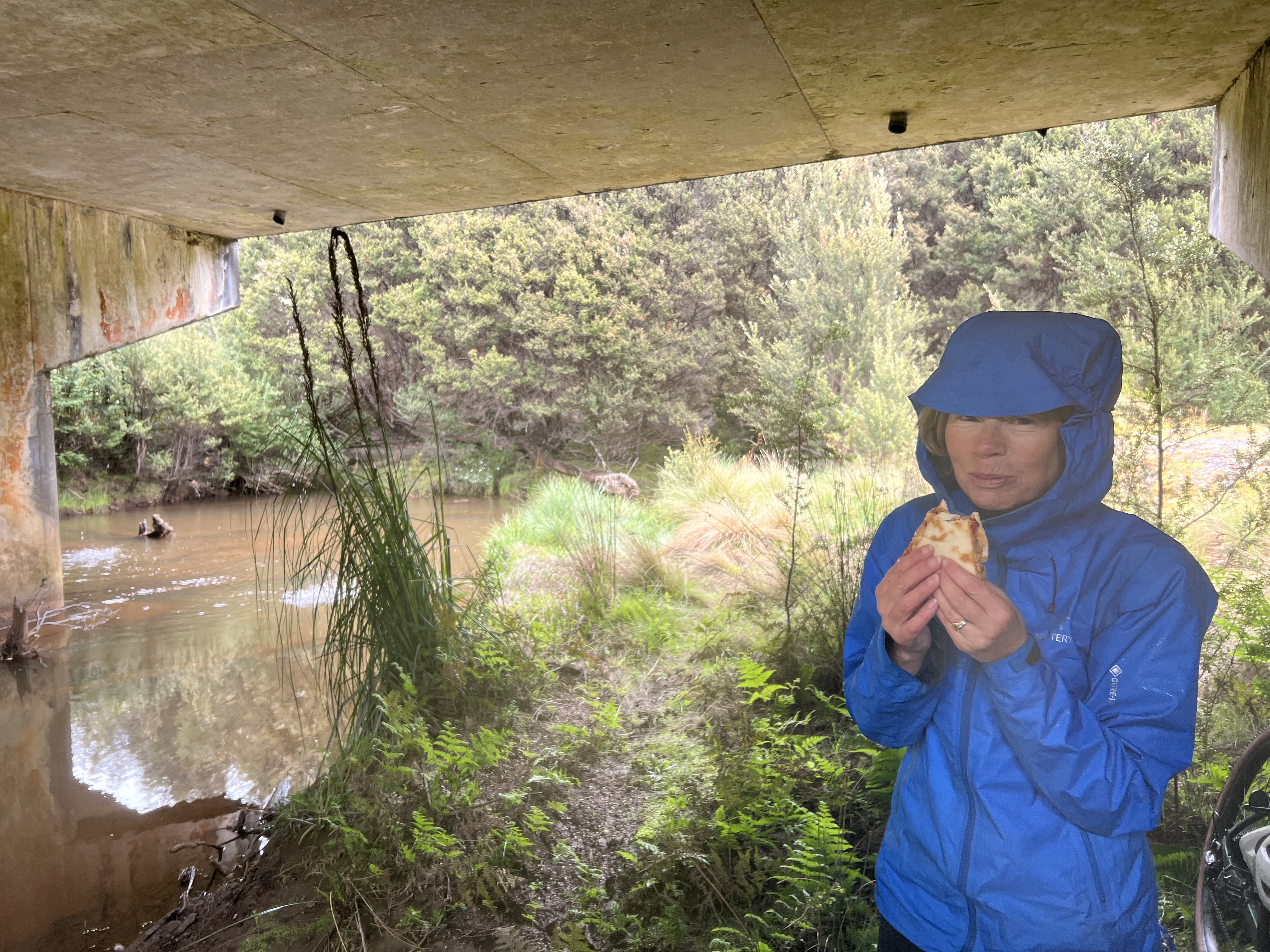
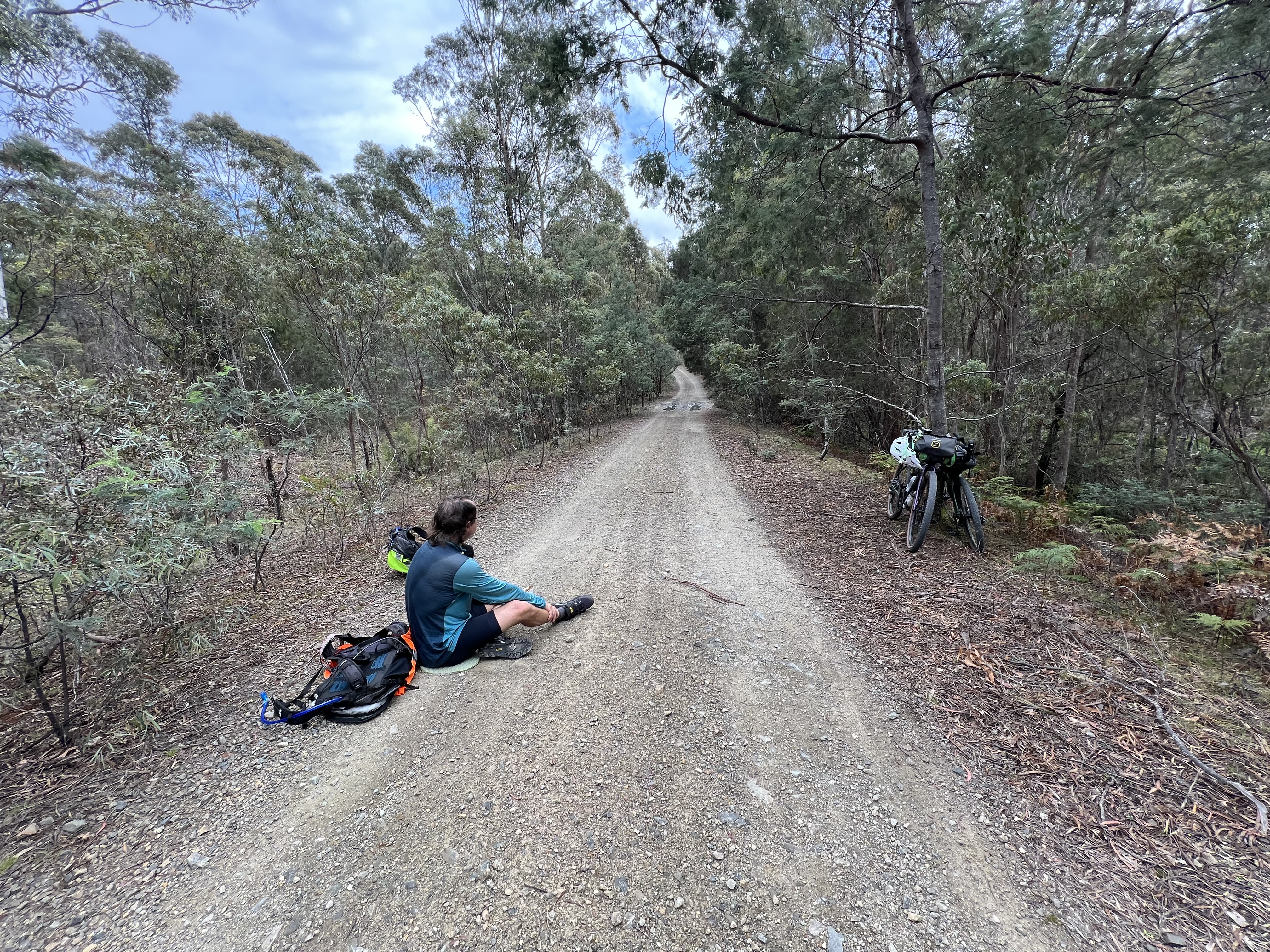
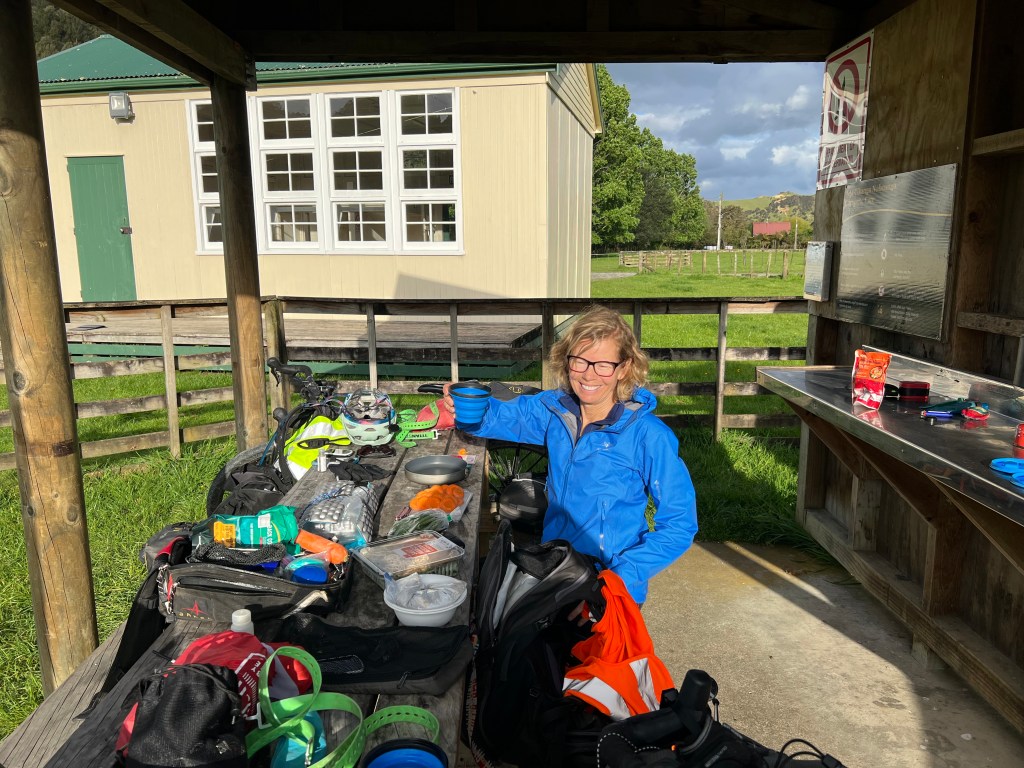
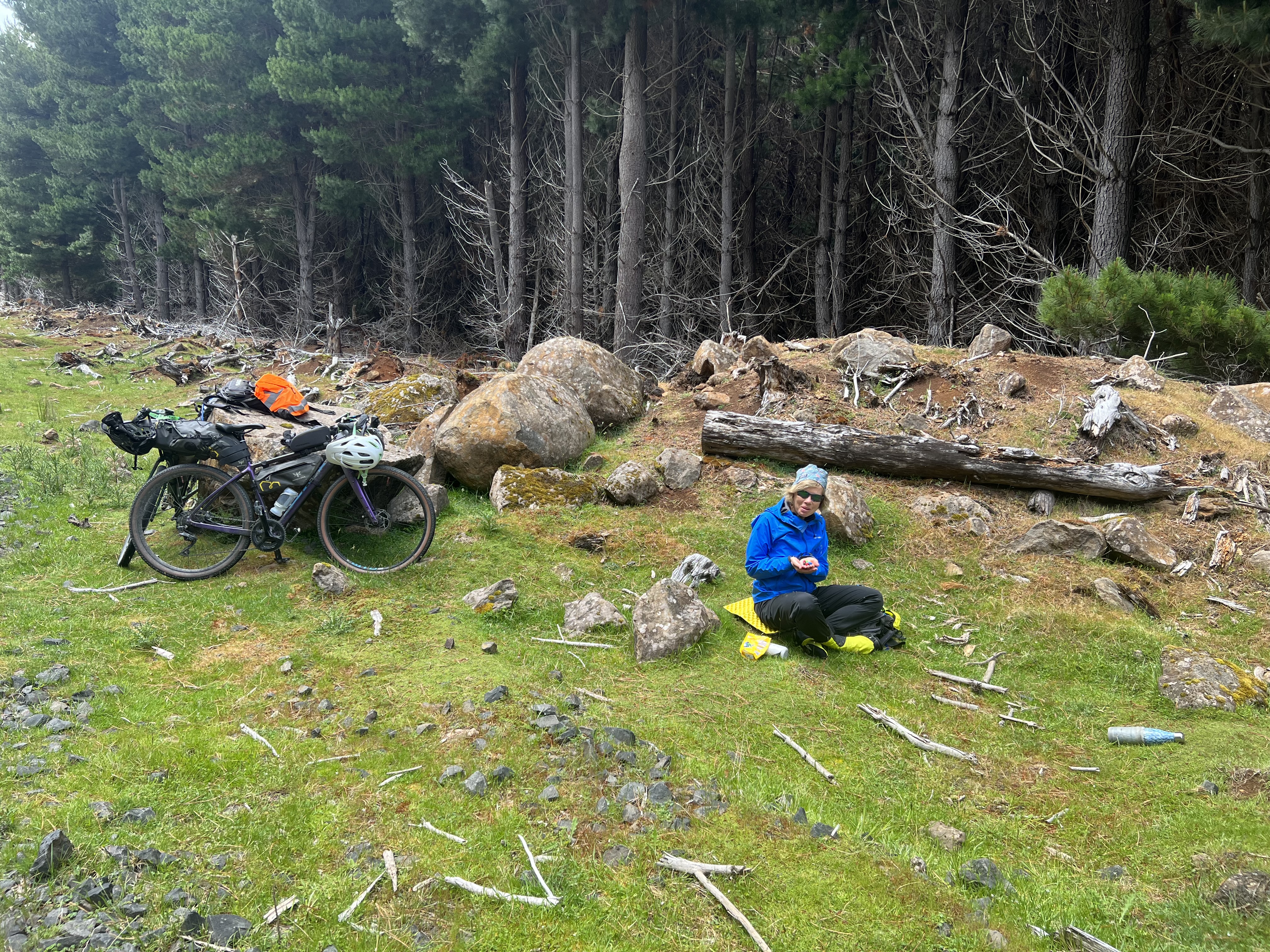
Picnic Tables and rest stops? For the most part – none. Typical Tassie rest/lunch stops are like above – close to roads or in very short grass…to avoid these:
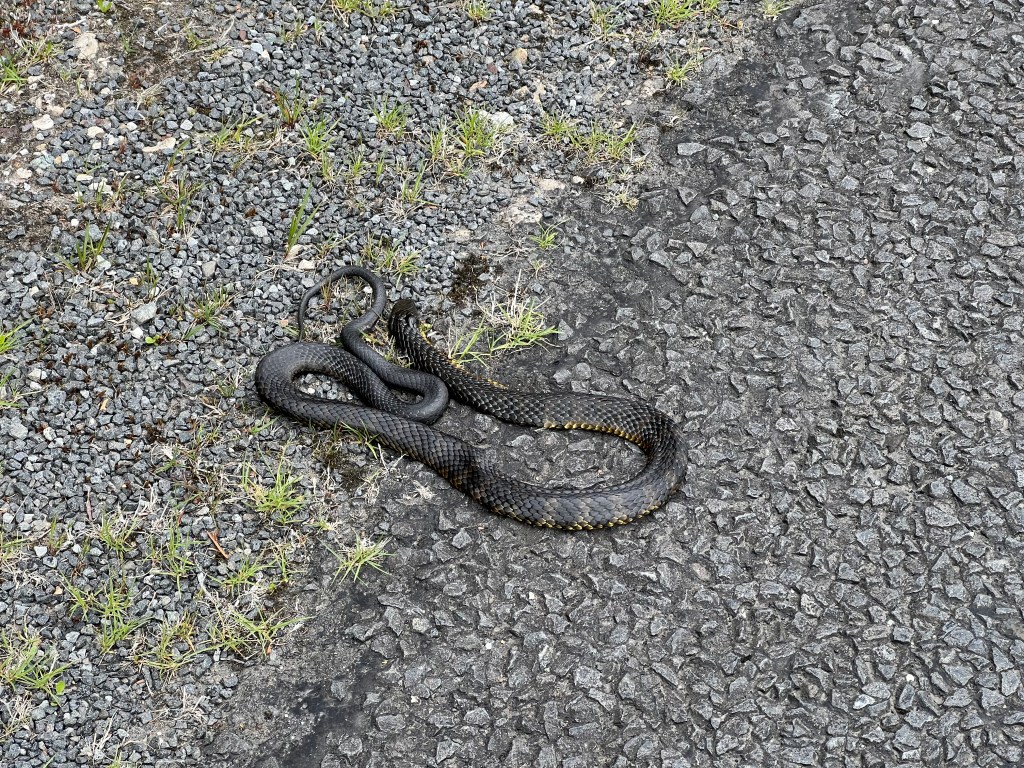
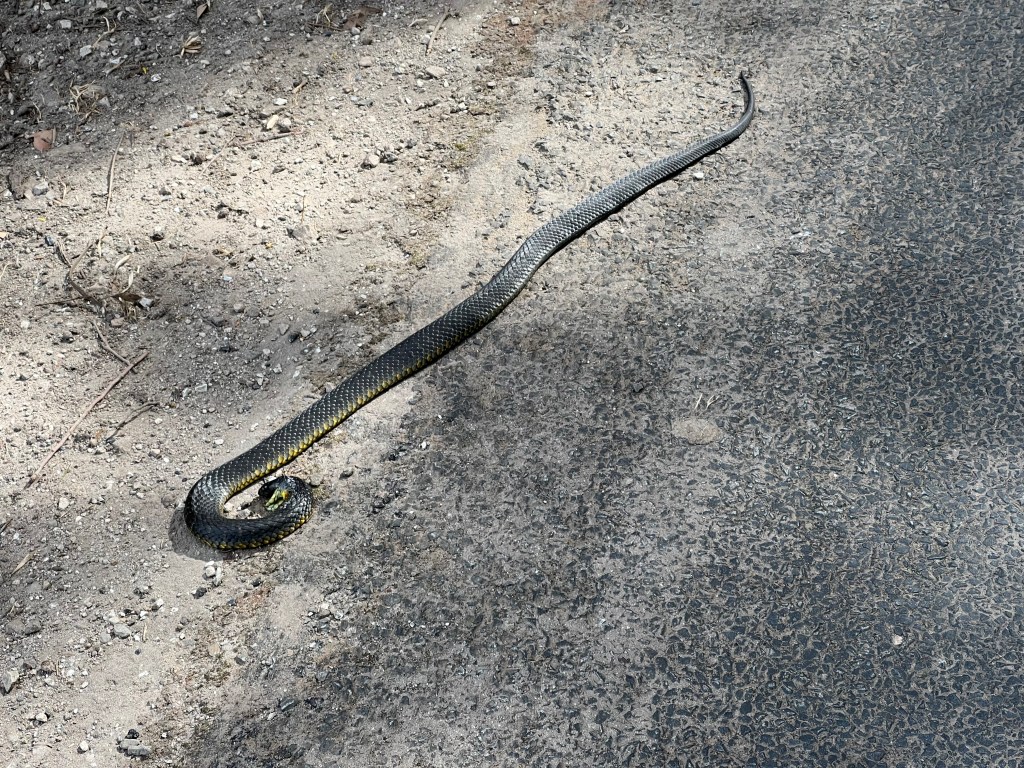
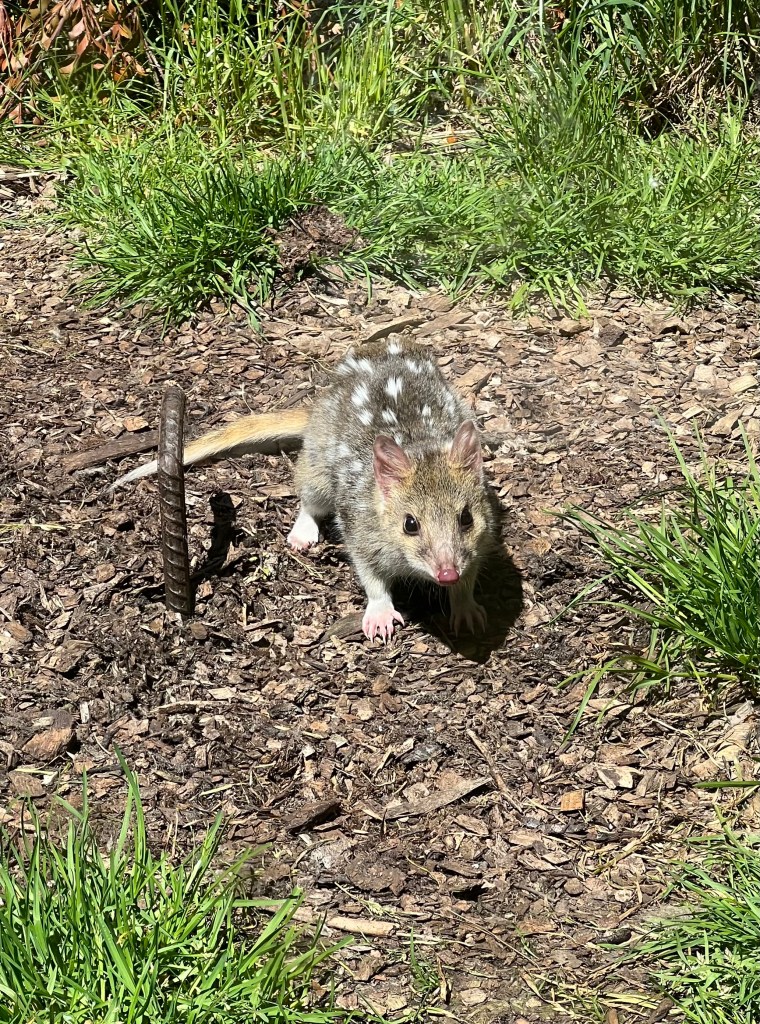
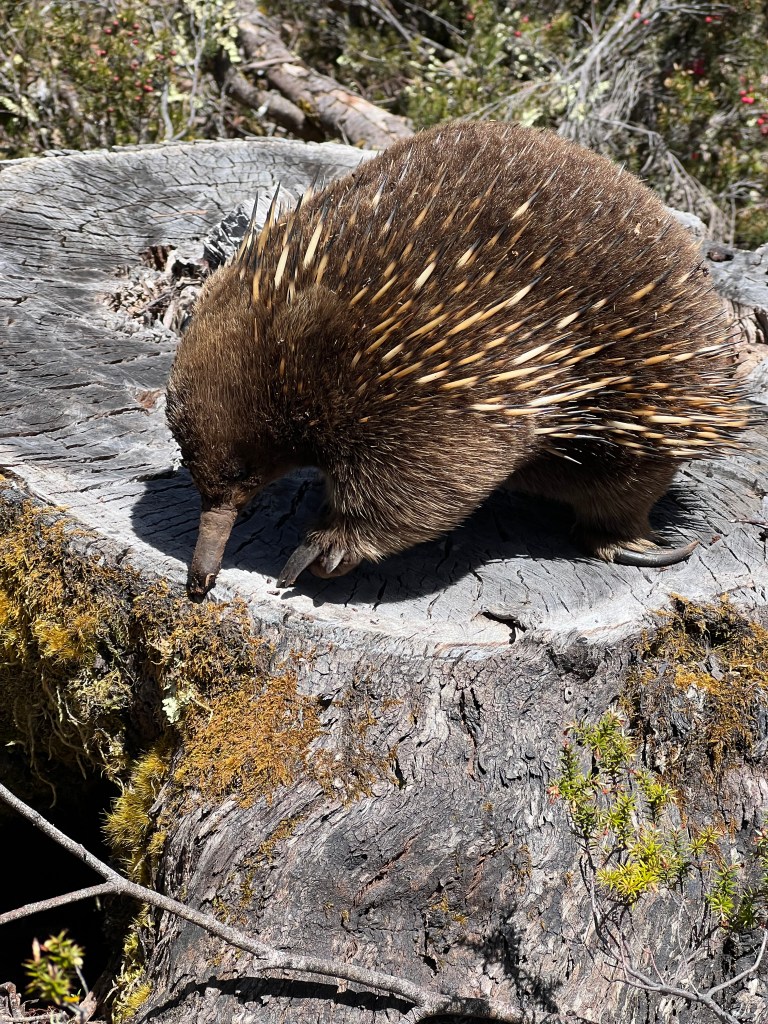
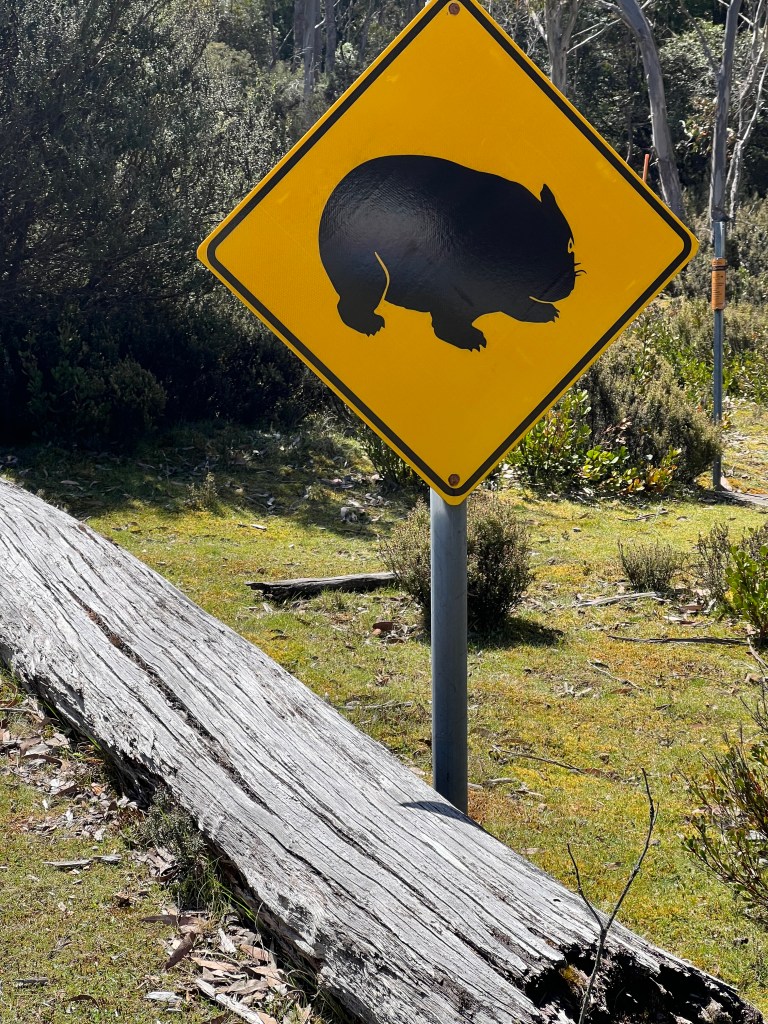
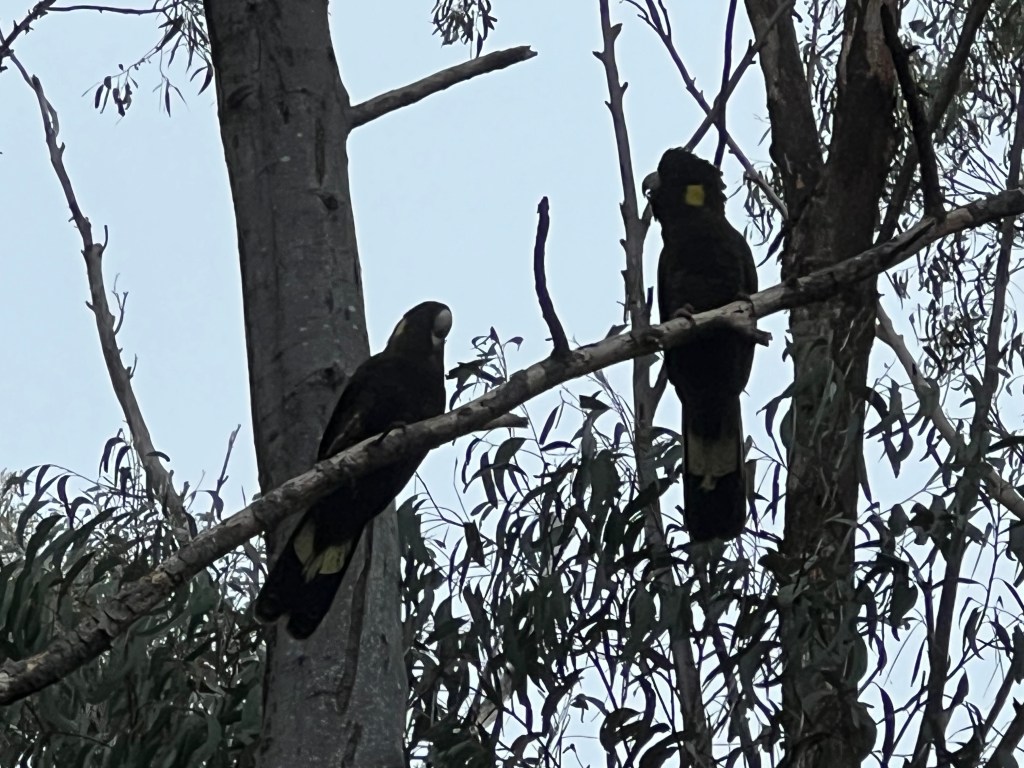
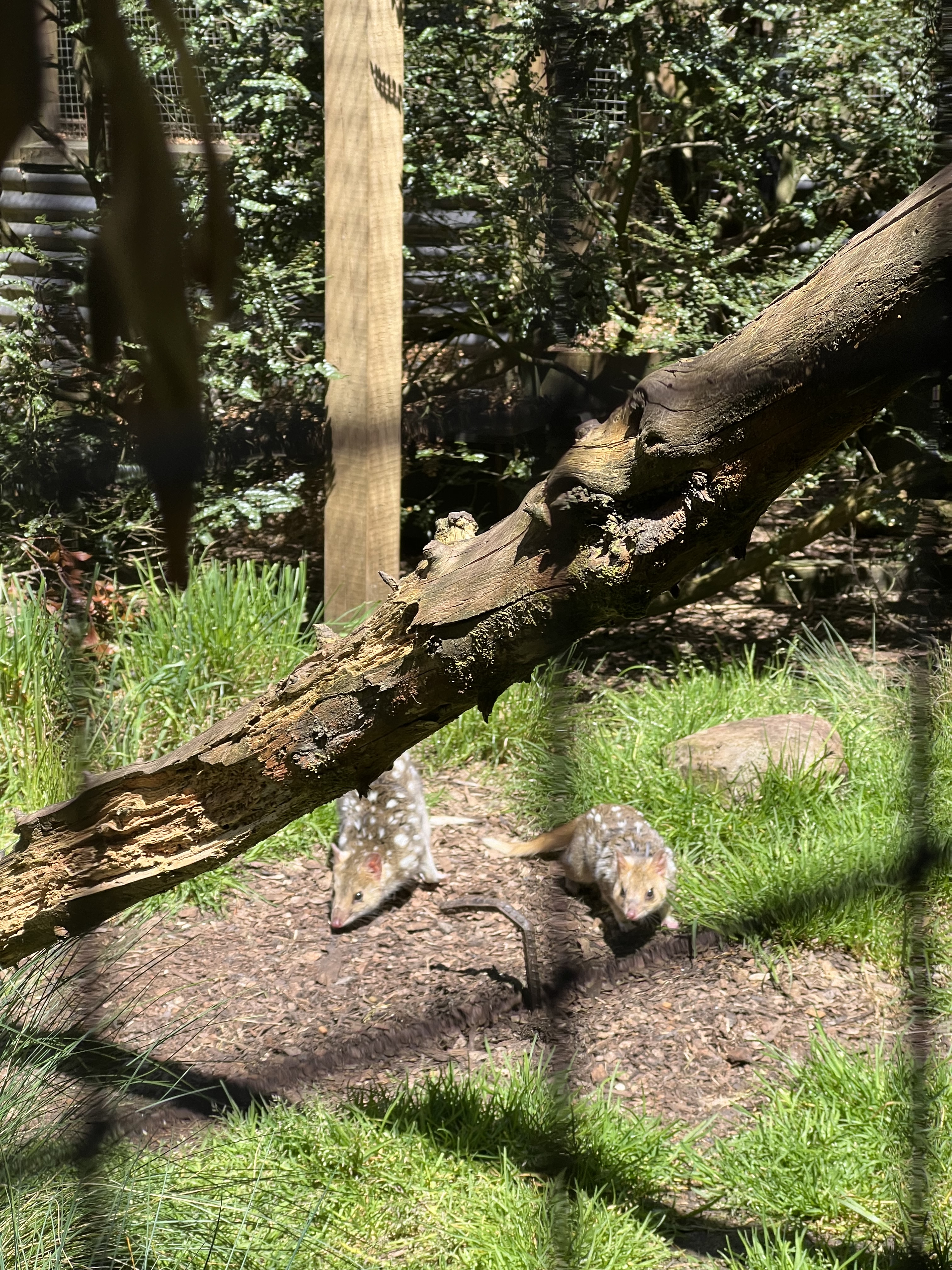
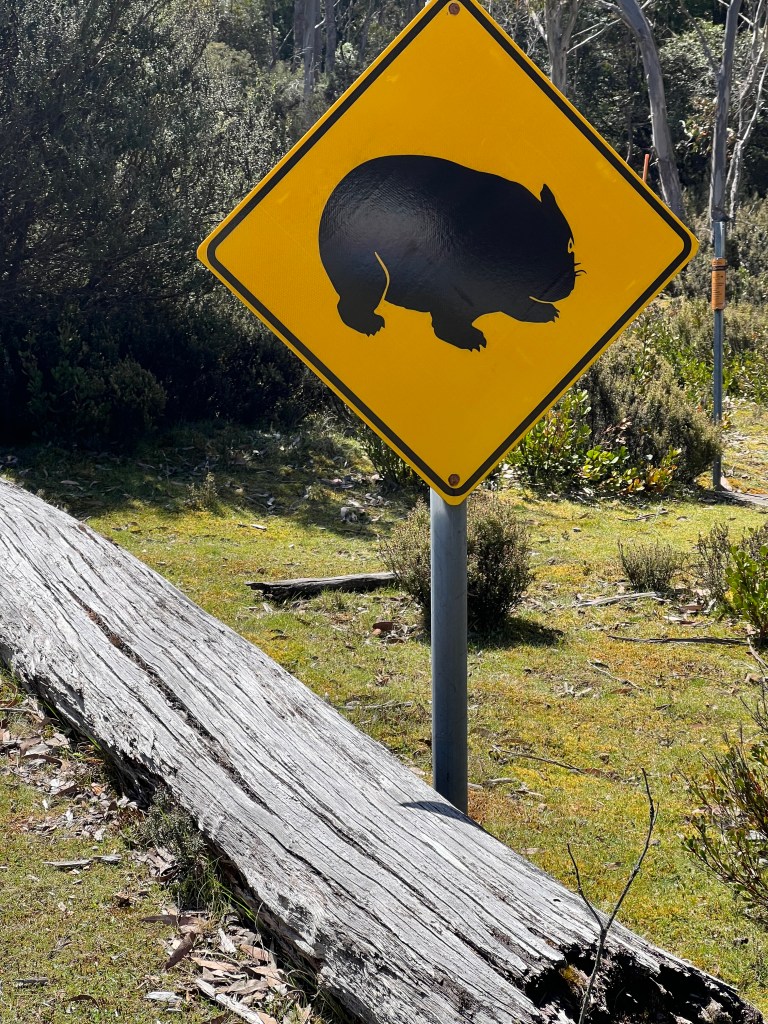
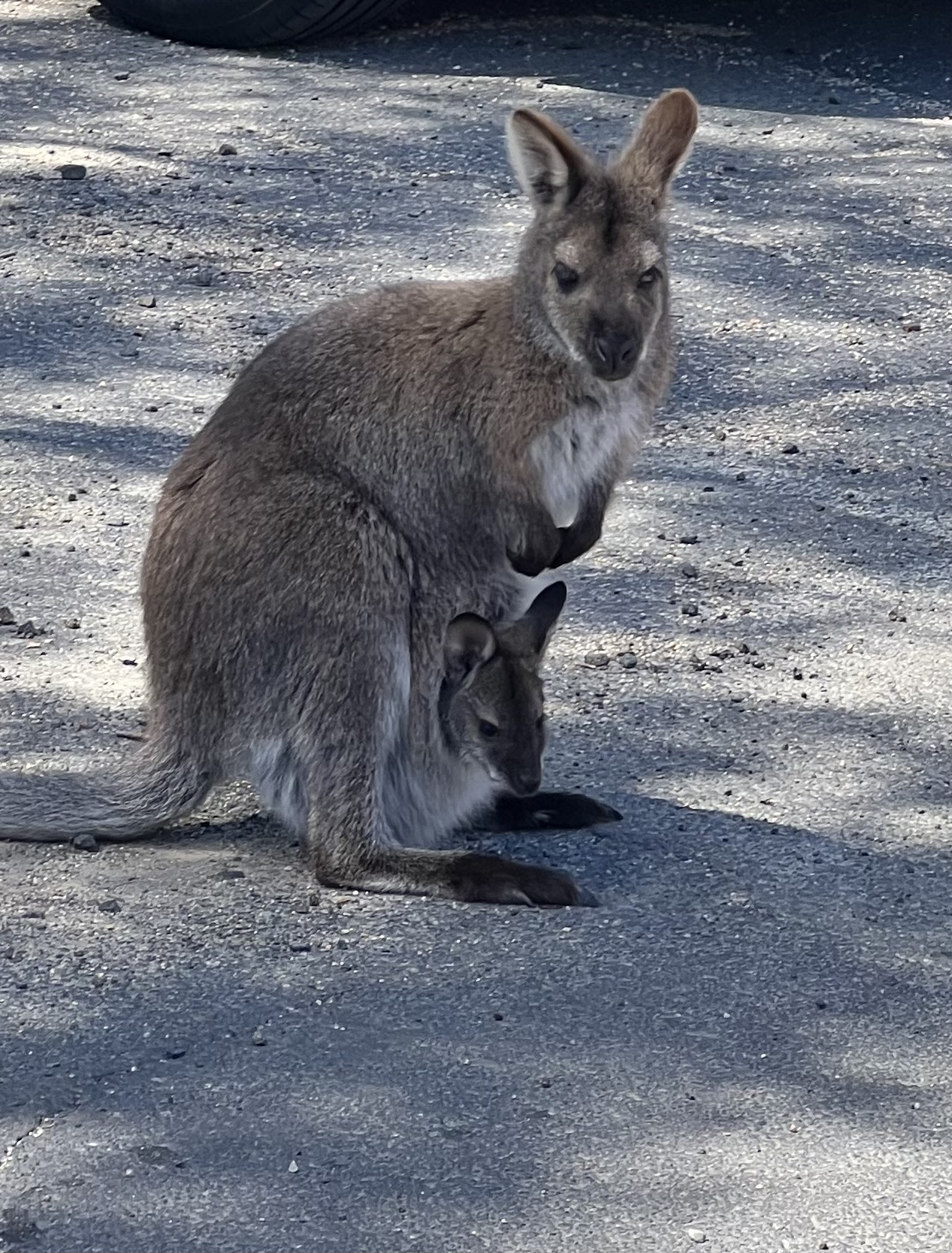
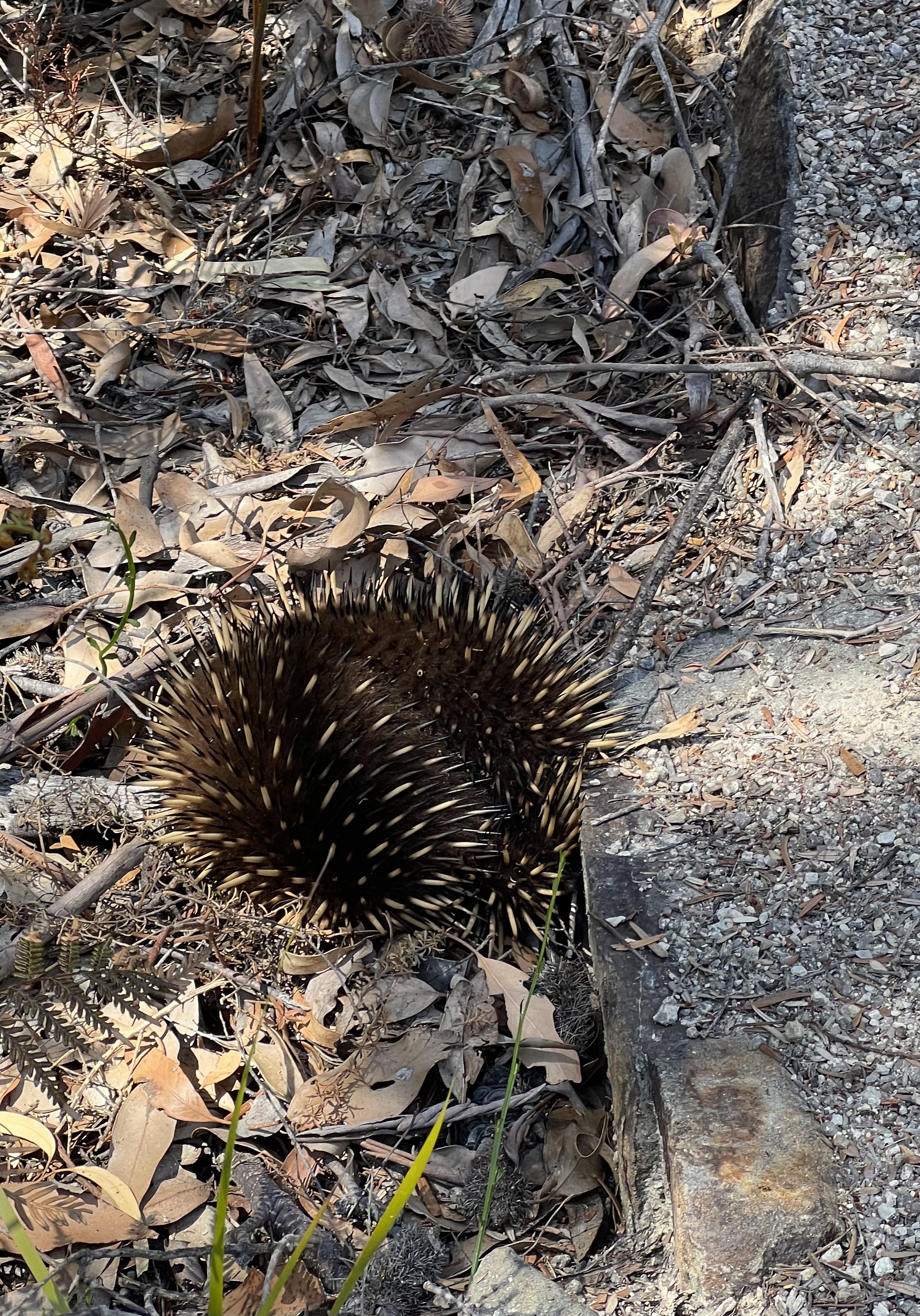
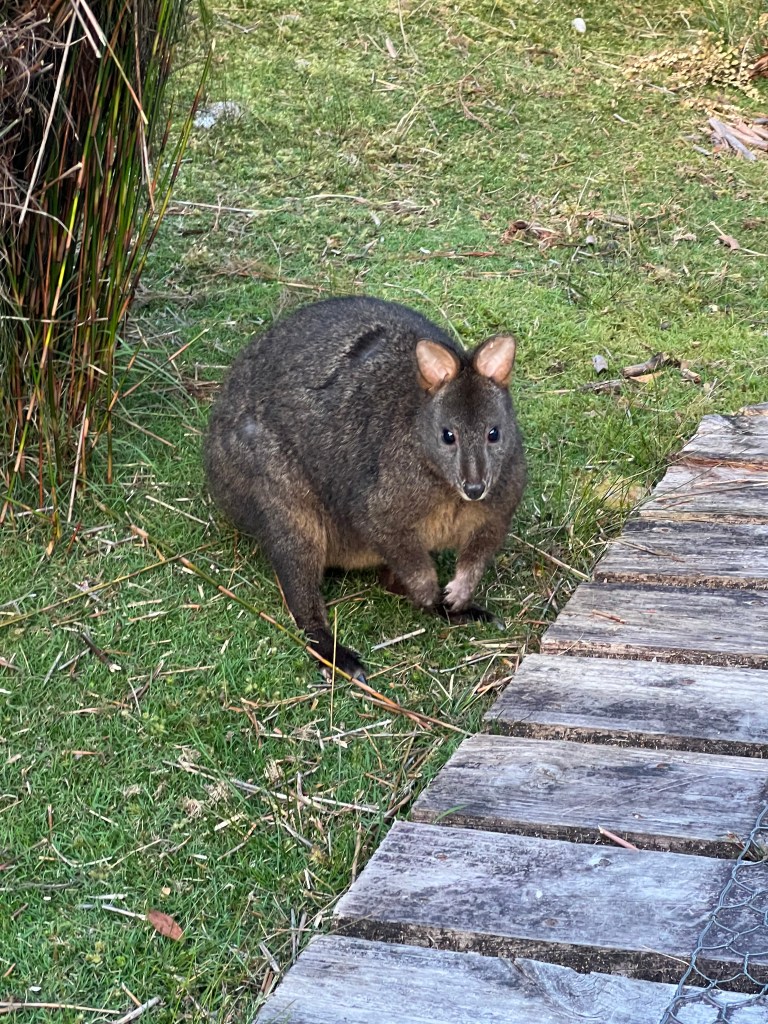
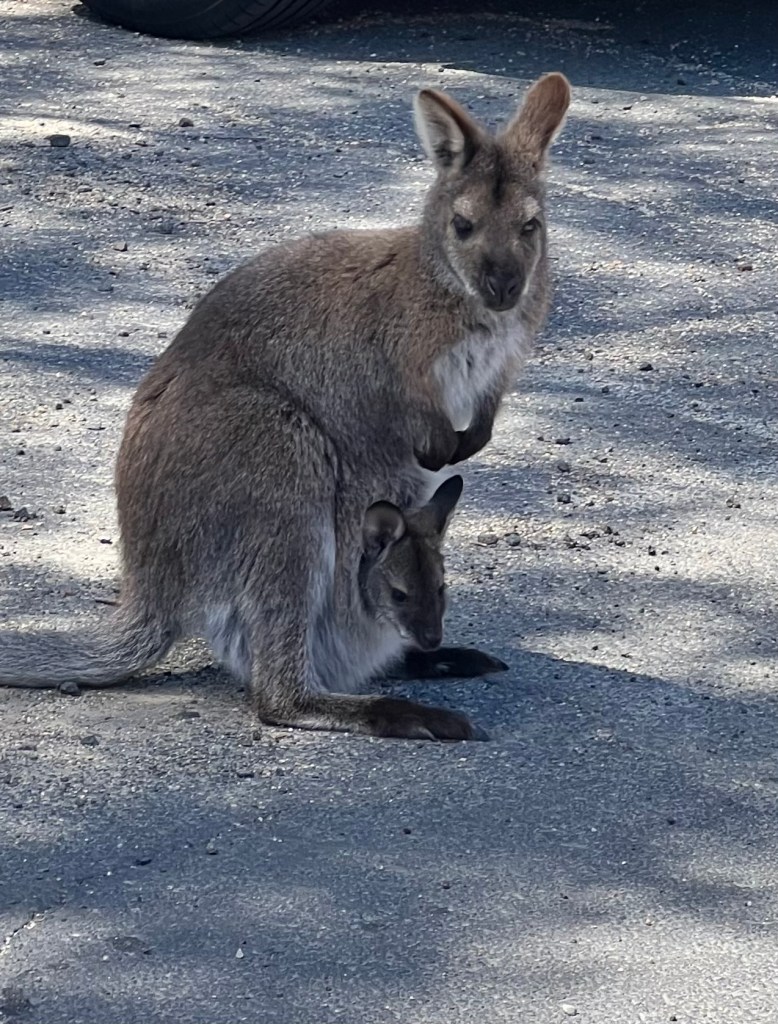
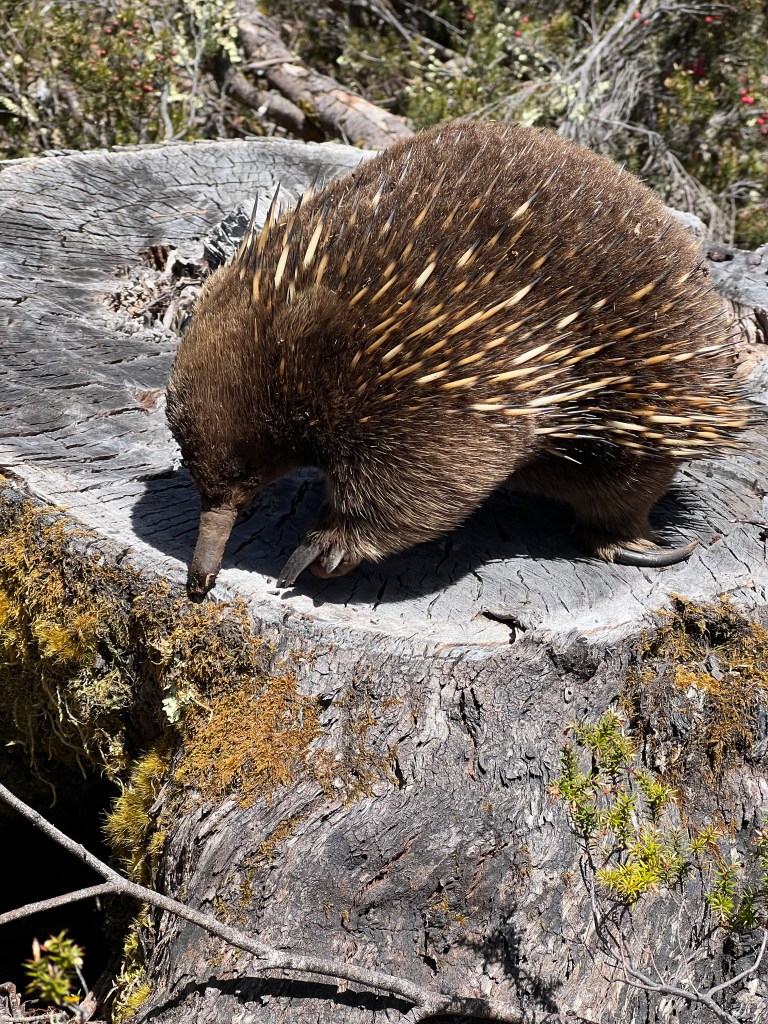
Australian animals – we’ll never get used to snakes. We saw many on the sides of roads, apparently warming up. Wallabies are as plentiful as deer are in Canada. Some were large enough they may have been kangaroos. Pademelons are petite members of the kangaroo and wallaby family. Devils and Quolls were only seen in the animal preserve, but that counts as they are endangered. Echidnas win the photogenic prize, whereas wombats, though adorable, were too quick for my camera. Platypus and penguins, although supposedly common in the wild – were elusive to us.
Reflections

And so we come to an end of another bike packing adventure. We have already been asked which ride is our favourite – Canada, NZ or Tassie. We loved them all. Very different rides in many respects. Canada was always something we wanted to do and we had friends and family to visit along the way, a bonus. We also treasure our JoyRide bike campaign with Freedom Concepts. We loved New Zealand, which we have described as “Civilized Remoteness”. We plagiarized that from our Kiwi friend Stephen. New Zealand offers a tip to tip bike route that is nationally sponsored and though it has a few traffic sections that need improvement, it is heaps and bounds ahead of any national route system we’ve seen or know about. Canada is no where near the stage New Zealand is at for a cross Canada bike route. But, as we did, you can MacGyver your way across much of Canada on back roads and routes. Tasmania does have a shorter cross island route akin to our Continental Divide Ride (tenting *gasp*). But for a circumnavigation adventure bike packing in Tassie, you have to create your own route, which we did with the assistance of a local bike tour organizer in Tassie.
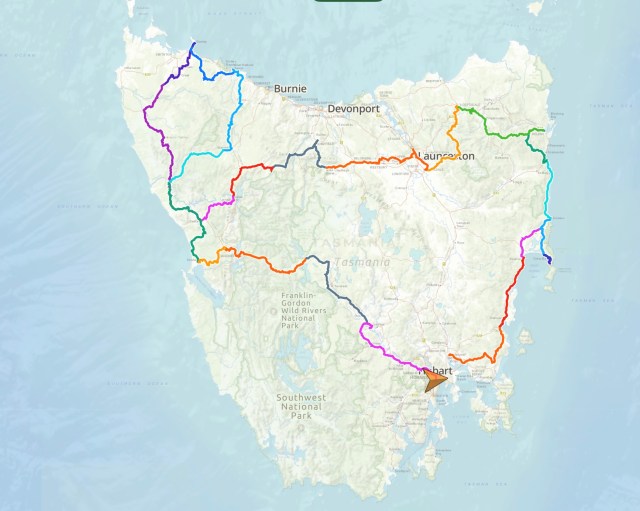
Tasmania

1540 kms

19,600 vertical meters – 12.7 vm per km

23 riding days

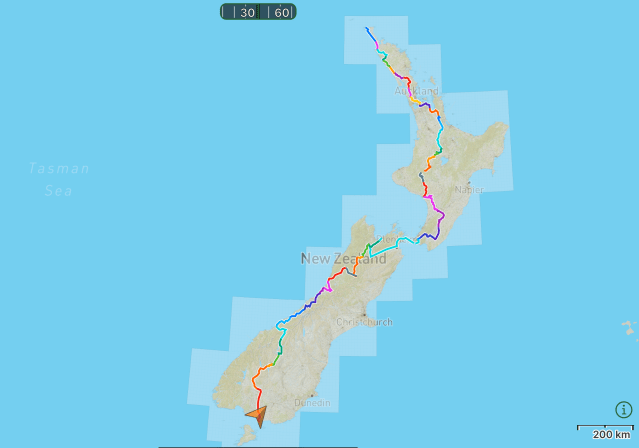
New Zealand

3000 kms

25,700 vertical meters – 8.6 vm per km

45 riding days
Canada

9,000 kms

49,000 vertical meters – 5.6 vm per km (BC 11 vm per km)

100 riding days

Tassie is a great place to ride. It was certainly the most driver friendly of the 3 countries. There were few busy traffic roads and they could mostly be avoided. Those few times when we had to be on a busy road it was for a short time. Tassie has a no tolerance speed limit – “Over is Over” for speeding tickets. In our observation, this has the effect of having traffic moving about 10 kph below the speed limit. This is not the case in Canada or NZ, where traffic typically moves at 10 or even 20 kph above the speed limit. This makes a huge difference on a bike. In Canada and New Zealand we were buzzed a number of times. But in Tassie, drivers are pretty chill for the most part. Even courteous and friendly. In Tassie, we had several drivers pull over to offer us a lift up a steep hill, water on a (rare) hot day, and on one miserably rainy day to take us anywhere we wanted. That never happened in Canada or NZ. But, it must be said, that unlike the description we have adopted for New Zealand, being “civilized remoteness”, we would not go that far for Tassie. Remote, yes. Civilized? Not so much; especially on the west coast and on the very remote Western Explorers Road. Here’s the thing – no where in either Canada or New Zealand did we get the impression that if for some reason we had to activate our emergency InReach SOS that it would go unheard. In Tassie we’re not so sure that would be the case. It is not that Tassies would not move heaven and earth to rescue us. They most certainly would. But they would first have to know that an emergency is at hand. In many parts of Tassie, that level of infrastructure just doesn’t appear to be in place quite yet. For seafarers yes, but for land dwellers, not so much. In fact, we were surprised at the lack of any wifi or cellular coverage in much of Tassie. There were spots like that in Canada and NZ as well. But in Tassie, there is no coverage in many small towns and large geographical spans. We didn’t actually mind this but it is a bit unnerving to take on remote bike packing routes unless you are prepared for an overnight or an emergency. For Canada and NZ we were. In Tassie we were not. (Apparently we need to have the tent talk again.)
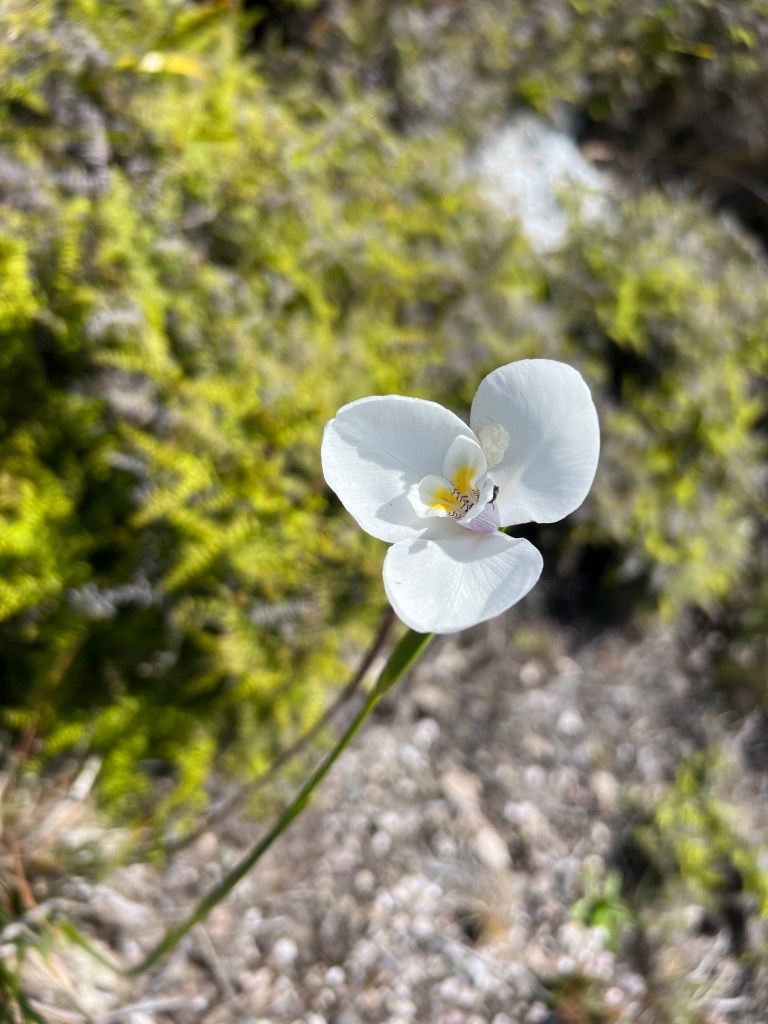
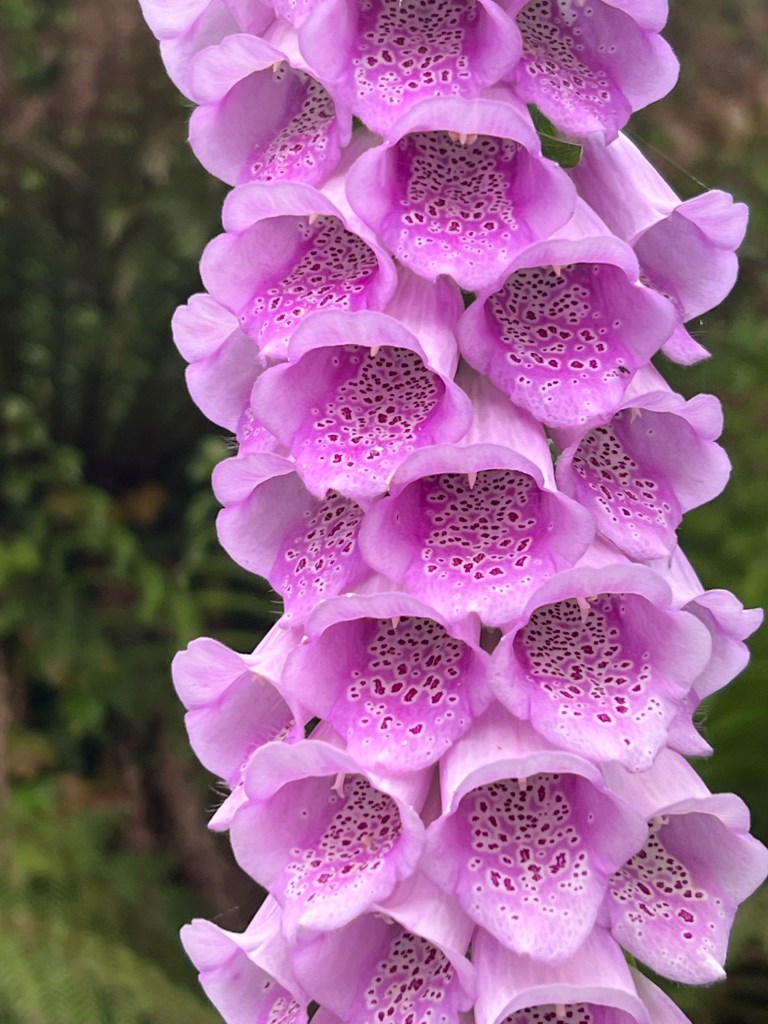
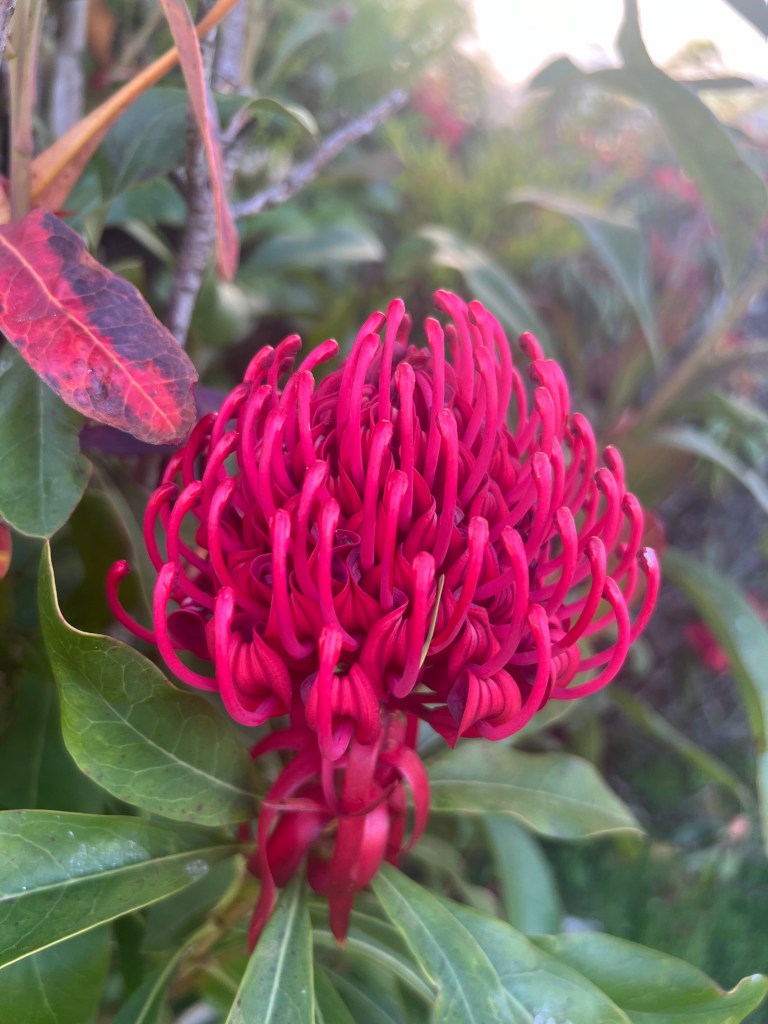
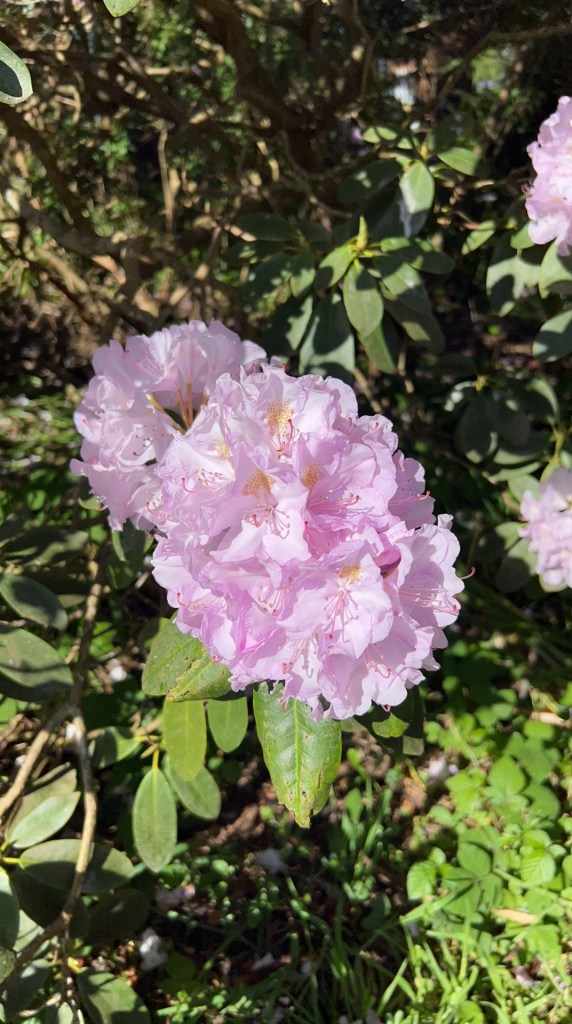
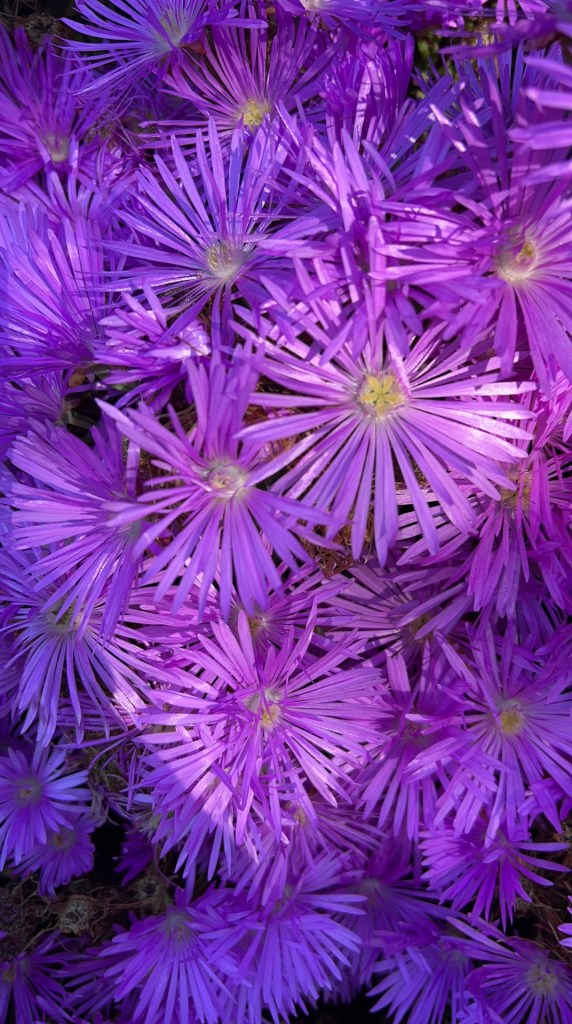
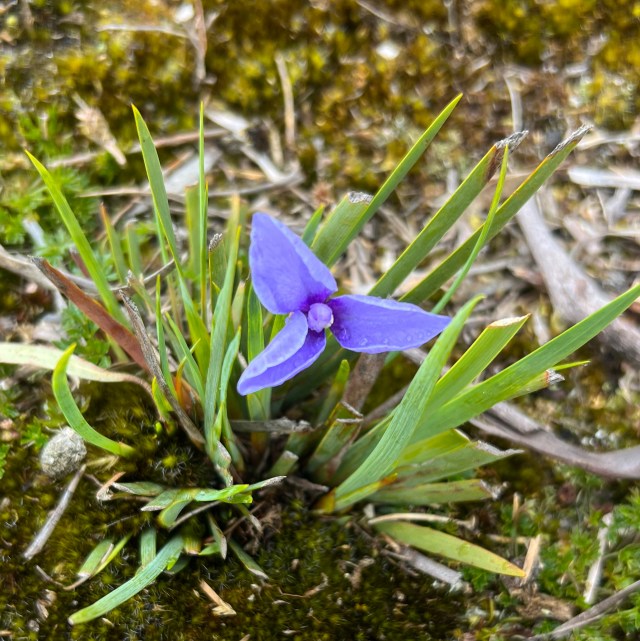
Wonderful Tassie spring wildflowers were everywhere

We hope the inevitable growth in tourism on this island state doesn’t change its current culture and laid back vibe. A wonderful place with wonderful people, perhaps not yet jaded with the effects of growth or tourism. We give it a decade to catch up. If it wants to.

It always seems anti-climatic at the end of a ride. This was our “shortest” long ride. It was originally intended to be about 2,000 km but ended up short of that through two routing changes we made. For us, there is no better way to explore a country than on a bike. There is simply nothing finer than Zenning out on a back country trail, double track, single track on a bike for days and weeks on end. Time just stands still. Except of course, if it’s raining, or snowing, or windy, or a busy road. But the better touring days always trump the not better touring days; if not in number than at least in memory. Thanks for riding along.
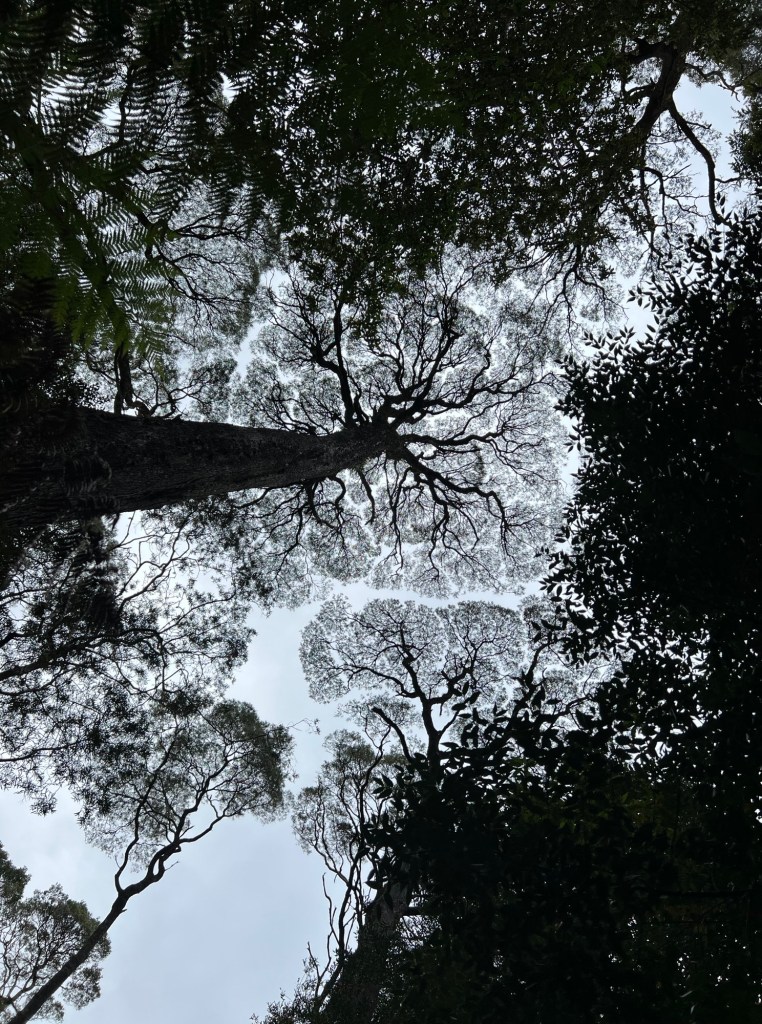
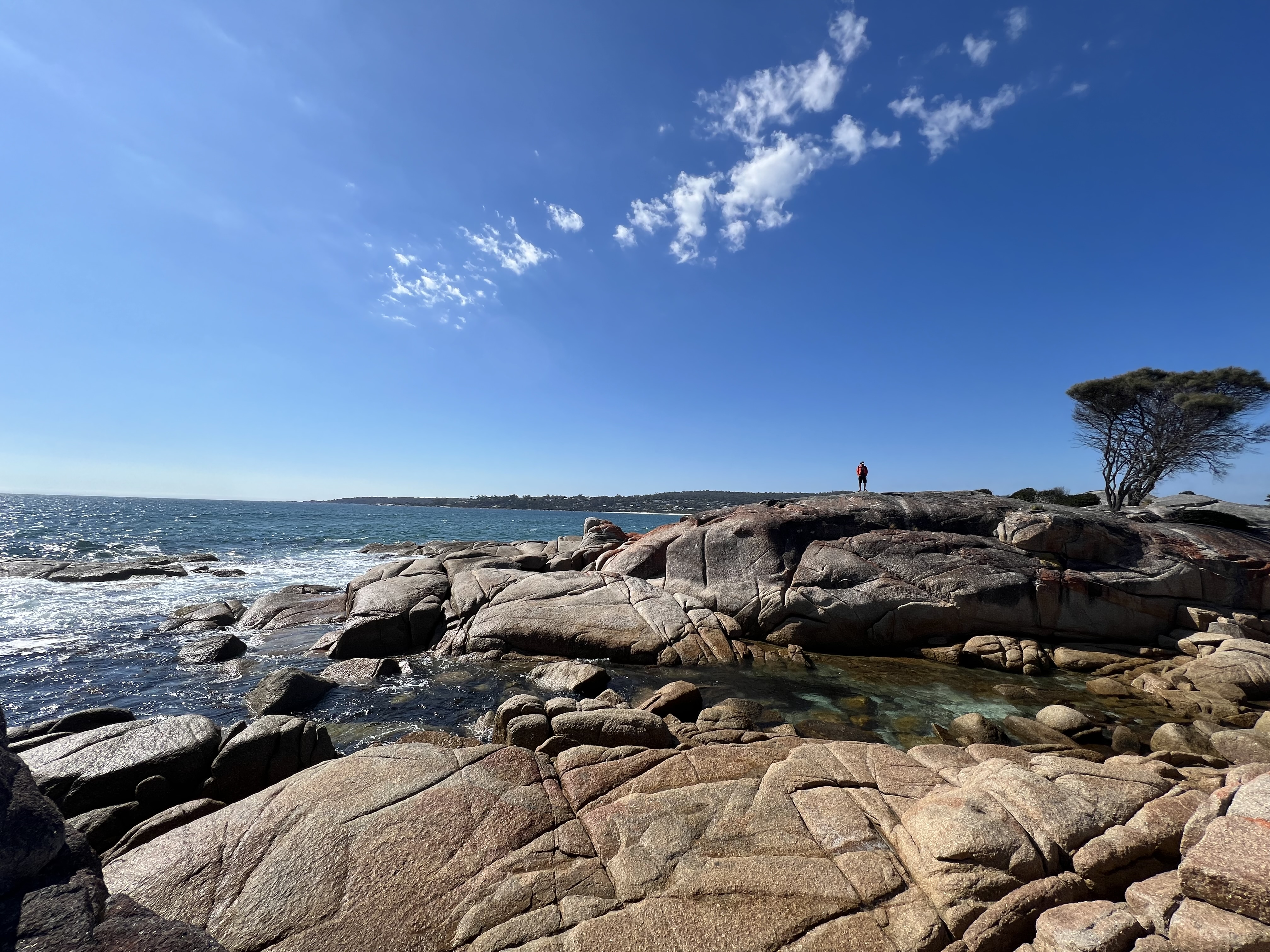
Feeling Small

Tassie Takeaways

  • Although less kilometers, with 12.7 vertical meters per kilometre, this might have been our toughest trip. We needed to replace our drive trains after just 500km of riding in Tassie.
  • Tassie is a great place to bike pack, especially if you love hills. Great back country routes, birds abound to provide background music, wonderful people, courteous drivers.
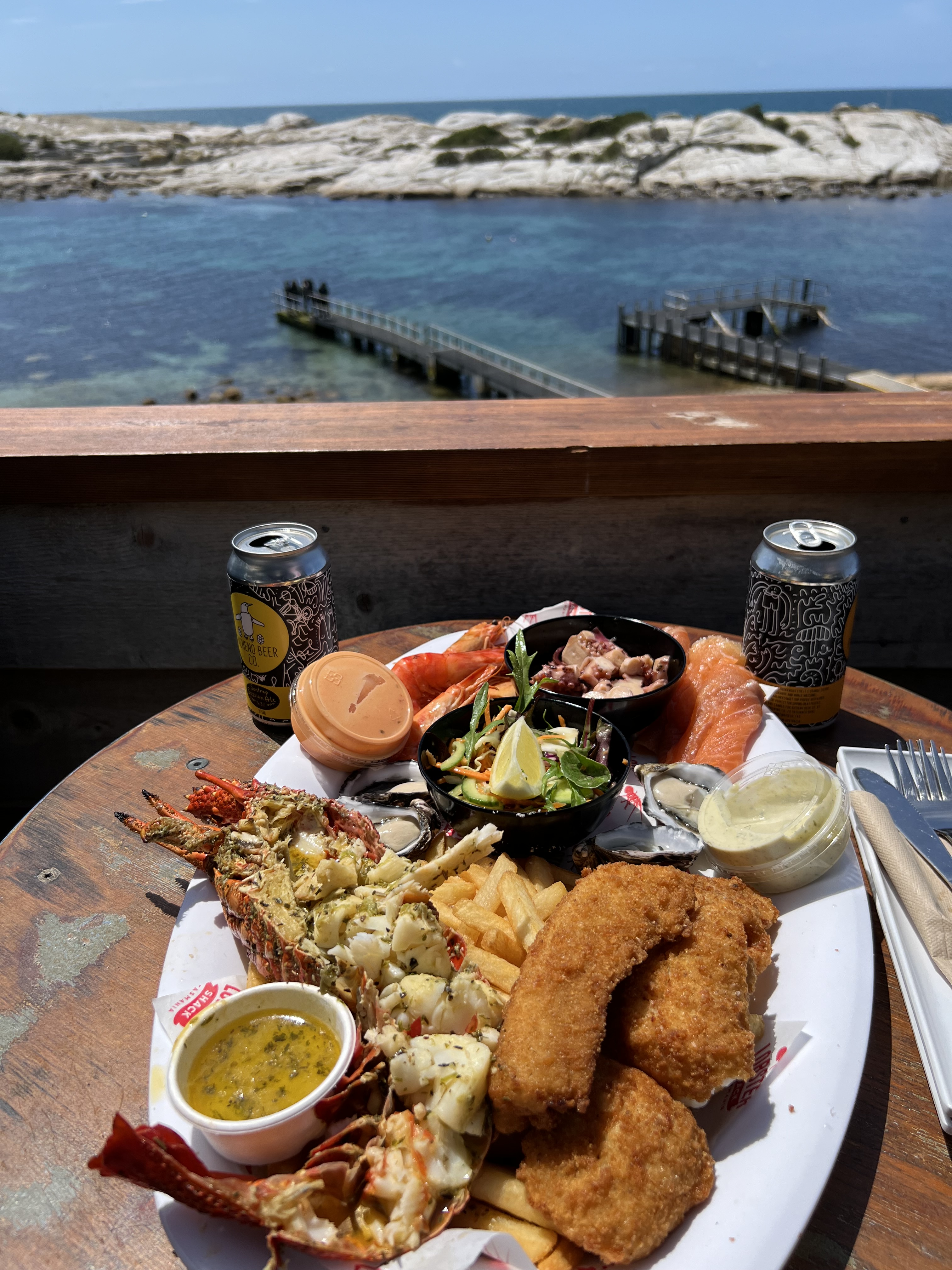
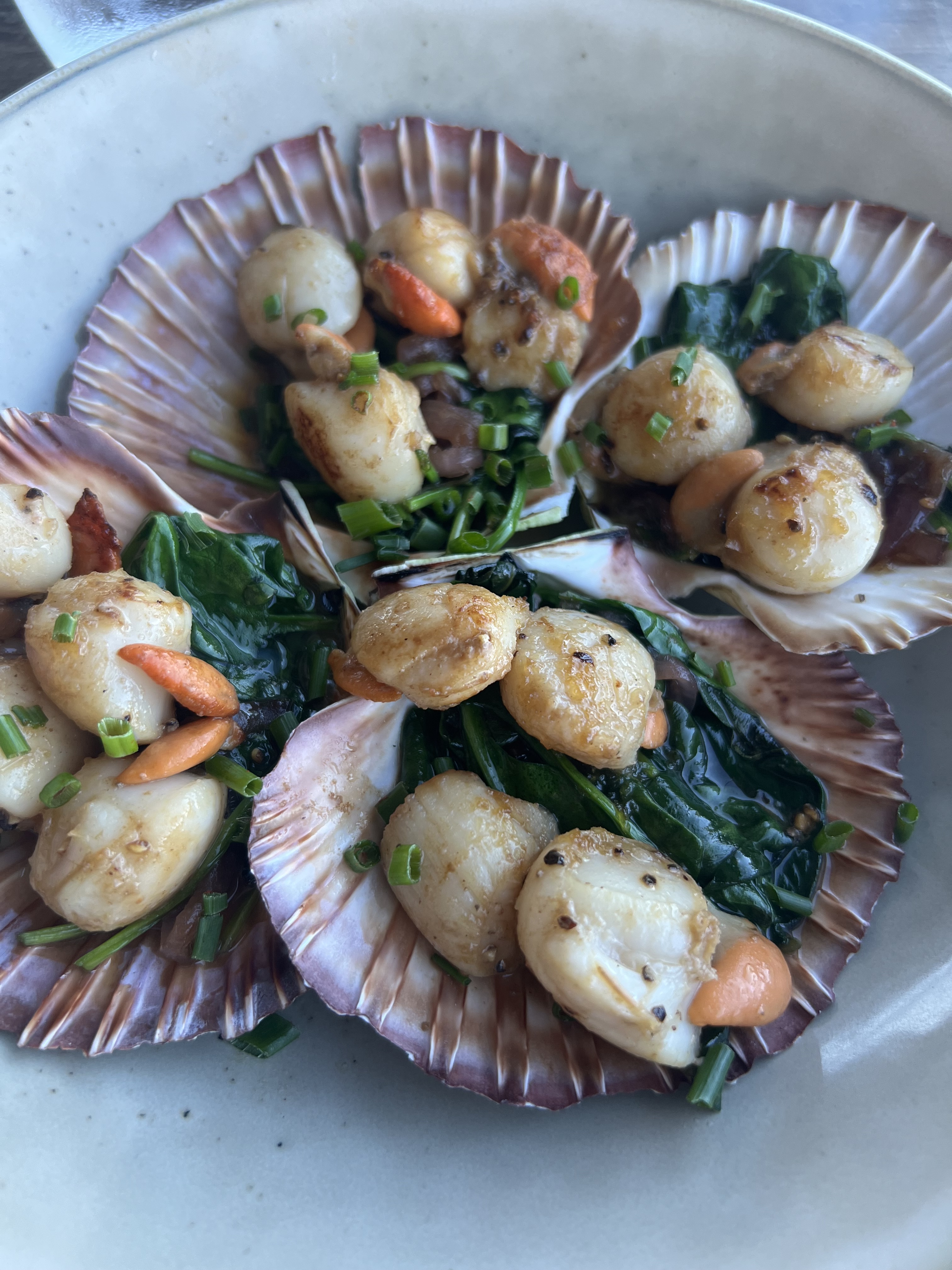
  • Tassie has the best seafood in the world. Best seafood platter in the world changed 3 times during this trip, ending with the Drunken Admiral (A restaurant, not a new title for Gear Guy) in Hobart. So good in fact, I broke my rule and went back for a second time.
  • Toughest day – 43kms uphill out of St Helens, rain squalls, head wind. And…..loving it. Kind of like the Creston/Salmo ride in BC, but on double track gravel.
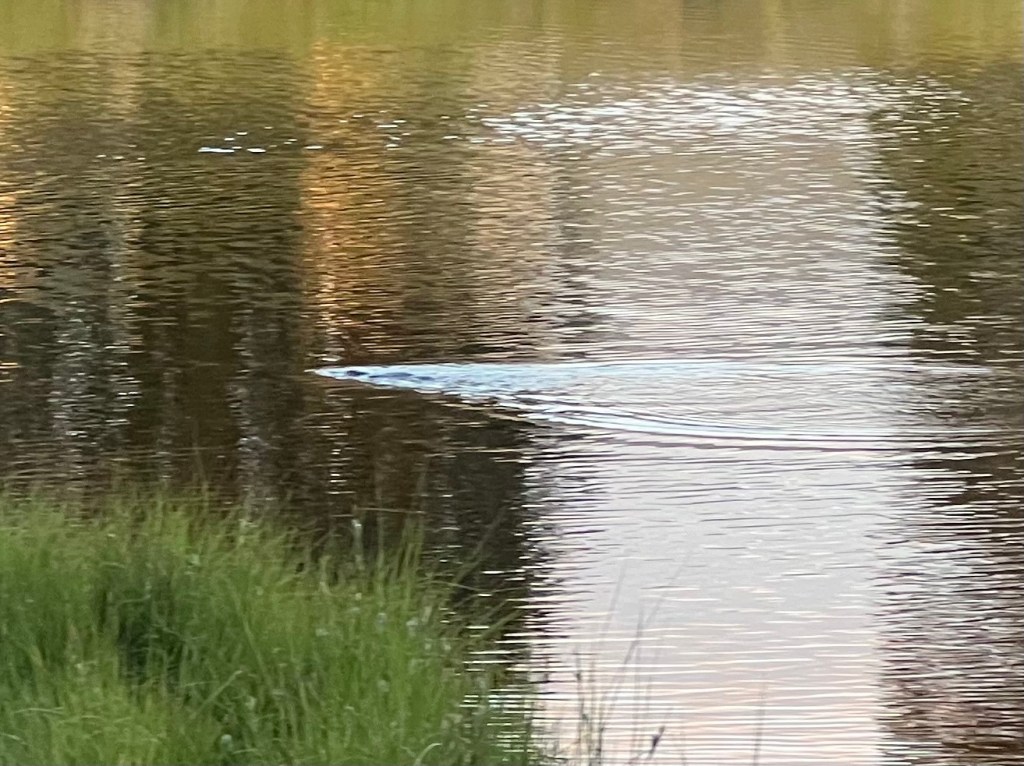
  • Tasmanians have been trained to tell every tourist that there are platypus in their creeks. I searched. I waited. I was quiet. For 19 nights. The best I could do were some ripples in a pond.
  • ”You’ll never see a snake mate”. You will. Many of them.
  • Did we miss tenting – oh wait, we never did tent on a bike trip – so no. Gear Guy maintains: “A tent would have been useful”. Whatever.
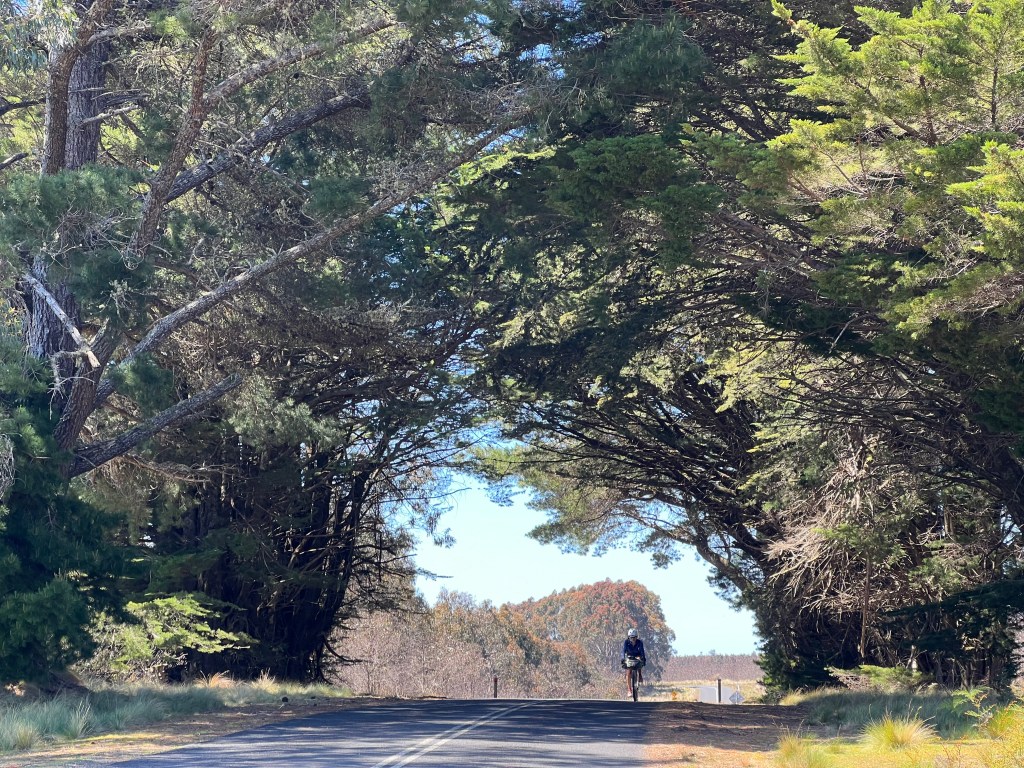
Until next time, or until you understandably unsubscribe…All the best to you in 2024

Rain and Pain, Hills and Headwinds but Wombats, Wallabies (and Wine) Fix Everything

  • Day 9 St Helens – Scottsdale 100kms 1778m
  • Day 10 Scottsdale – Evandale 86kms 988m
  • Day 11 Evandale – Mole Creek 106kms 772m
  • Day 12 Mole Creek – Cradle Mountain 84kms 1811m
  • Day 13 Cradle Mountain – Tullah 55kms 514m
  • Day 14 Tullah – Zeehan 44km 791m
  • TOTAL TASSIE SO FAR – 844 KM 19632m

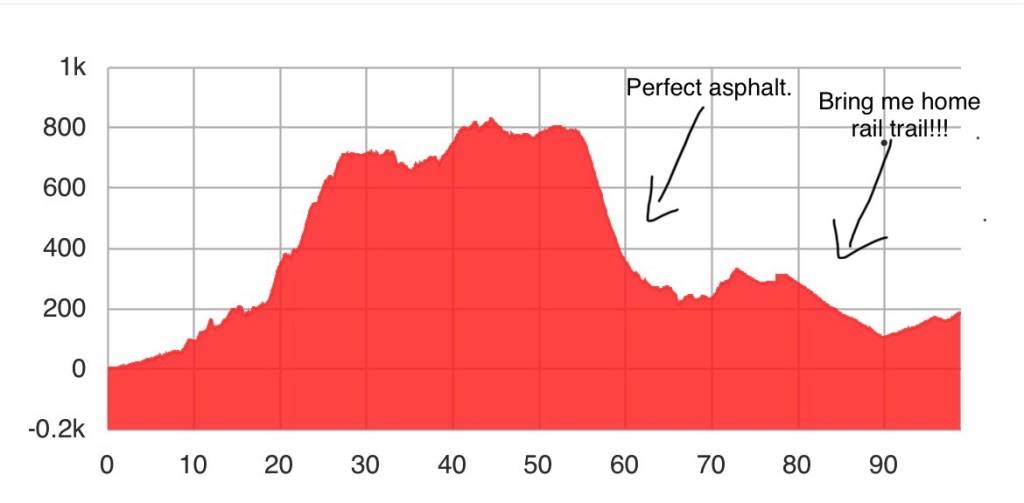
Our first riding day toward the famous Tassie West Soide was out of Saint Helens. A beautiful dirt road but a merciless 43 km climb for almost 1,000 meters vertical. Grades ranged from 2 to 15%. But at least there was a head wind – AND several Tassie rain squalls mixed in for maximum pleasure. Tassie rain squalls, we’ve learned, are similar to New Zealand or Newfoundland rain squalls; just colder. But here, you don’t dare venture off the road and under a tree for cover. Snakes.

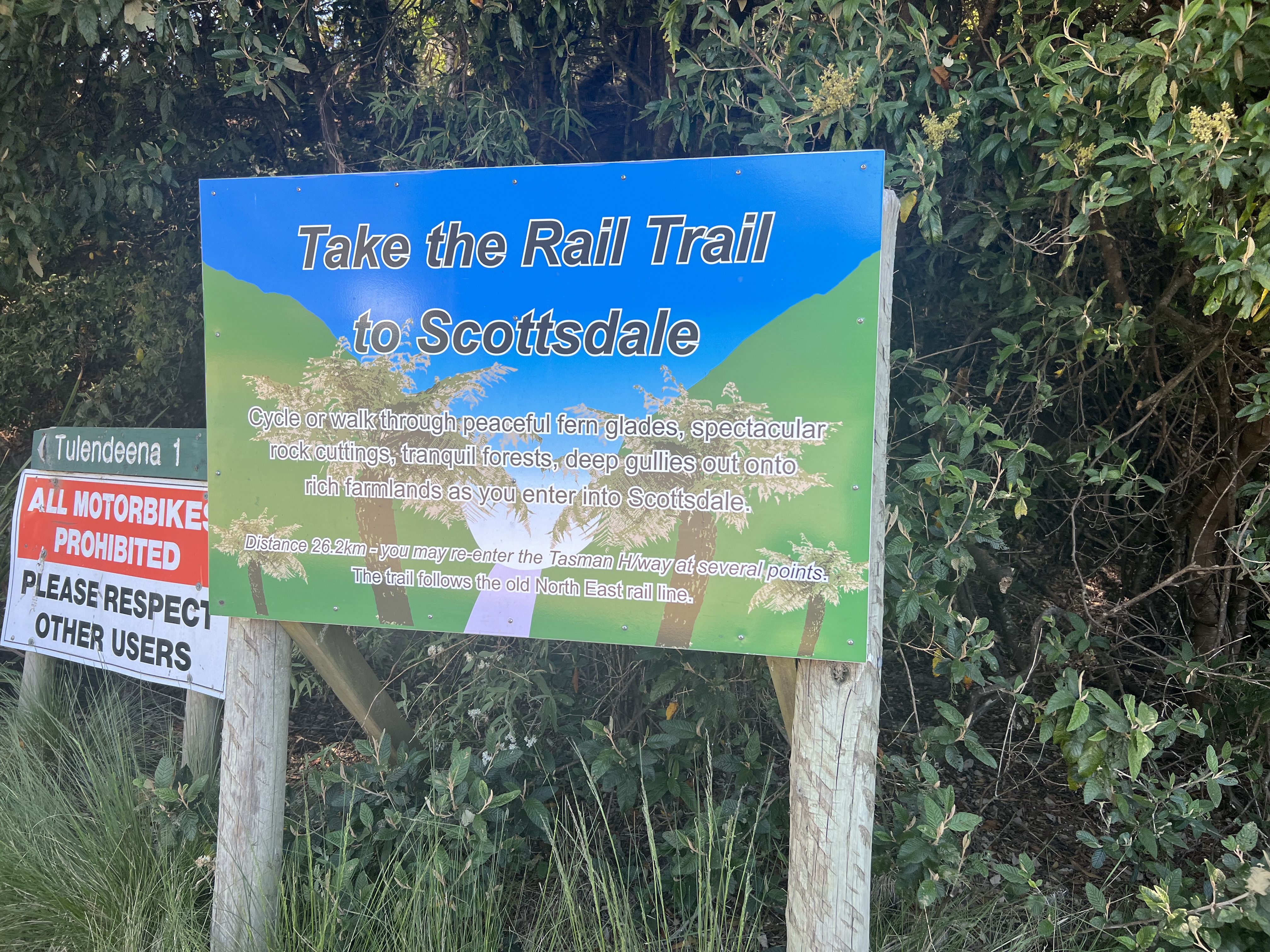
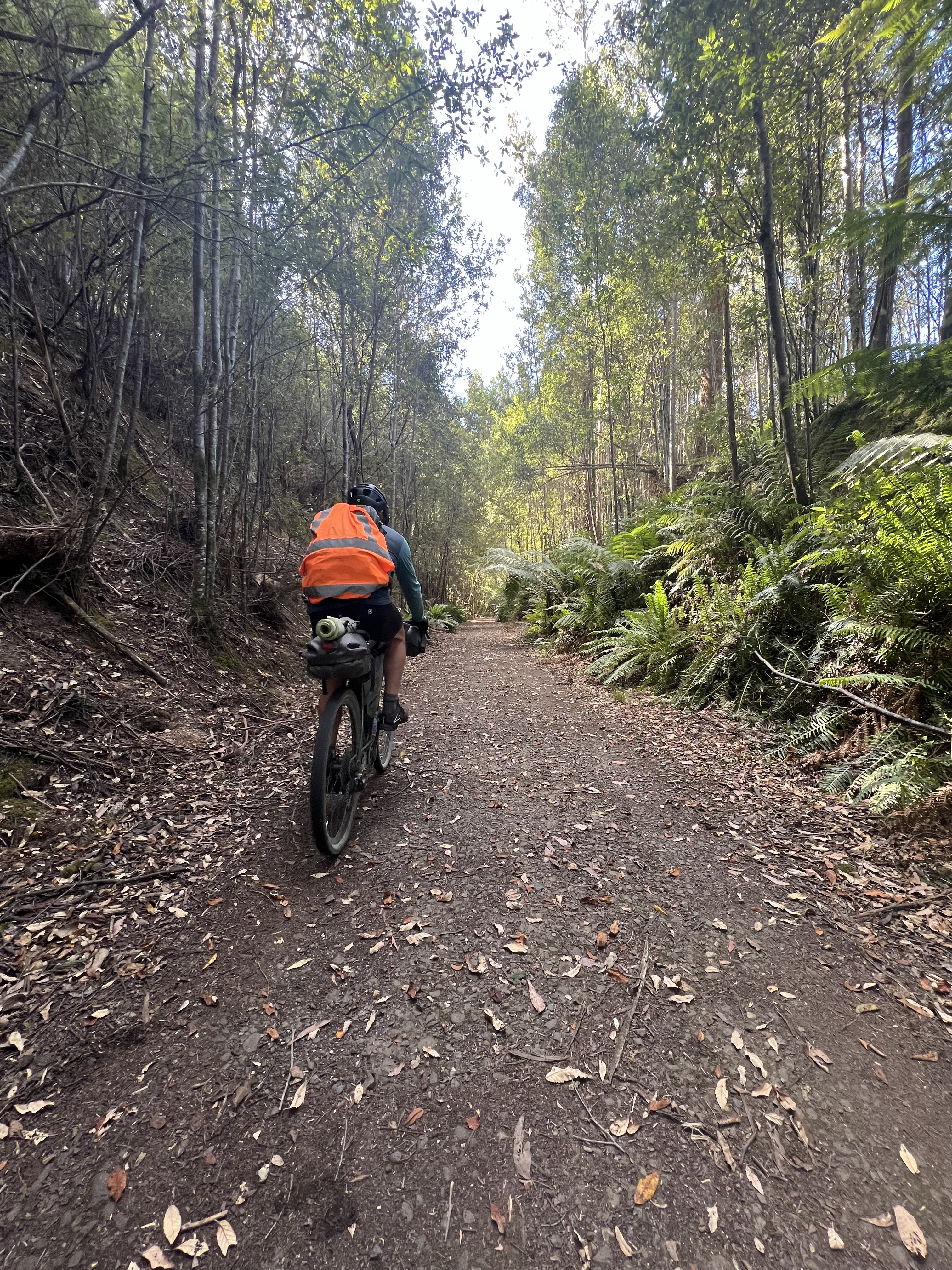
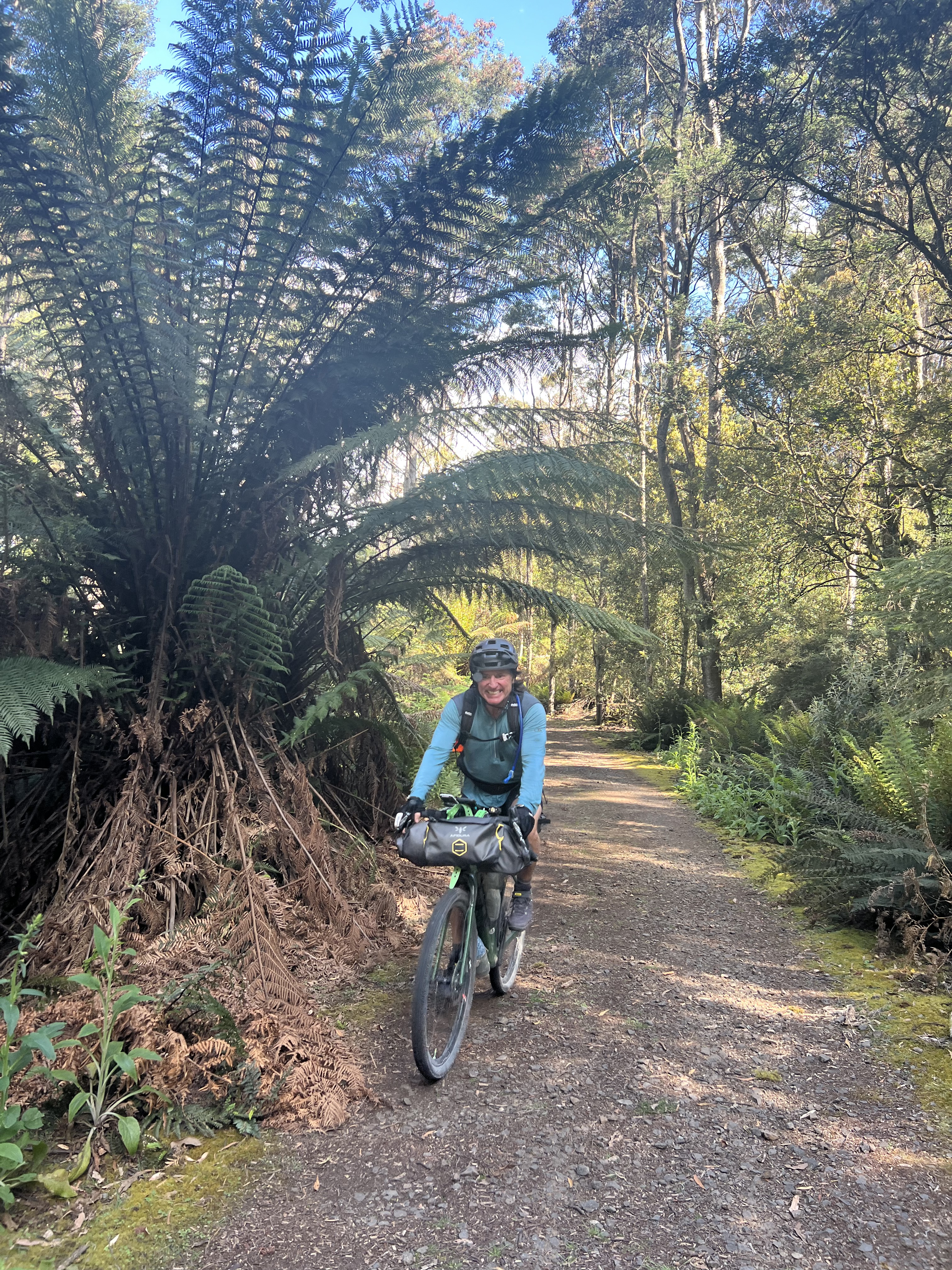
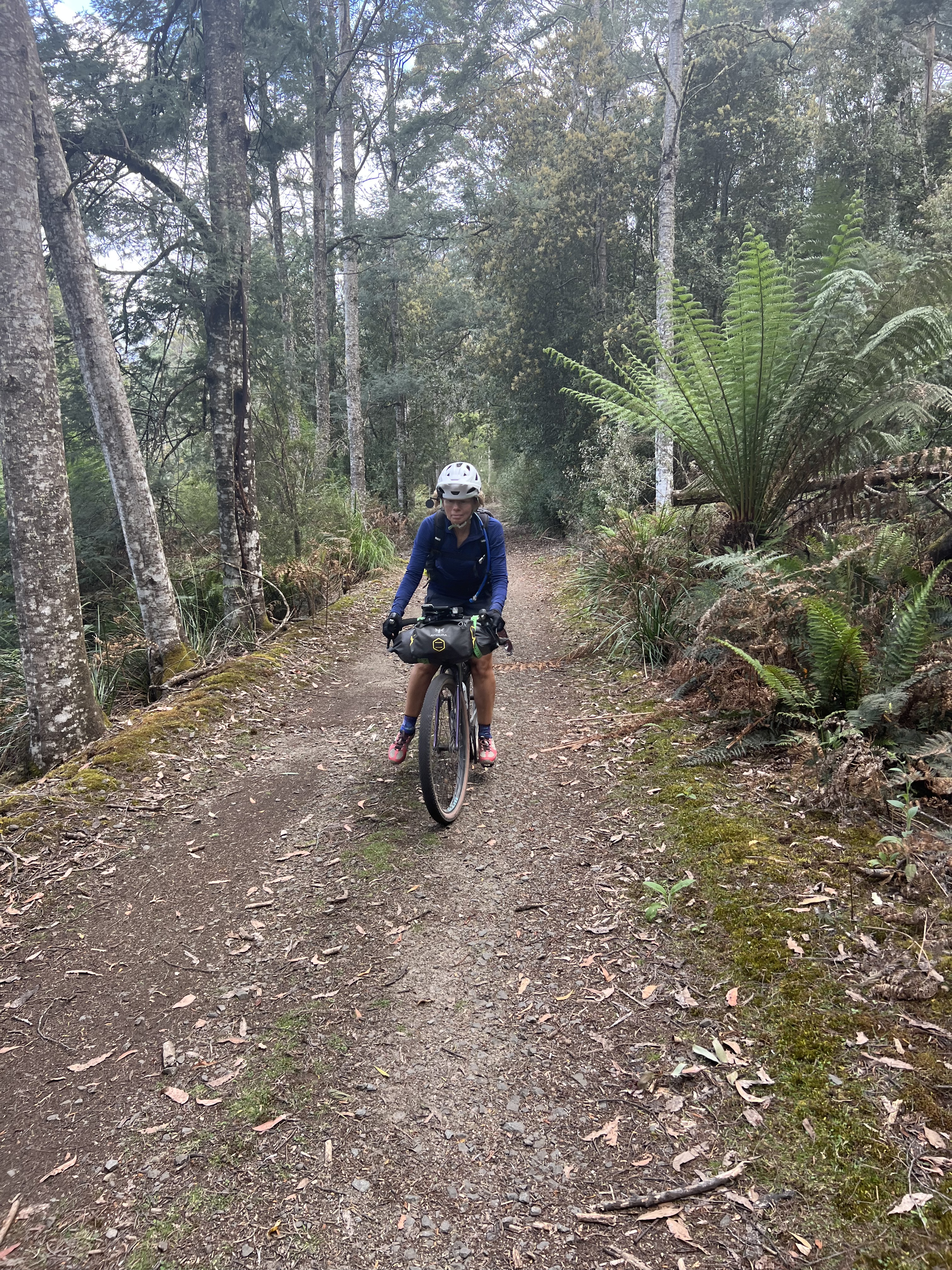
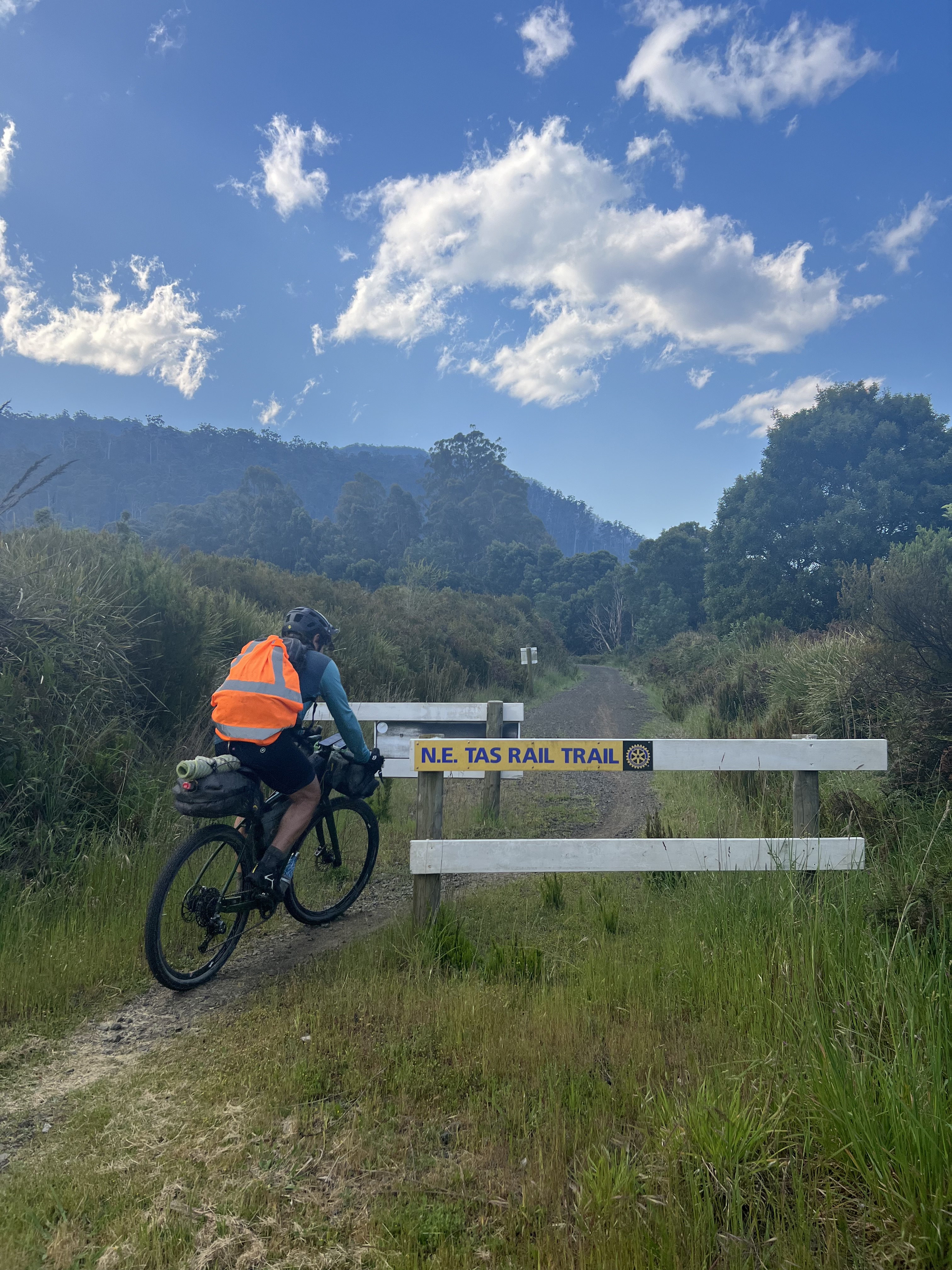
This climb is similar to BC’s Creston/Salmo Pass on a cold, rainy, windy day. Winjin’ type sounds were audible from both bikes and they weren’t mechanical. Our reward after that punishing uphill was a couple of heavenly downhills, including a 26 km leg on our first Aussie rail trail. Rail trails in Tassie are different than Canada or New Zealand. Though well maintained, there are a lot of broken branches littered about. These aren’t ordinary branches. The branches are comprised of extremely hard, bouncy, menacing, hotdog bonfire type spears. They seem to pack their own energy source. Like a tightly charged bow. So if you run over a branch on a Tassie Rail Trail, you risk an otherwise benign looking branch springing up like a Taekwondo kick as high as your thigh and maybe spearing you, or worse, getting in your spokes and, well, you know the end of that. You get it, you simply can’t run the Tassie Rail Trails at as high of speed as you’d like to. But really, the gentle 3% downhill grade, travelling at a relatively safe speed of 15 kph (brakes smoking), swerving in and out of black belt branches was rather Zen like. A 2 hour down hill to cover 26 kms – saved the day.

We had our first serious bike mechanical issue when my front derailer broke at the start of a 10km climb. Gear Guy donned his cape and McGiver’d it so that the low chainring was operable. We made it into our destination town of Evansdale. Friends of Jay’s brother picked us up and we had a fantastic dinner at the only restaurant in town and discussed all things Tassie. Kim and Geoff brought their family here from Timmins, Ontario just this year, for a 2 year adventure. I suspect the warm weather, beaches and long golf season may lead to an extended stay!

Bike mechanical failures are never welcome, but if it had to happen, there are only 3 places in this state where it could be fixed. We were within 20km to one. Launceston – My Ride Bike Shop. We went in looking desperate and “poof” magician bike mechanic Geoff dropped everything and put my bike on the stand and had it fixed within an hour, apologizing for taking so long. Darn, I was geared up for a down day in the lovely city of Launceston. Back in the saddle and onward to our Mole Creek destination, where Justin greeted us and opened the bar and restaurant. The hotel (and the entire “not a town”) looked closed for the season and we had the entire place to ourselves. After a ridiculously and unexpected delicious meal, we bundled up and went in search for platypus (what is the proper plural?). Justin assured us they were there most nights, but he stayed inside and had another scotch. Smirking – tourists. Like the penguins, the elusive platypus did not emerge.

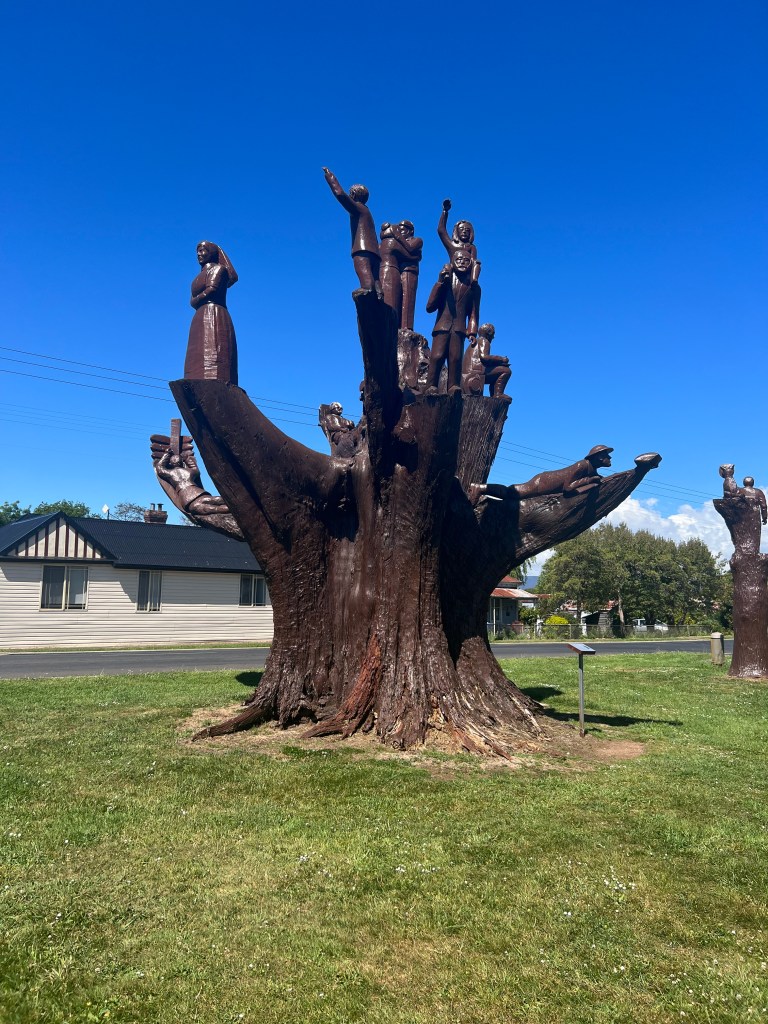
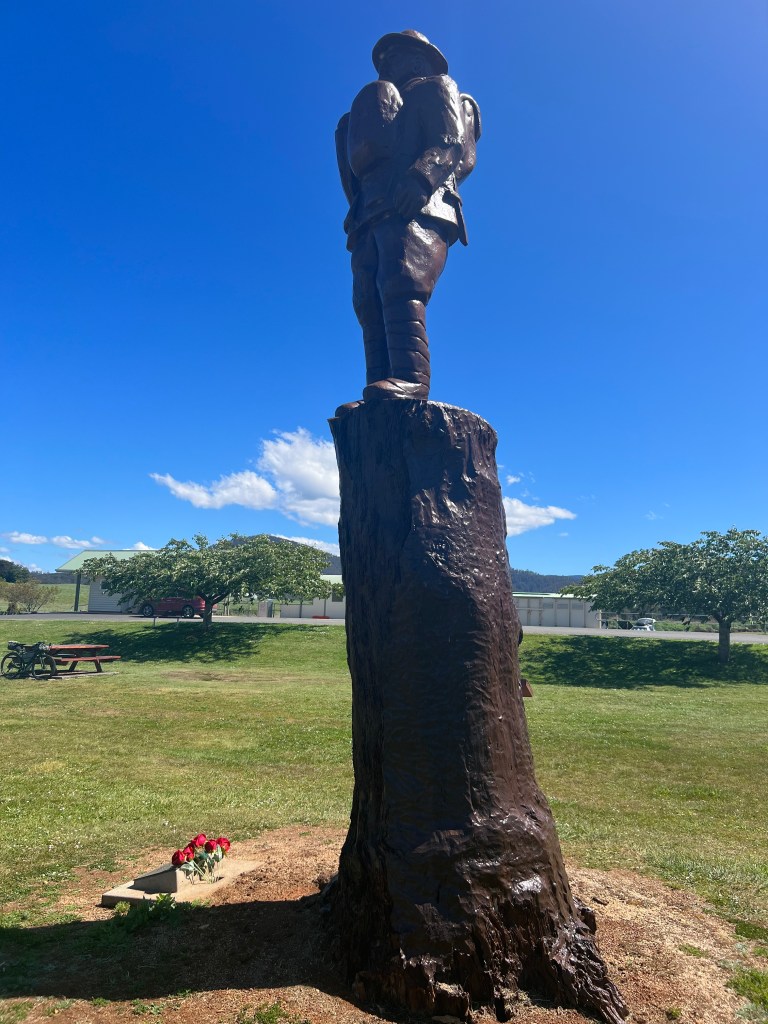
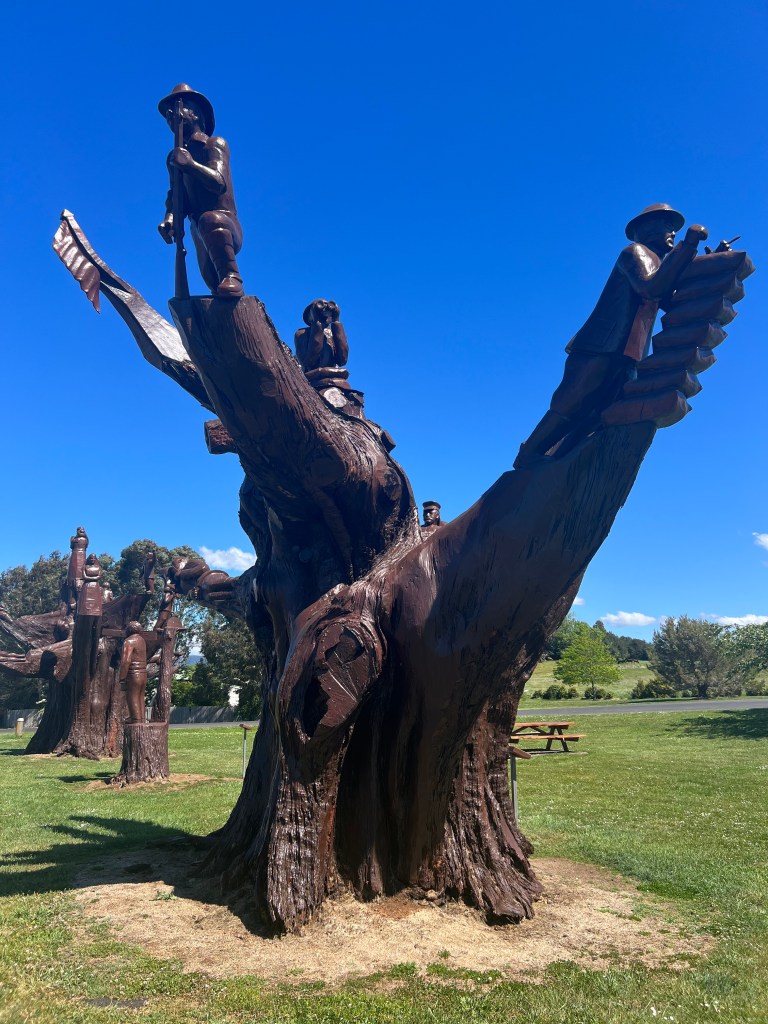
In the tiny hamlet of Legerwood (near Ringarooma to give perspective) trees were planted in 1918 to commemorate 7 local soldiers who died in WW1. When the trees were declared a hazard in 1999, town council made the visionary decision to create chainsaw carvings from each one, honouring the same soldiers. Beautiful work that we happened to come upon – on November 11. Spiritual to the core.

“The Wall” (elevation profile from last post) was the 4th major climb of that day (day 12). The description was clear, “You are at the summit, and it is “mostly” flat from here. Any self respecting Princess Bride devotee knows that means it is “slightly” uphill. After conquering the 10 – 13 degree road, it was another 25kms of uphill. Fortunately, I was on wombat watching mode after nearly causing Gear Guy to crash when I saw my first. Gear Guy thought I had crashed. But hey, we’re talking cute, awkward, Winnie the Poo like mini bears. I just had to yell to him! On a downhill. Gear Guy mumbled, “Next time, just pull over. Don’t yell. Scares me.”

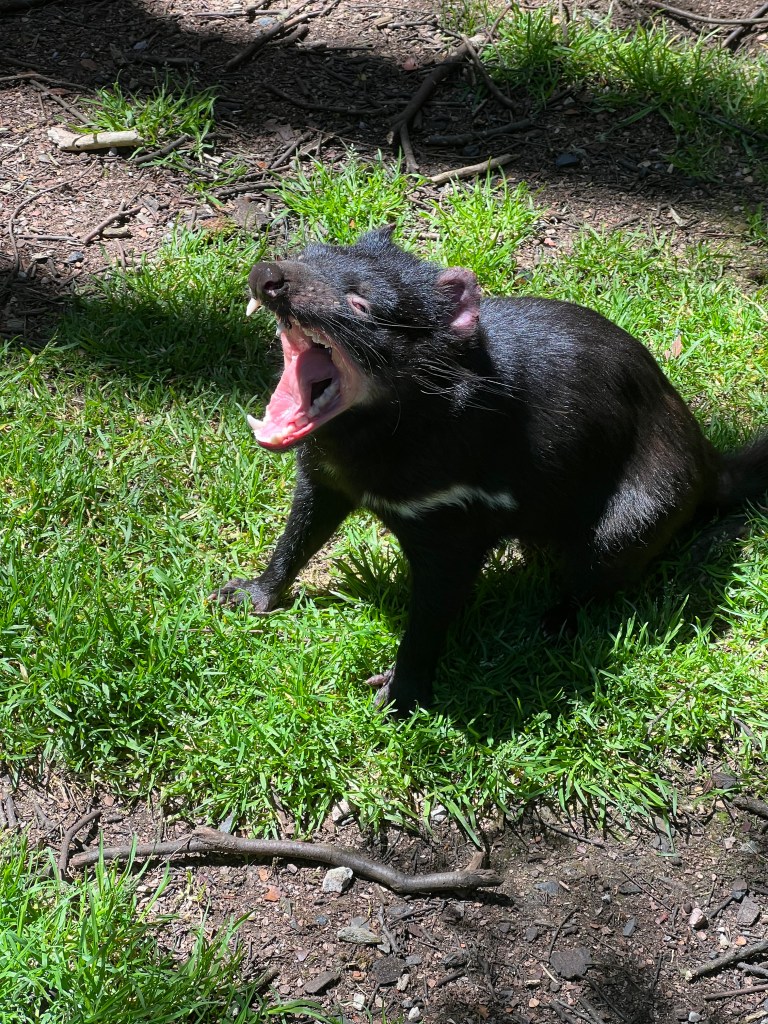
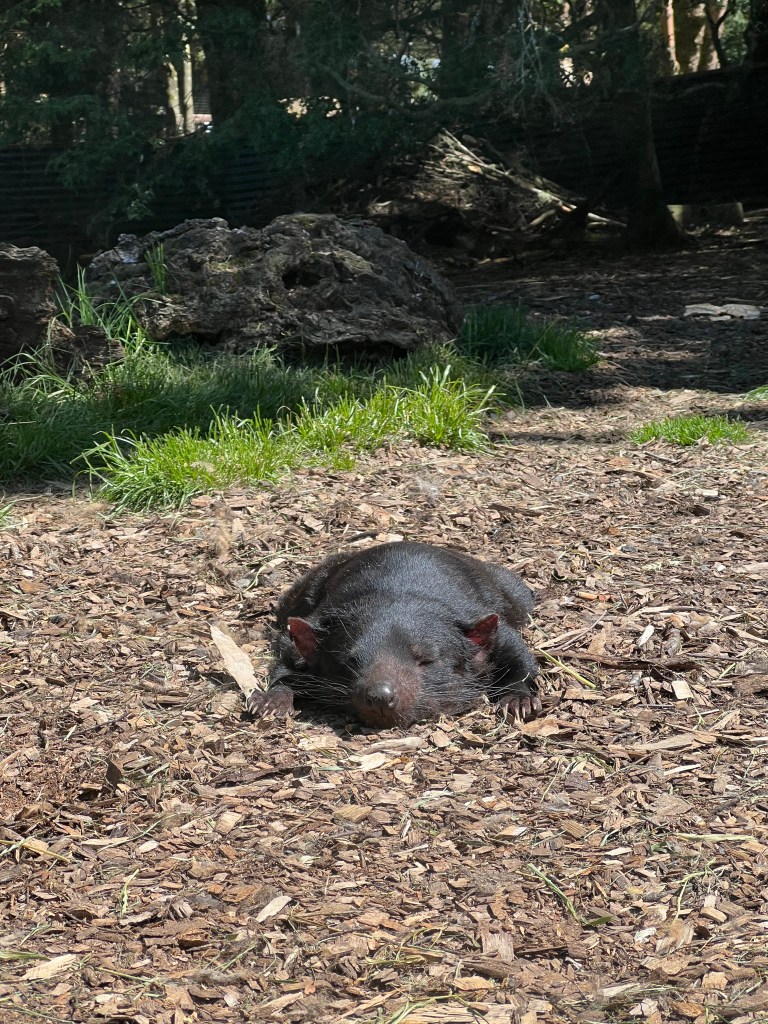
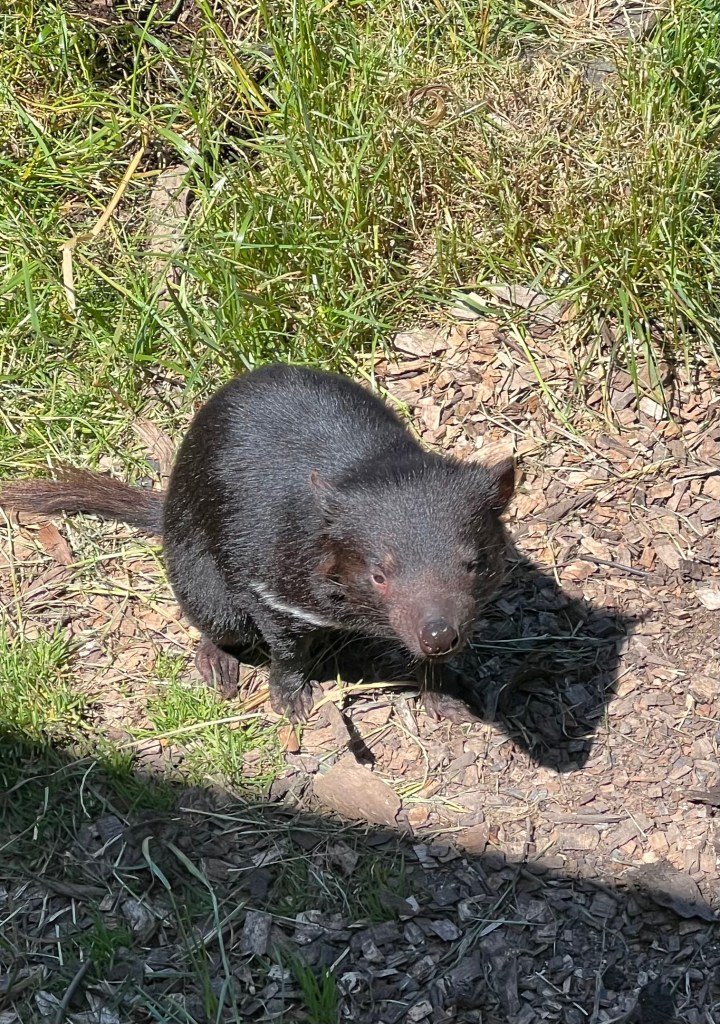
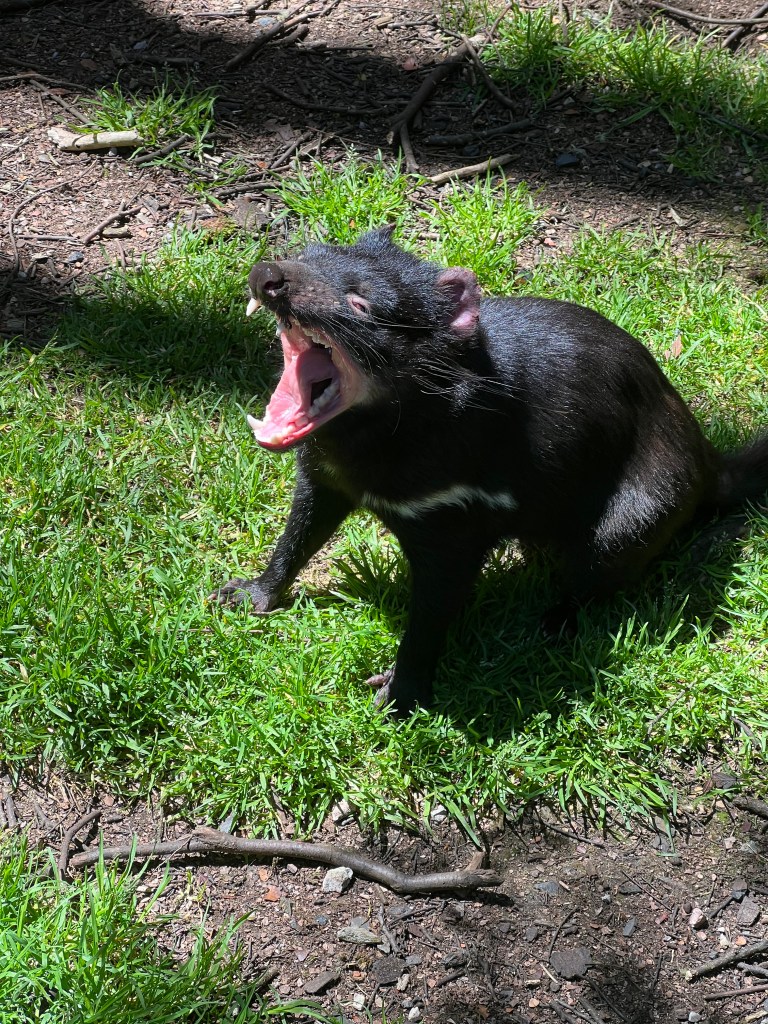
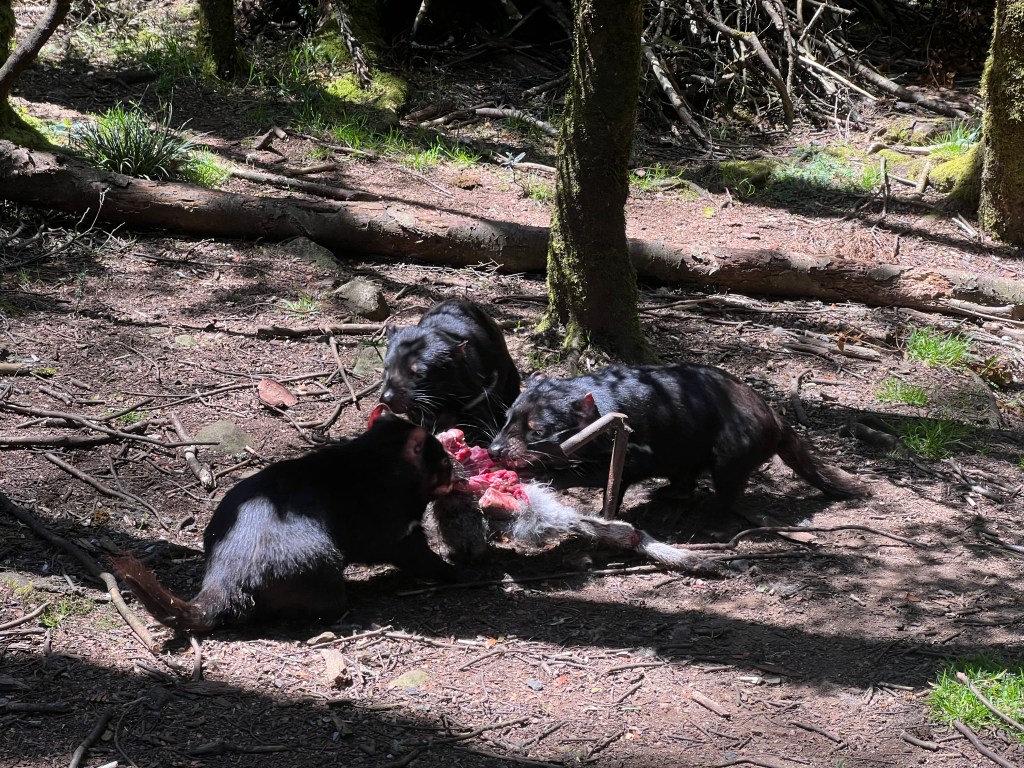
We had climbed to Cradle Mountain Wilderness Resort, our home for 2 nights. Day off options included a hike or a visit to the nearby Devil sanctuary. The best decision to provide a recovery day was the sanctuary. An informative tour – everything Devil and Quoll related. The Tasmanian Devil is the largest surviving marsupial carnivore. They will eat just about anything, but are more scavengers than hunters. A devil will birth up to 60 embryos but only the Fastest Four find a space in her pouch and survive. Just four of sixty. Gear Guy doesn’t think he’d made that cut. The advent of the uninspired named Tasmanian Devil Facial Tumour Disease has decimated the native population to an estimated 20,000 left – only in Tasmania. The cancer kills 100% of the devils that contract it and it is very contagious. This sanctuary does not release any of its bred devils into the wild as the disease is still so prevalent. The thought is, if they become extinct in the wild, they can release this group. An insurance policy if you will. Interestingly, studies are showing that the wild devils are living with the cancer longer, and there is hope they are evolving to be resistant to the disease.

Gear Guy: “Ya see? They scream and spin and spit and have bad breath, just like on Bugs Bunny”.

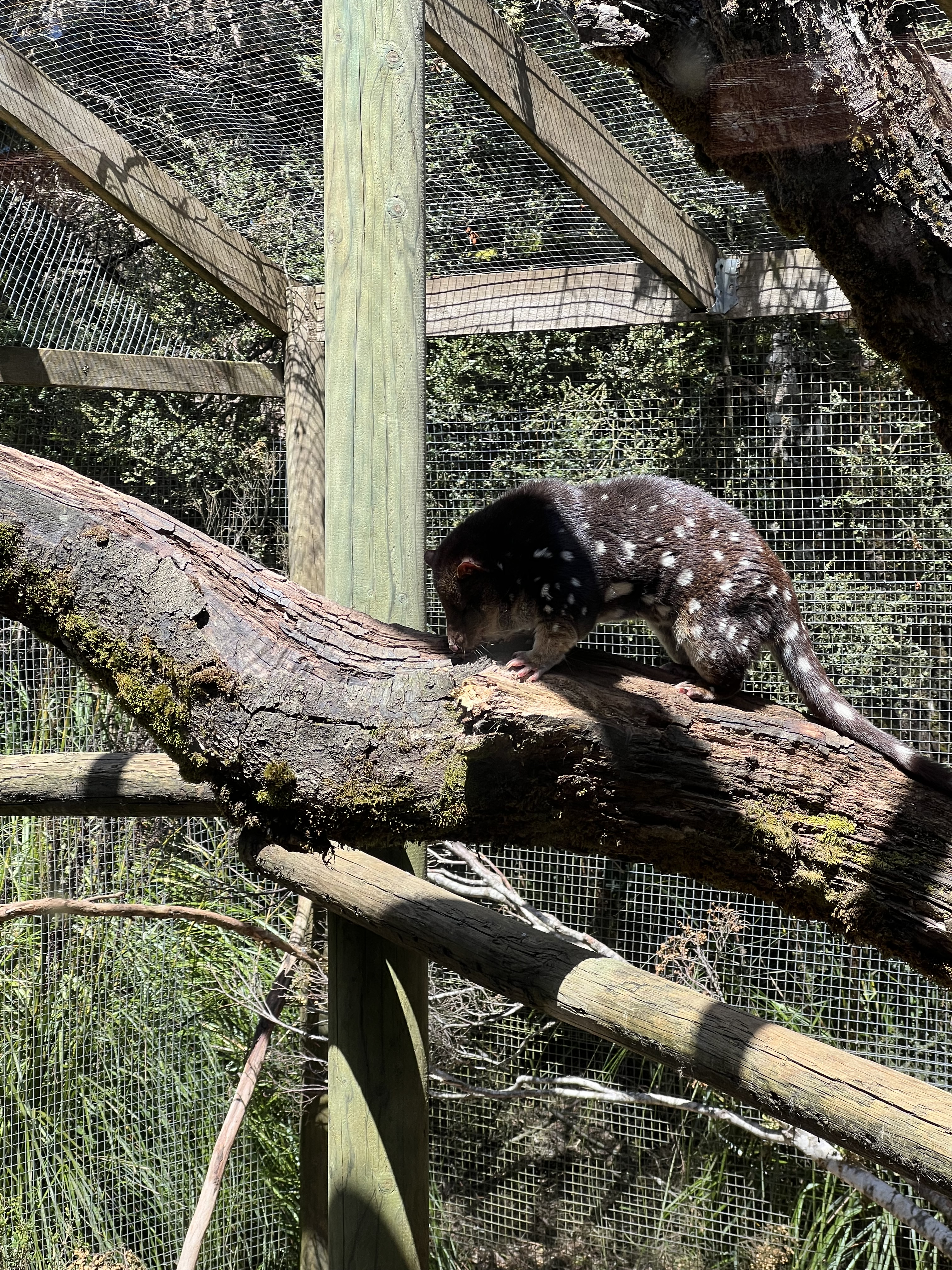
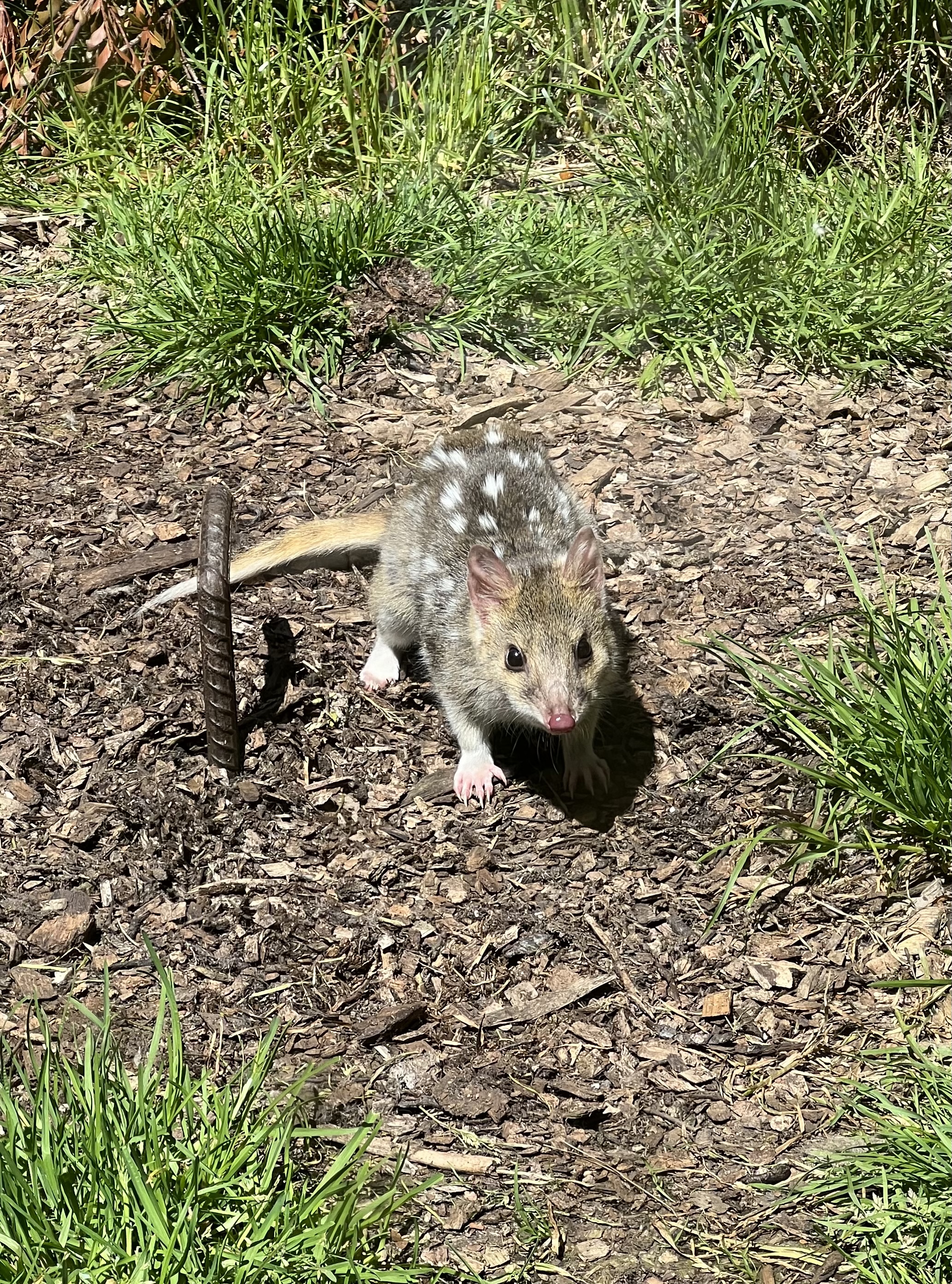
The underappreciated Quolls are also marsupial carnivores, even more endangered that Devils. It is estimated that there are only 15,000 left. But they were not made famous by Warner Brothers, so no one seems to know much about them. These guys are released into the wild and seem immune to the cancer.

We knew the sunshine and Tassie warmth couldn’t last forever. It came to a screeching halt on Ride Day 13. “Should be fining up later mate” – desperately upbeat and overly cheery words from a chatty local whilst we searched for the nonexistent cafe in Rosebery. It was 6 degrees and pouring. The only open facility was the generously categorized “grocery store”, clearly not heated. It was so cold and wet on the road, a trucker slowed and tossed candy out his window for (at?) us on the side of the road while we were stopped to add another layer. We pushed on to the tired town of Zeehan, where upon reaching our Air BnB, we cranked the heat up to 25 degrees and stripped out of our dripping wet riding gear.

Wallaby’s are everywhere – especially in the ditches roadside – “sleeping” we always told the kids. So it was not surprising to find them on menus. Gear Guy had it. I didn’t.

Four days of wind, rain and cold.
That’s our West Side Story so far.

Coasting up the Coast

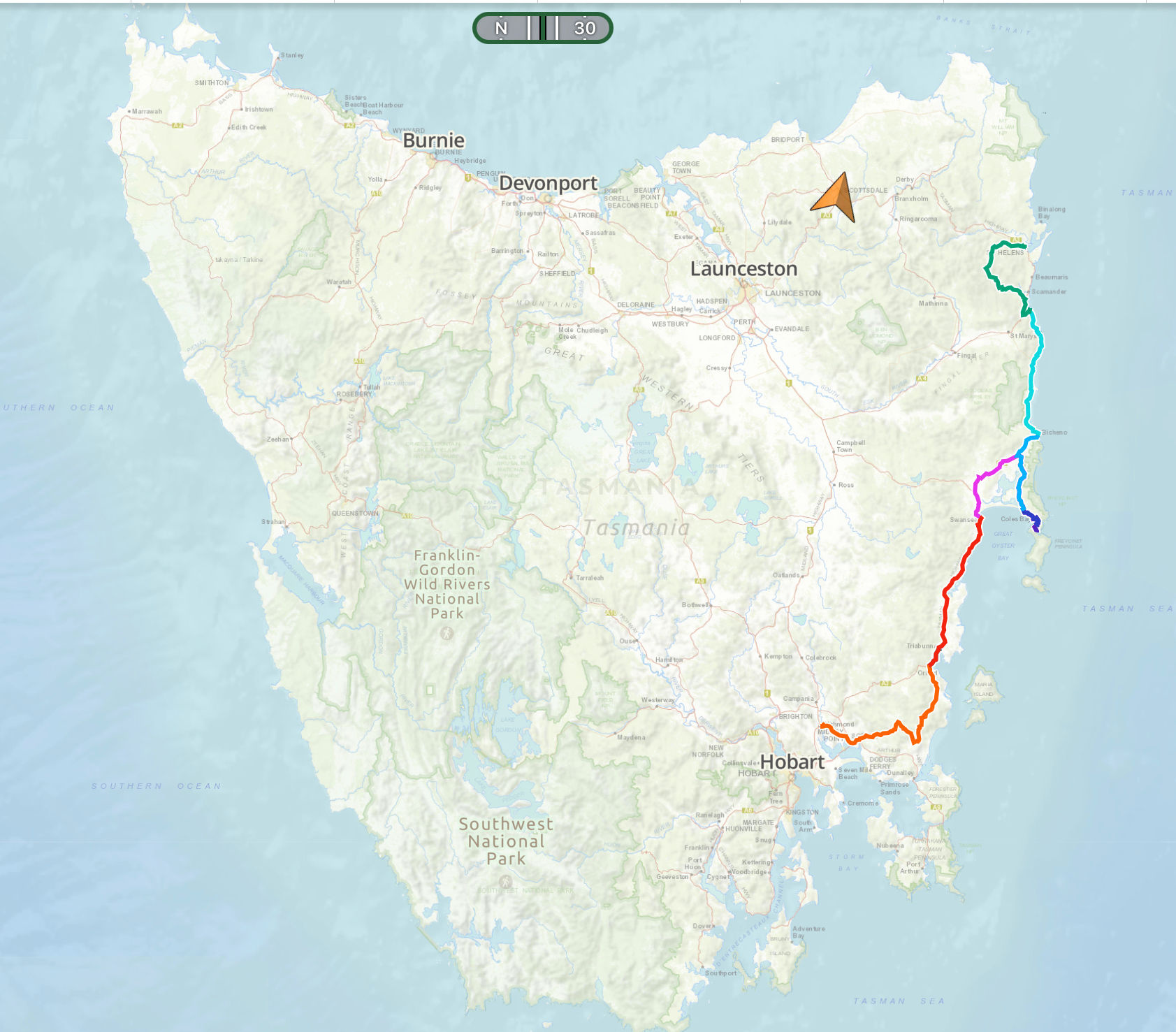
  • Cycle Day 1 Richmond to Orford 76 km 1623 m
  • Cycle Day 2 Orford to Triabunna and back (Day off) 15 km 100m
  • Cycle Day 3 Orford to Swansea 58km 385m
  • Cycle Day 4 Swansea to Coles Bay 53km 330m
  • Cycle Day 5 Coles Bay to Freycinet Park and back (Day off) 28km 267m
  • Cycle Day 6 Coles Bay to Bechino 33km 150m
  • Cycle Day 7 Bechino to Fal Mouth 52km 395m
  • Cycle Day 8 Fal Mouth to St Helen’s 56km 778m
  • Tassie Total so far: 371kms 4028m of elevation
At this rate, we should be home for Easter

Took us almost a week to get started – or just seems that way. Jay’s birthday literally disappeared as we crossed the date line. He claims that makes him a year younger and better looking. The usual travel issues – late departures, lost luggage, unexpected overnight stay (In Brisbane). But at least Gear Guy left his backpack (with everything critical in it) on an airport bus while we were trying to make a tight connection. But Gear Guy managed to muster up all bus drivers in Tasmania to locate his lost backpack within 30 minutes, narrowly escaping a “marital”. But really, all credit to correcting airline mishaps on this trip must go to Air Canada’s Gavin in Brisbane – a miracle worker. Yes THAT Air Canada.

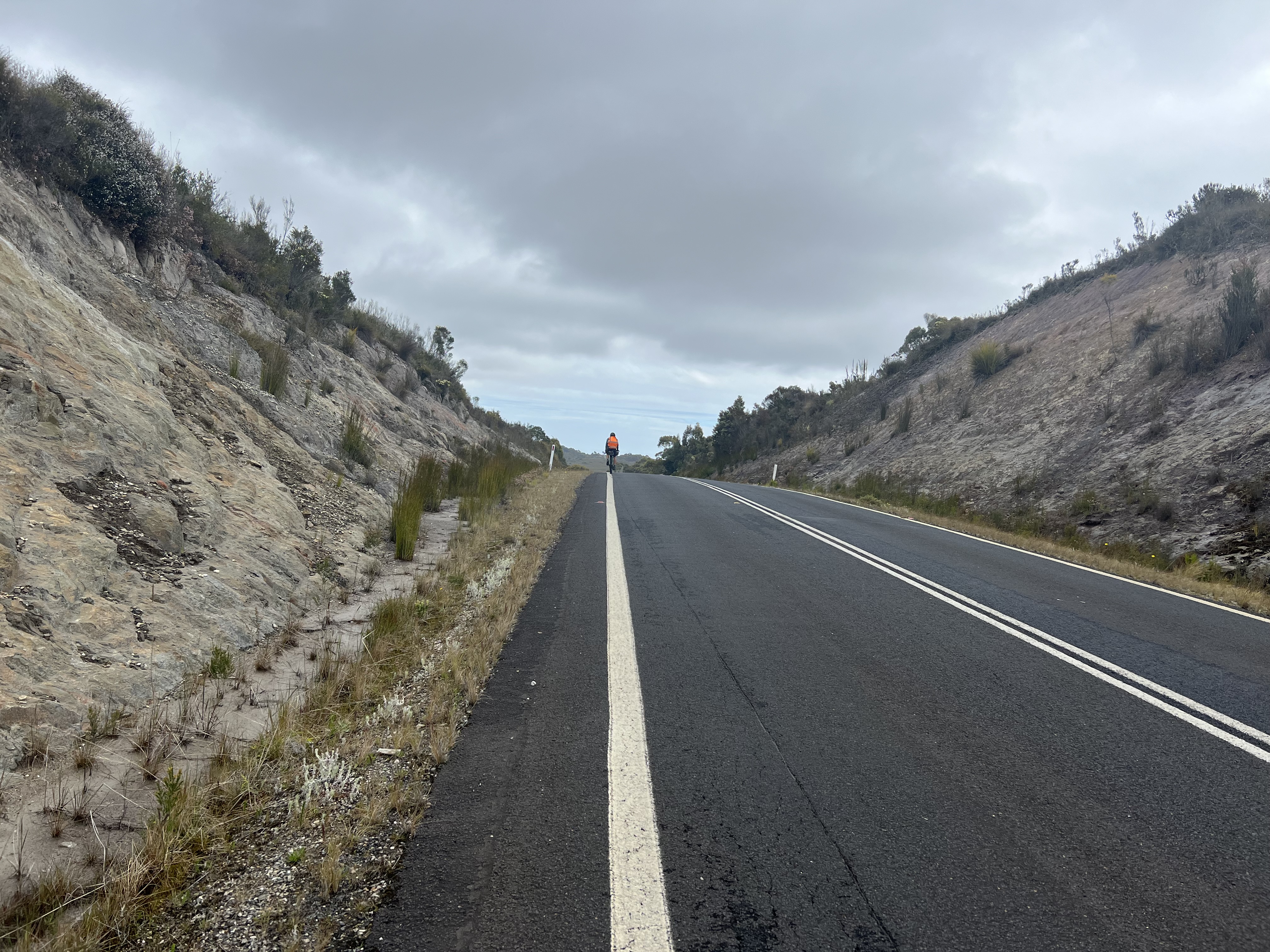
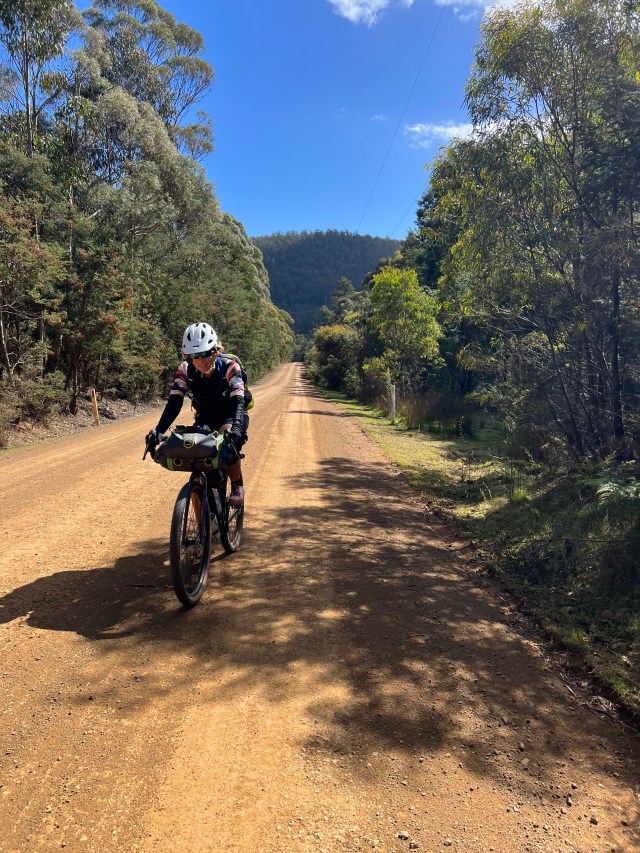
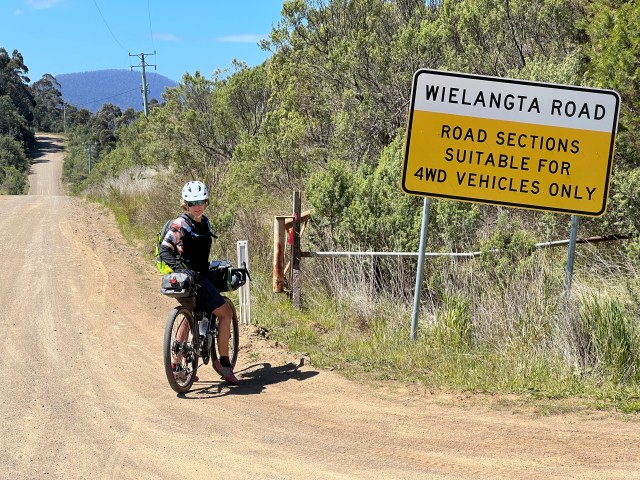
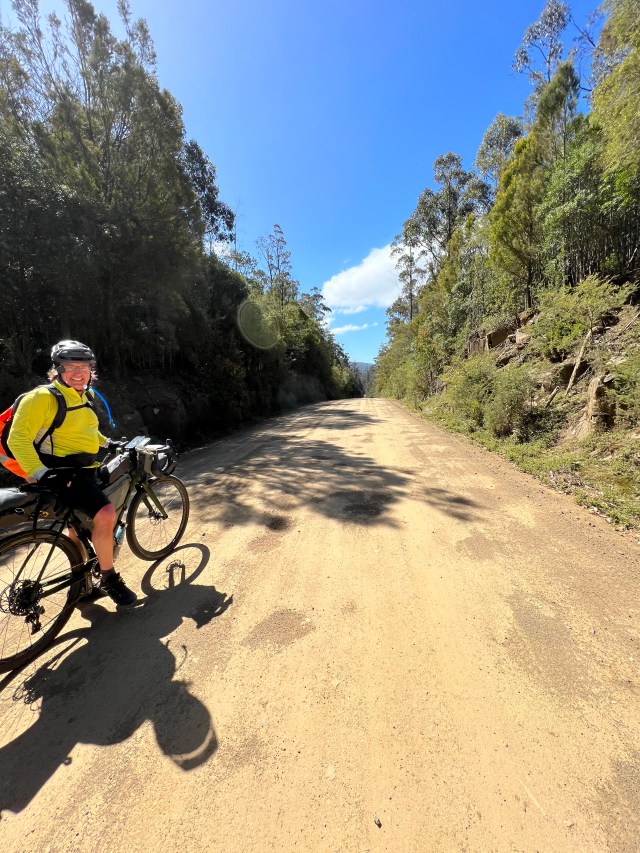
Day 1 on the bike was an eye opening, screaming knees, tight shoulders, shocker for me. I guess my summer workout routine of wine, beer and not much else did not adequately prepare me. Amazing how only 76kms and 1600m of elevation can kick the Sh*&# out of you. It was relentless, endless, ruthlessly steep hills – one after another after another – on gravel. Gear Guy says, “Ya, a couple of short but nasty 13 percent grades on that one”. The road was fortunately in great shape, apparently because this has been a dry spring, lucky for us. People seem accustomed to seeing bike packers, but they do raise their eyebrows when we told them we did the Wielanga Forest Road. “I noiver use that road mate. Not even in my 4X4 ute.”

Then this happened as I grunted up yet another hill.

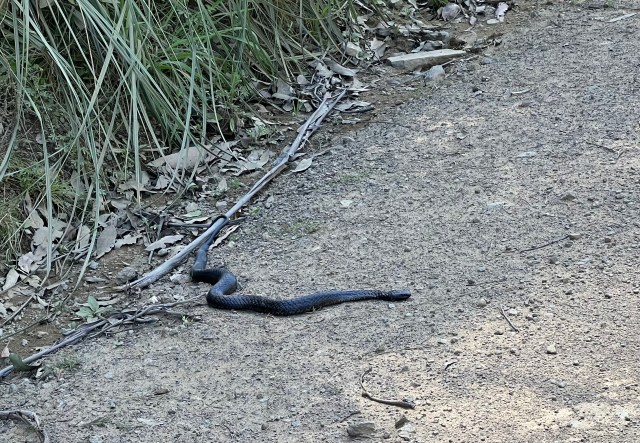
All the locals we asked told us, “You’ll never see a Tiger Snake mate.  They mind their own business”.  Ha.  Our first brush with one was when a farmer stopped his ute beside us and said, “Hey Mate, thought you should know there’s a big Tiger Snake just up the road right about where you are riding Mate.  Don’t come too close to it Mate, it will ruin your boike roide.”   We never did see that snake.  But not long after that, we saw this one.   I stayed perfectly calm, not panicking or getting hysterical or hyperventilating as Jay rode right by it – within 3 feet – he didn’t see it. I veered FAR right and sent Jay back to snap a couple of pics of it.  A Tiger Snake sighting is like seeing a Grizzly Bear in Fernie from short distance away – at least it had the same effect on us.  Now all the locals are saying: “Well, when they are waking from hibernation, they do tend to be a bit sluggish, so they may not get out of your way.” They are also grumpy and hungry and, well, horny and aggressive. So which is it? Sluggish? Or horny and aggressive?

Meanwhile, after days of painful neck straining in search of elusive koalas, I was told there are NO koalas in Tasmania. What? I’d been scouring the tops of the eucalyptus trees as we rode, sure I would see one. But sure as God made dumb tourists, “Thar ain’t any koalas in Tassie Mate. Too cold!”

So no Koalas and 1 snake. Not what I hoped for. Do a few wallabies and echnidnas compensate? Echnidnas are adorable hedgehogs who bury their head in the ground when stressed – like me.

Fernie legends Geoff and Shirley have a daughter and her husband living in Tasmania. We were so lucky that Sue put us in touch with them! Kim and Rod went out of their way to invite us to their shack for dinner. “Shack” is Australian for big beautiful new home overlooking the Tasman Sea. We had a wonderful, engaging dinner.

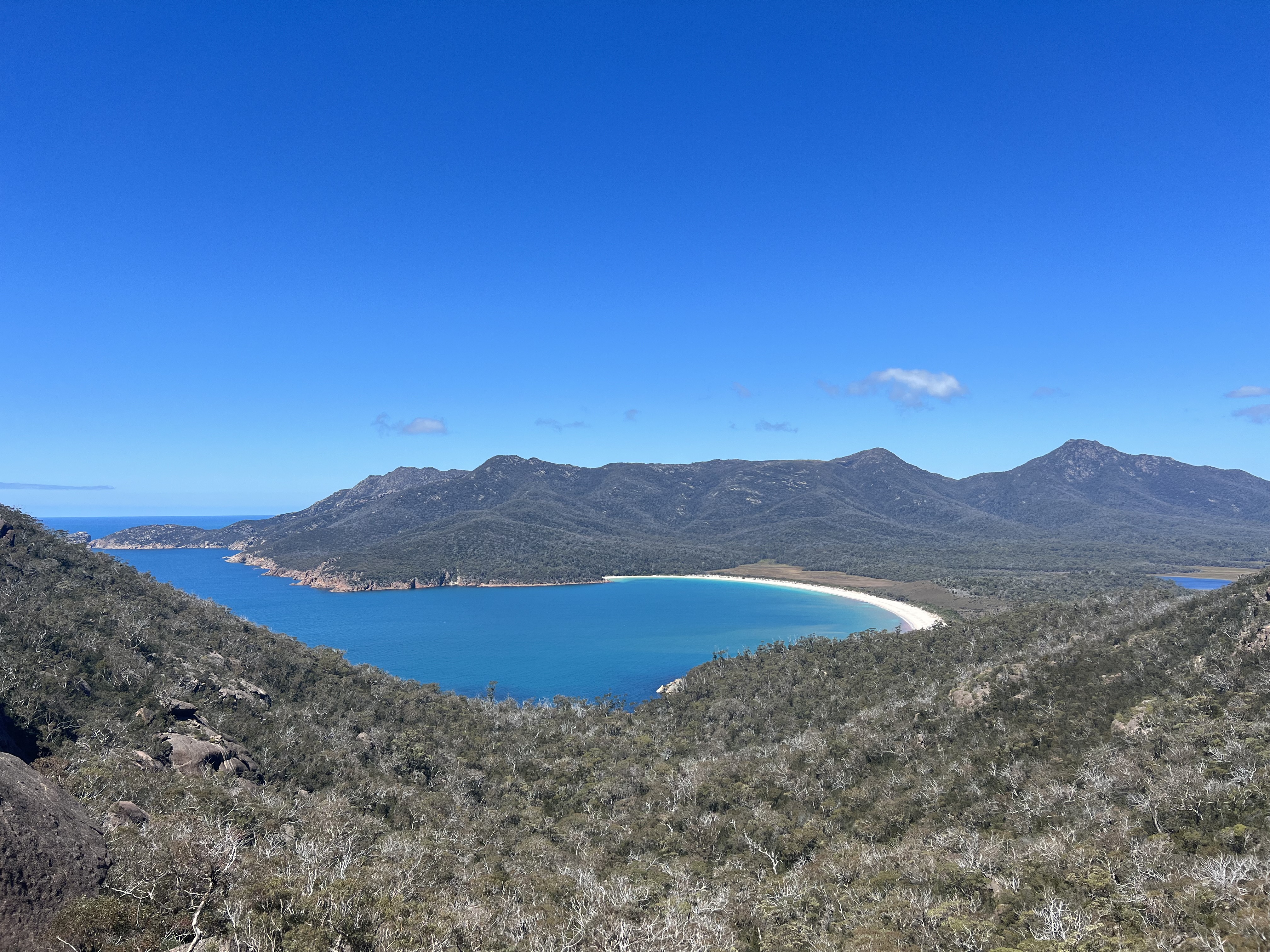
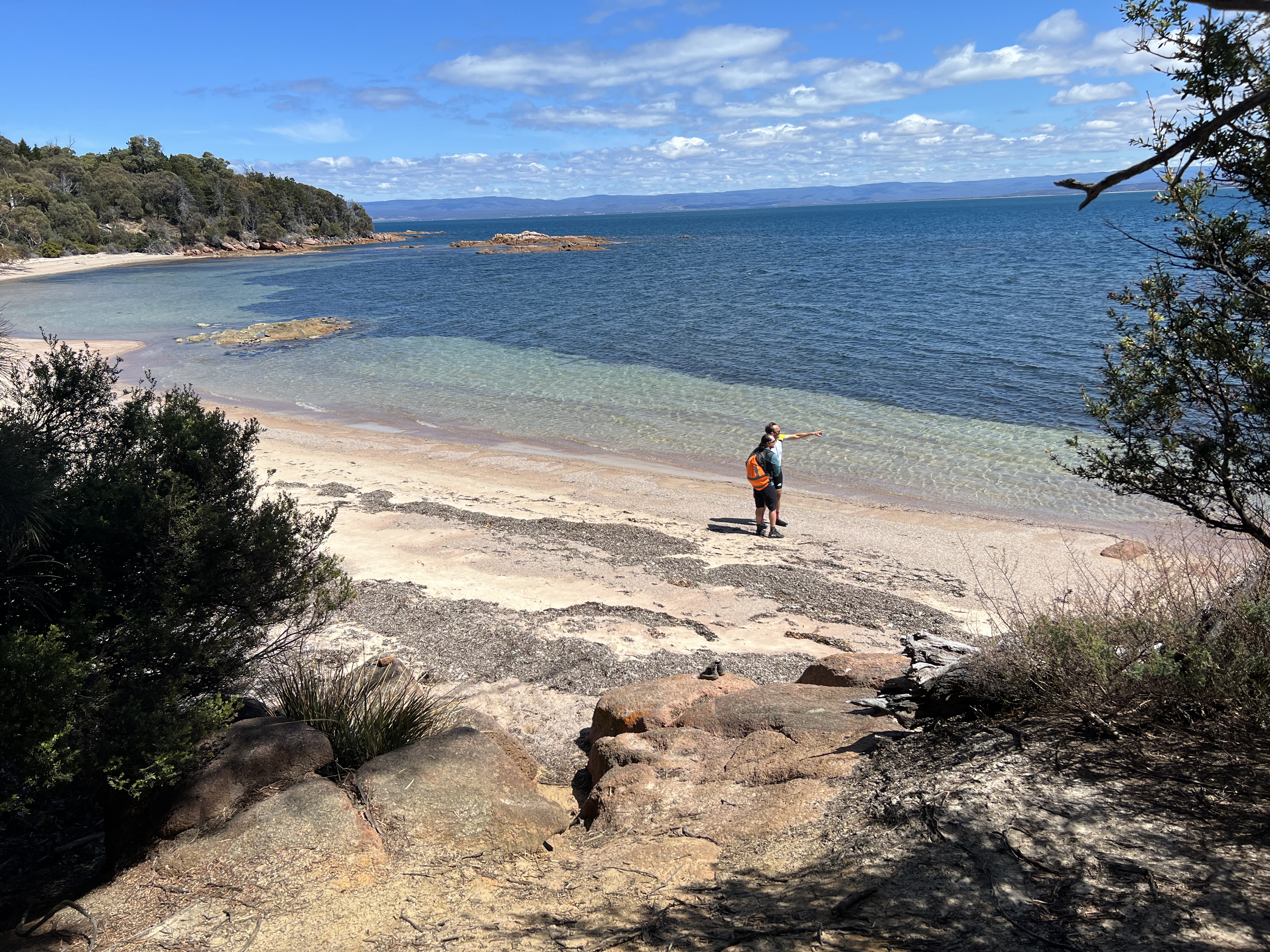
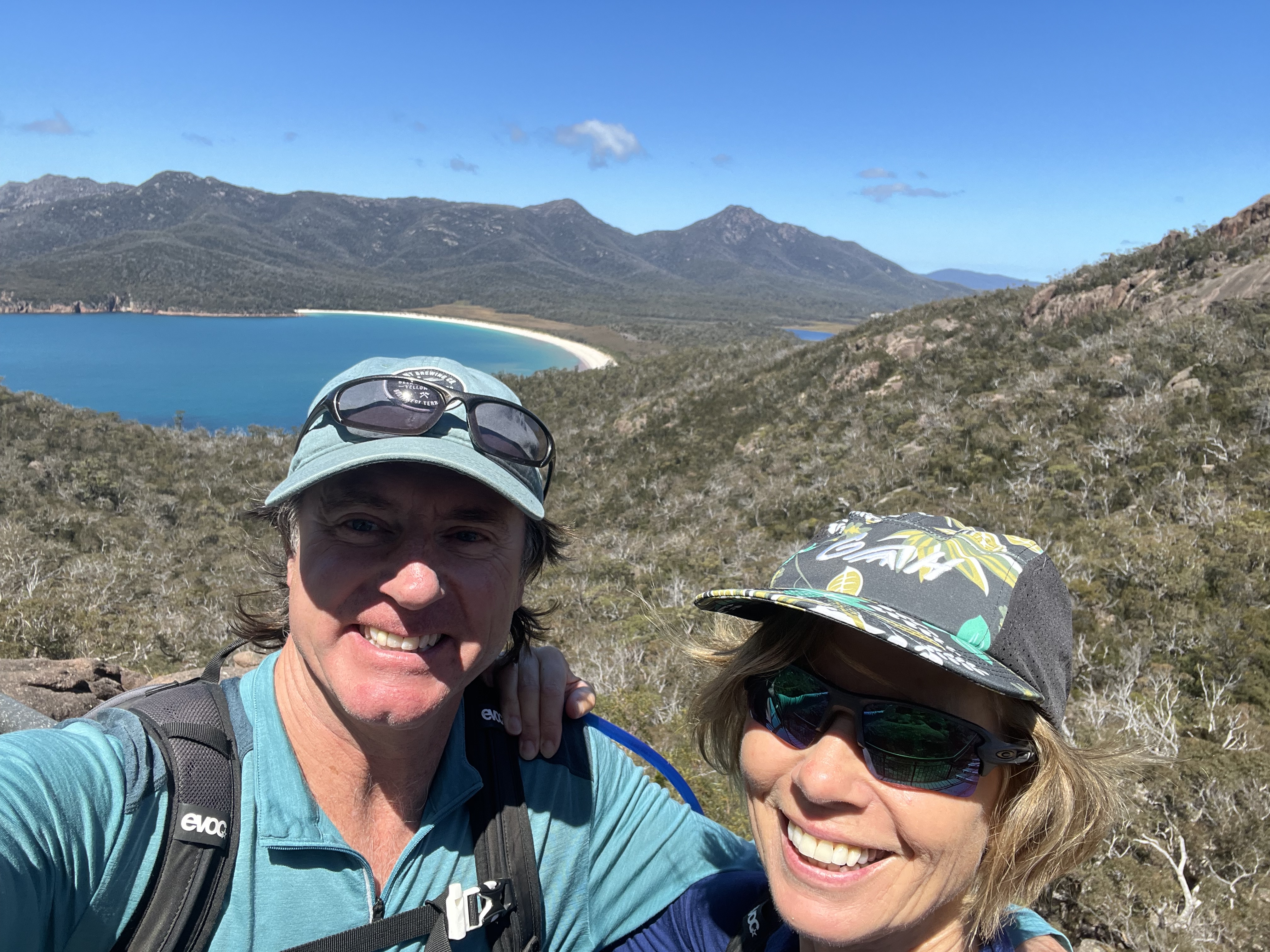
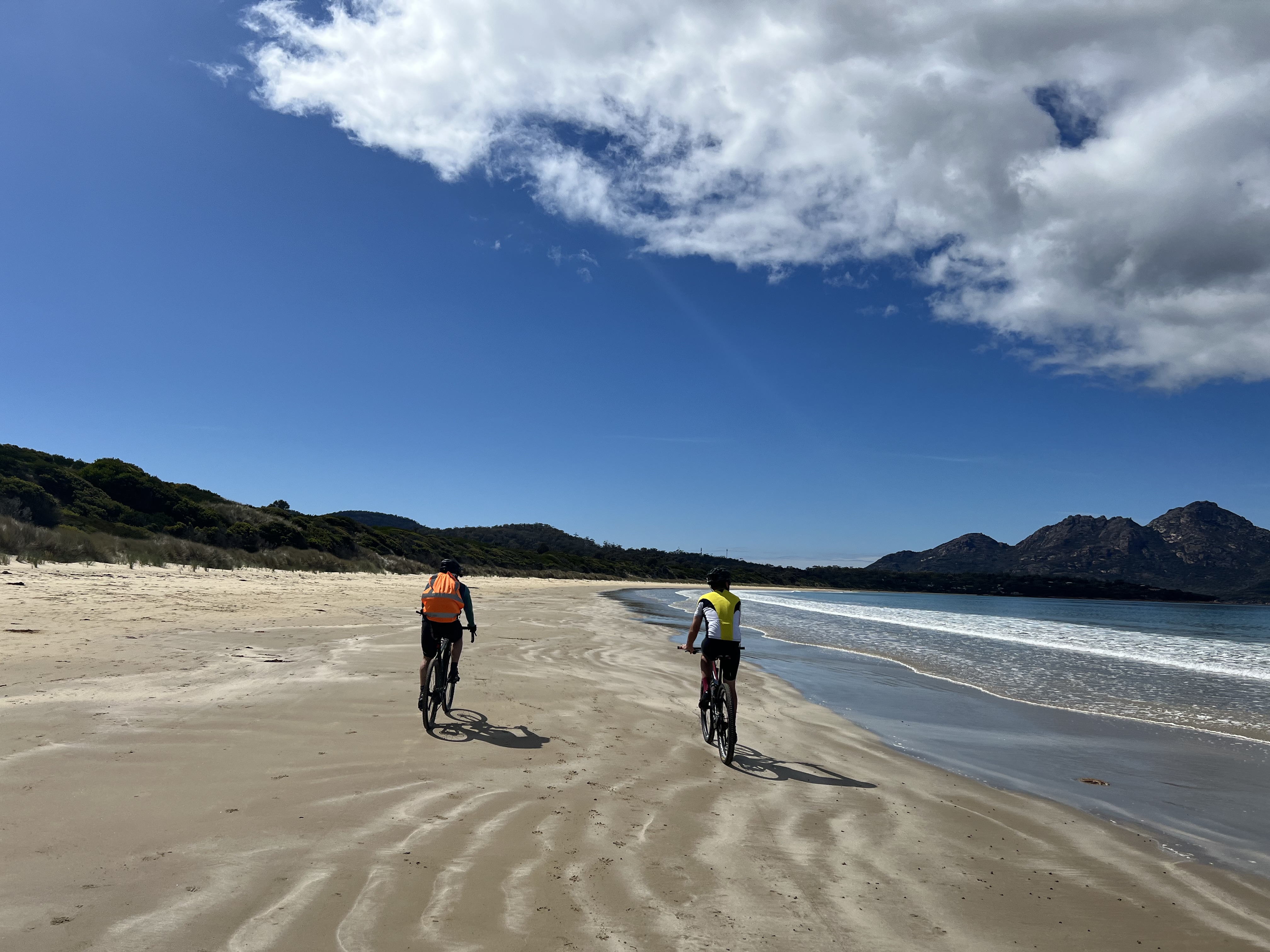
Rod biked with us into Freycinet National Park. Amazing. Worth the trip to Tassie just to see this. He took us on a route we surely would not have found – cycling beaches and trails to the hiking trail head. We hiked up to, of course, Wine Glass Bay lookout, then down to, of course, Wine Glass Beach.

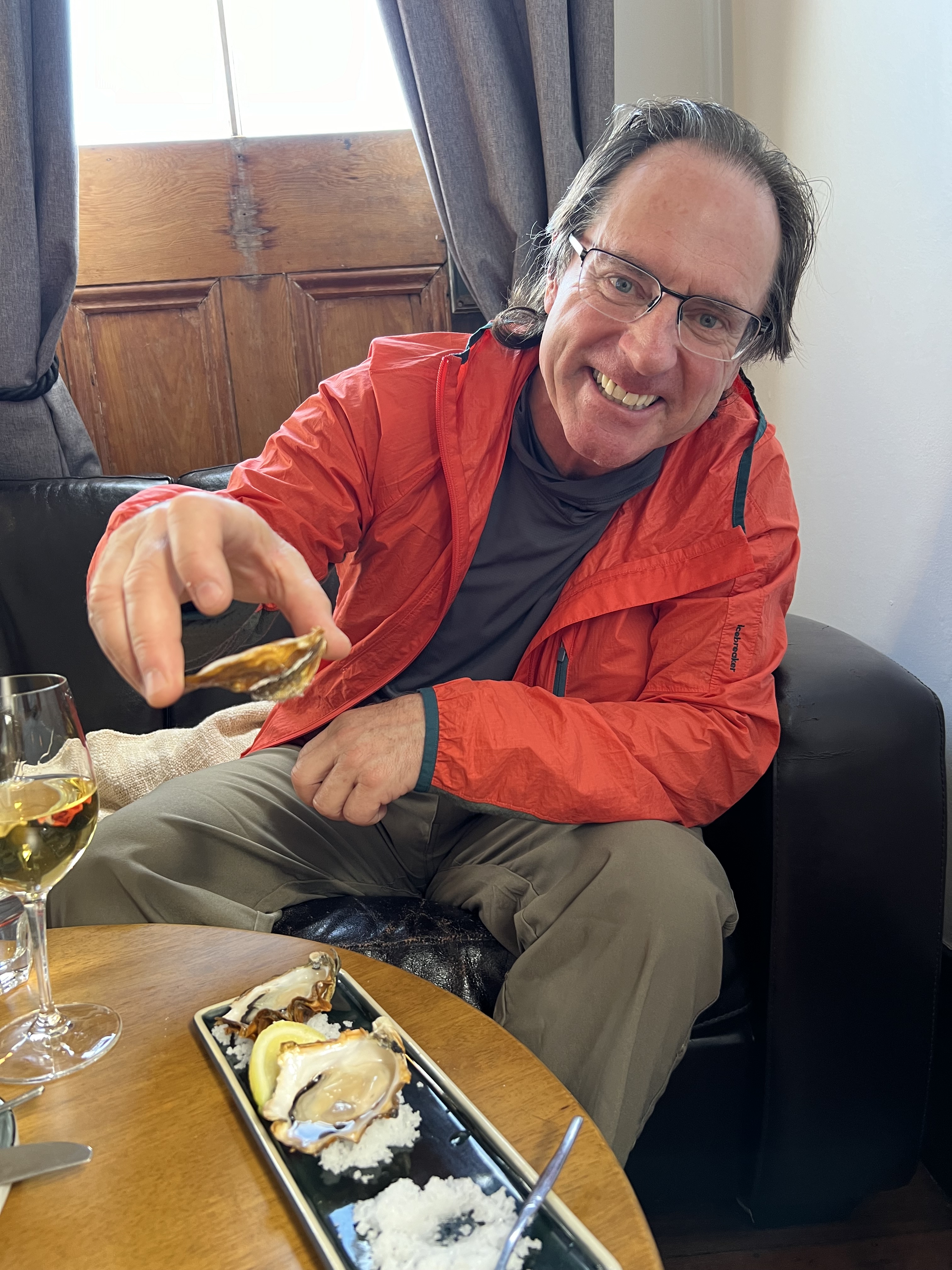
We were apprehensive about planning an “organized” trip for such a long distance. And sure enough, on day two, we started with alterations. We wanted to stay a few more days on the coast rather than head inland. Our Tassie tour planner, Manfred, made an impressive and appreciated quick pivot – but cautioned us on future revisions – as “It’s starting to get busy at this time of year and you might not be able to re-book”. But really, we wanted to stay by the ocean because the seafood is, like, the best seafood you have ever had. Ever. The oysters are so plump and sweet, Seafoody Jay ranked them “Best in the World”. Even the shells have beautiful color and look edible. They aren’t.

Oysters so good Gear Guy could weep!

We were on this tremendous double track stretch in the middle of nowhere on route to Saint Helens when when we ran into this dude on a fully weighted stiff tail mountain bike. A bit disoriented to say the least, he tells us he is a competitor in the annual “Tassie Gift” race. The Tassie Gift race we learn is best described as a tough, gritty, at times ugly jigsaw puzzle – finding roads, trails, goat tracks and not tracks that are wrangled into a figure 8 loop. The route “showcases the enormous diversity Tassie has to offer yet barely scratches the surface. A dating profile if you will. A scenic trip to hell. 1780 kms 38,000 vertical meters. Off road. Off grid. Unsupported.” This dude said he was “riding about 250 km per day”. He was clearly delirious and apparently oblivious to pain but unusually happy. So we signed our Fernie buddy Don up for next year.

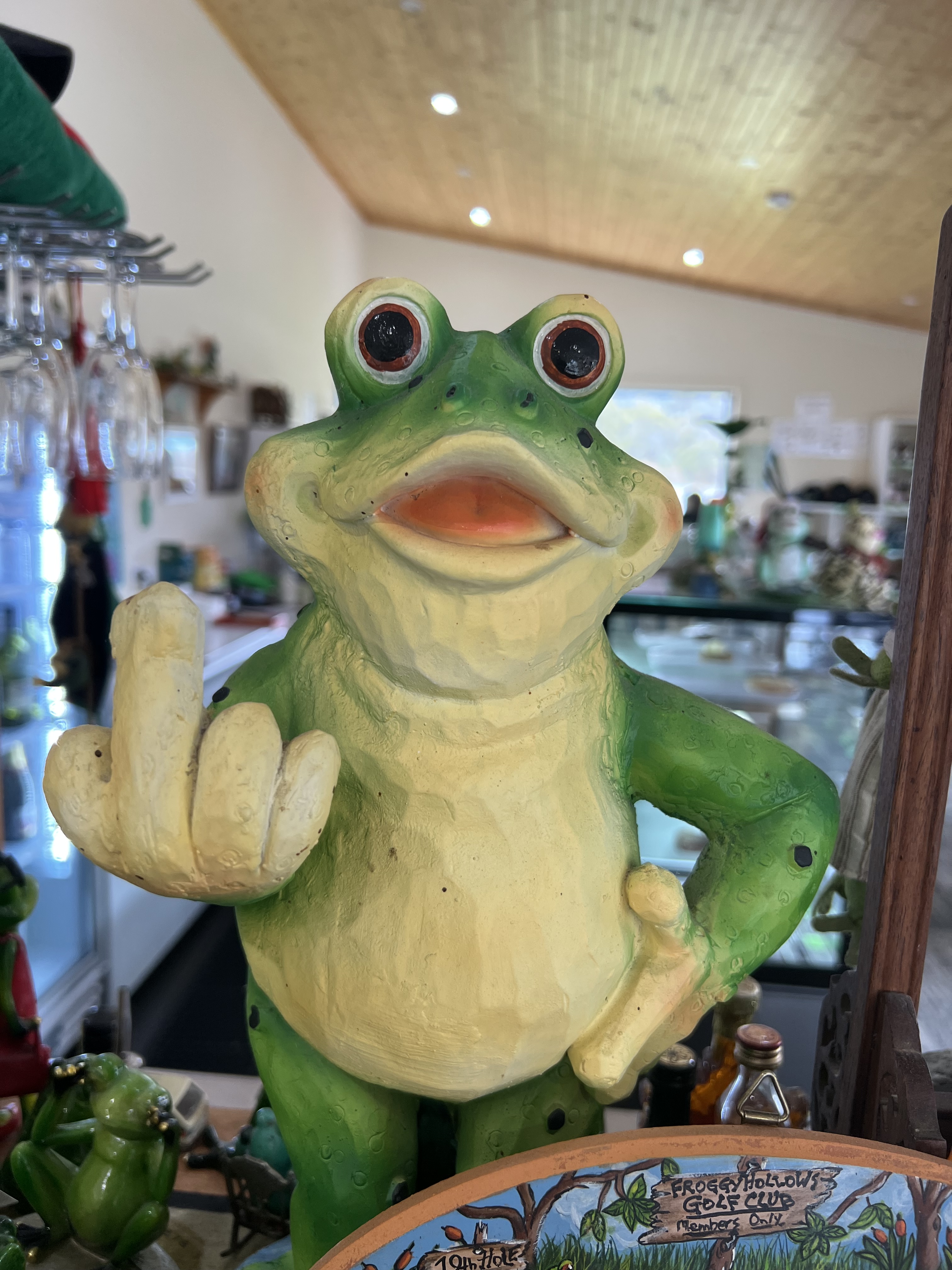
Other than day 1, our biking days on this east coast have not exactly been strenuous. In fact, beach walks, oysters, and flights of Tassie beer have occupied us well. Gear Guy insisted on stopping at the popular Pondering Frog Cafe; where, besides having fantastic Seafood Chowder, there are, of course, figurines galore of Frogs. And being a Frog (Fernie Retired Old Guy), the stop was mandatory. Ribbit.

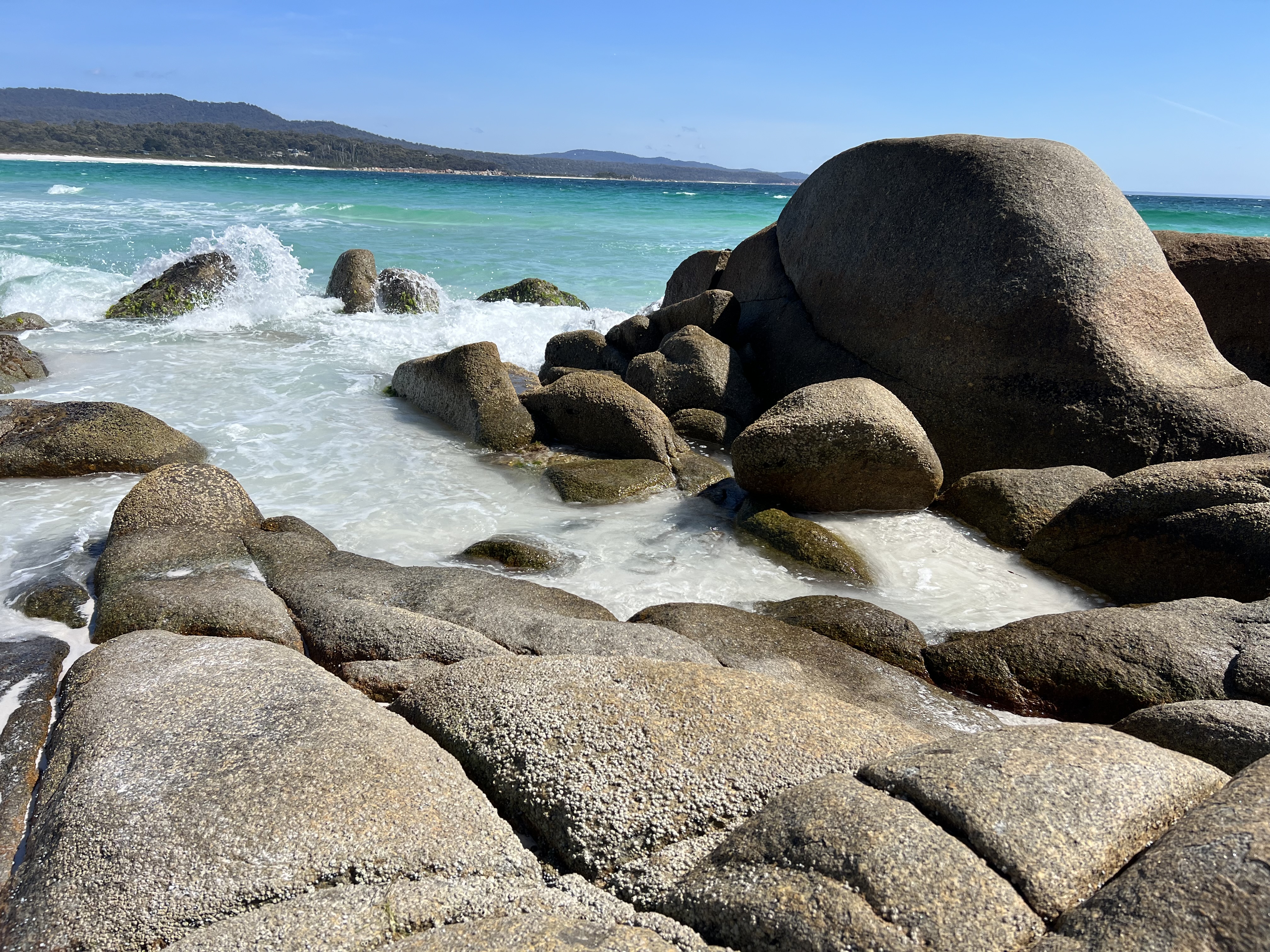
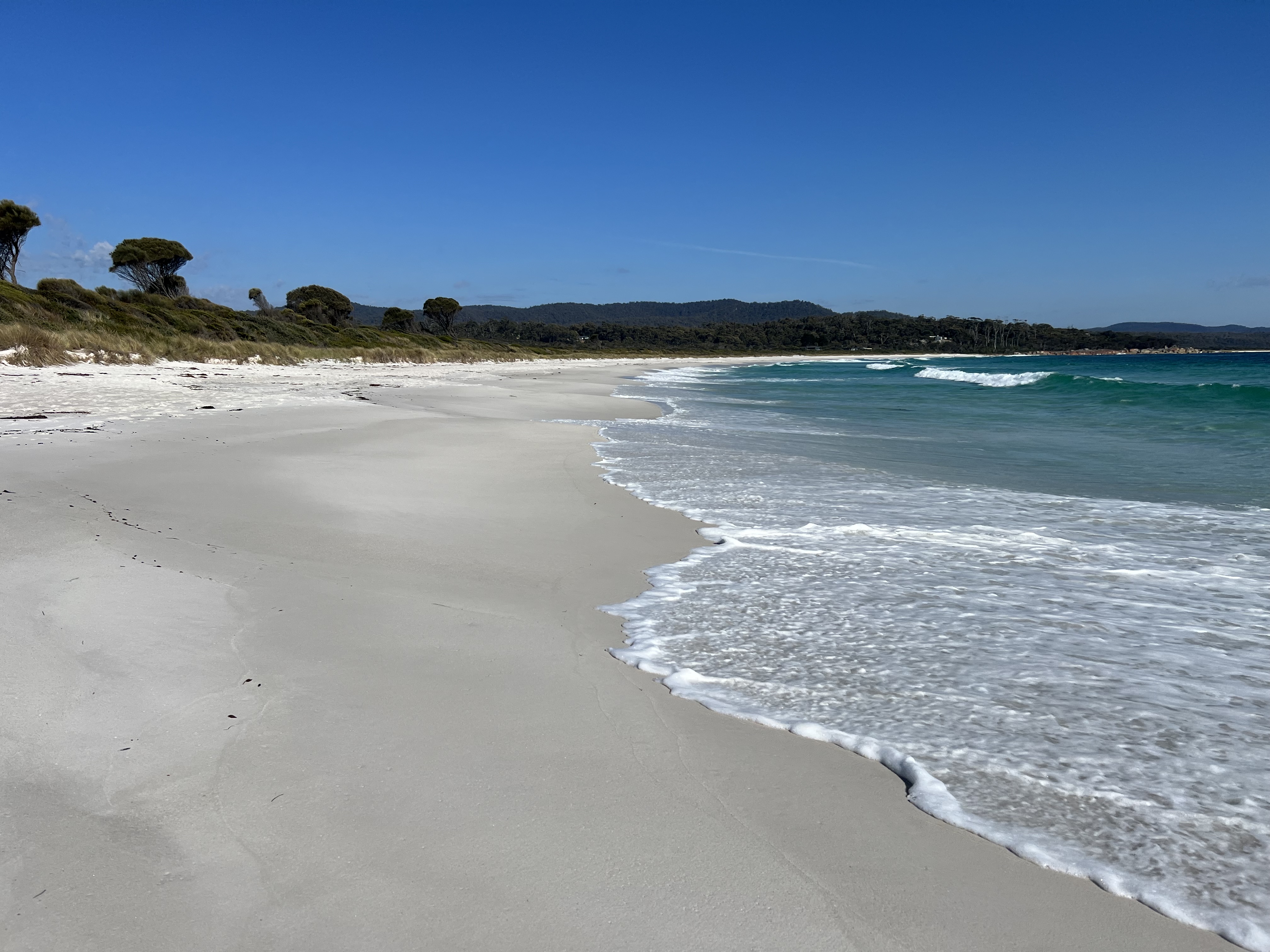
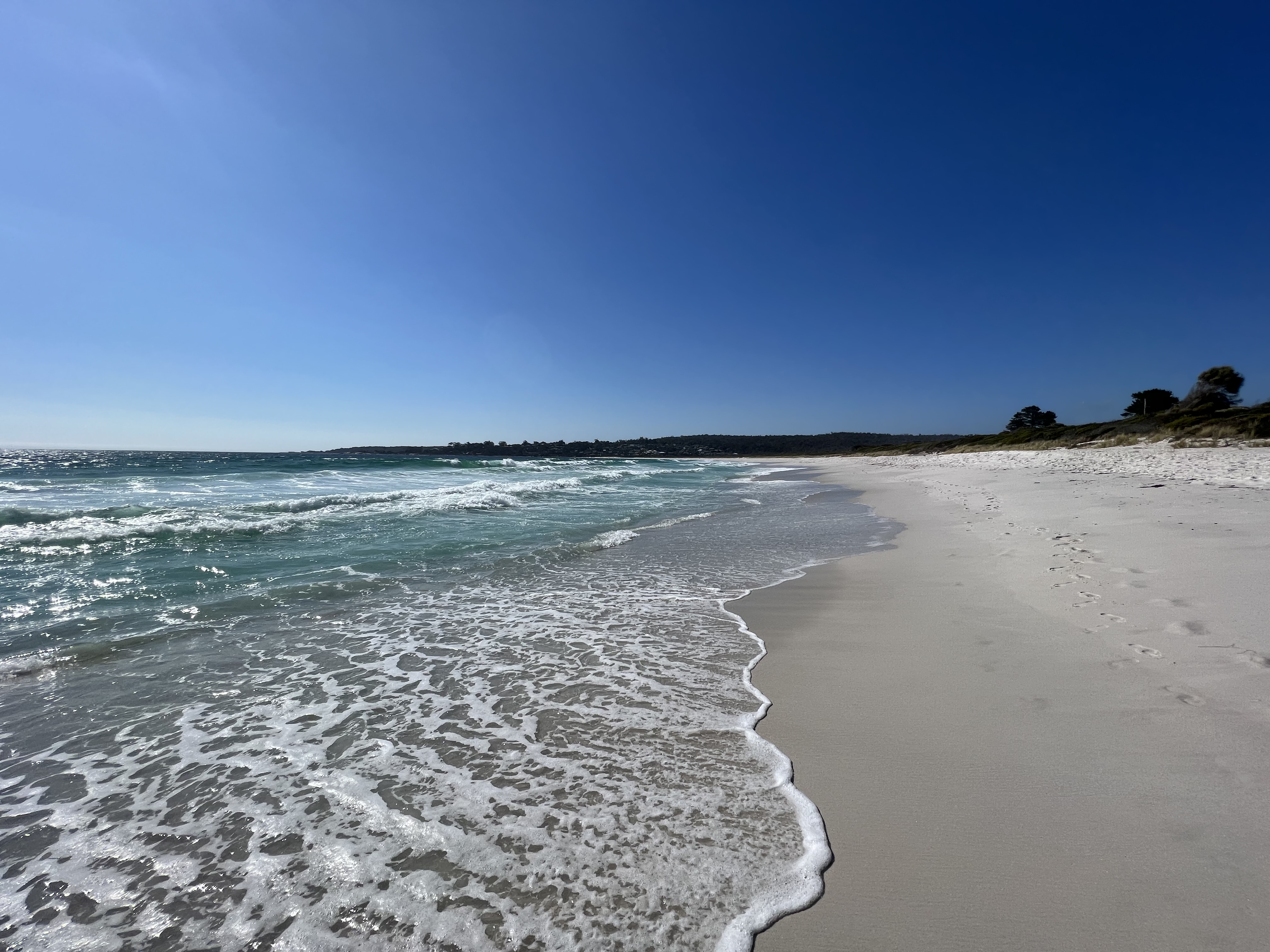
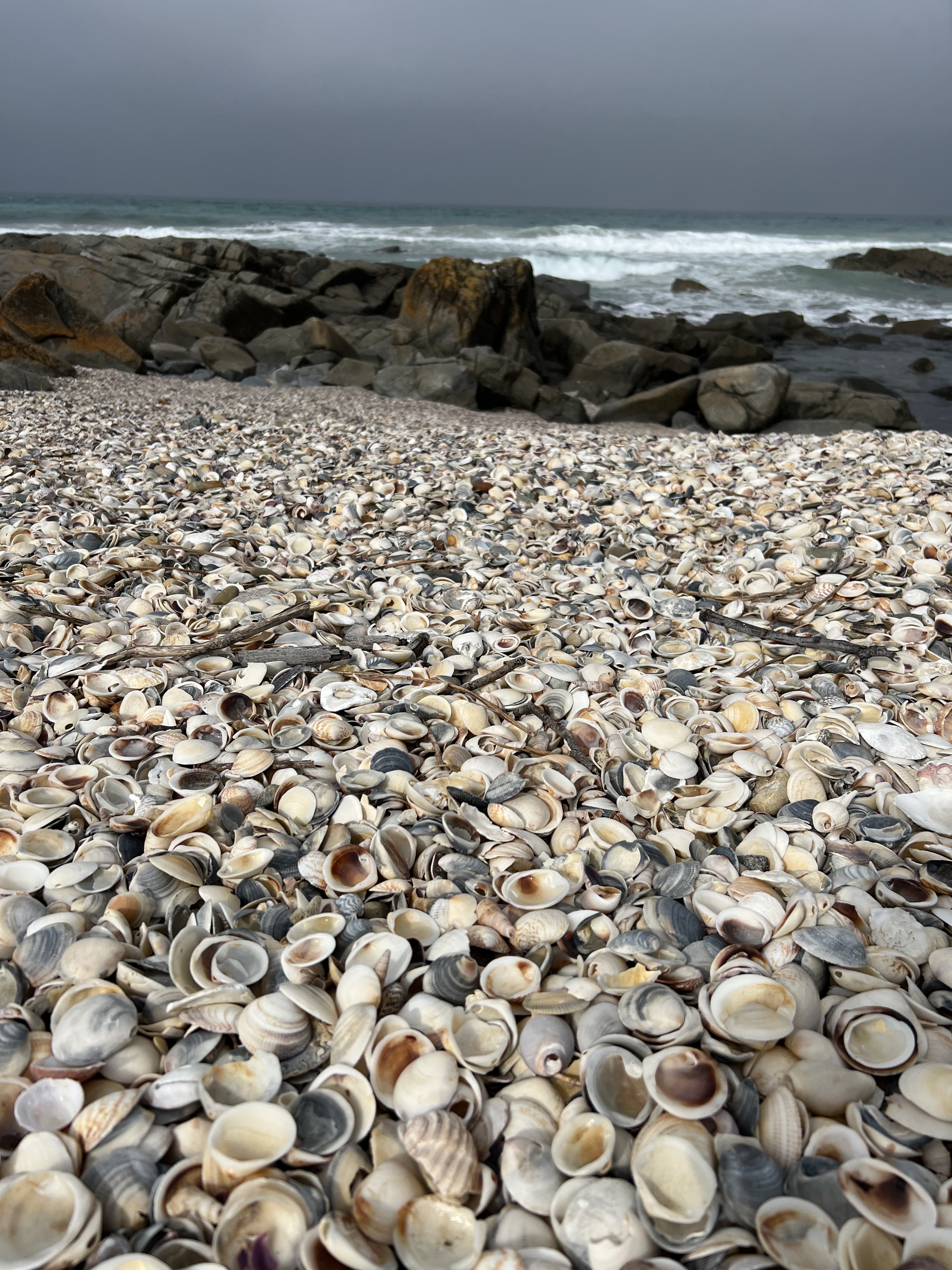
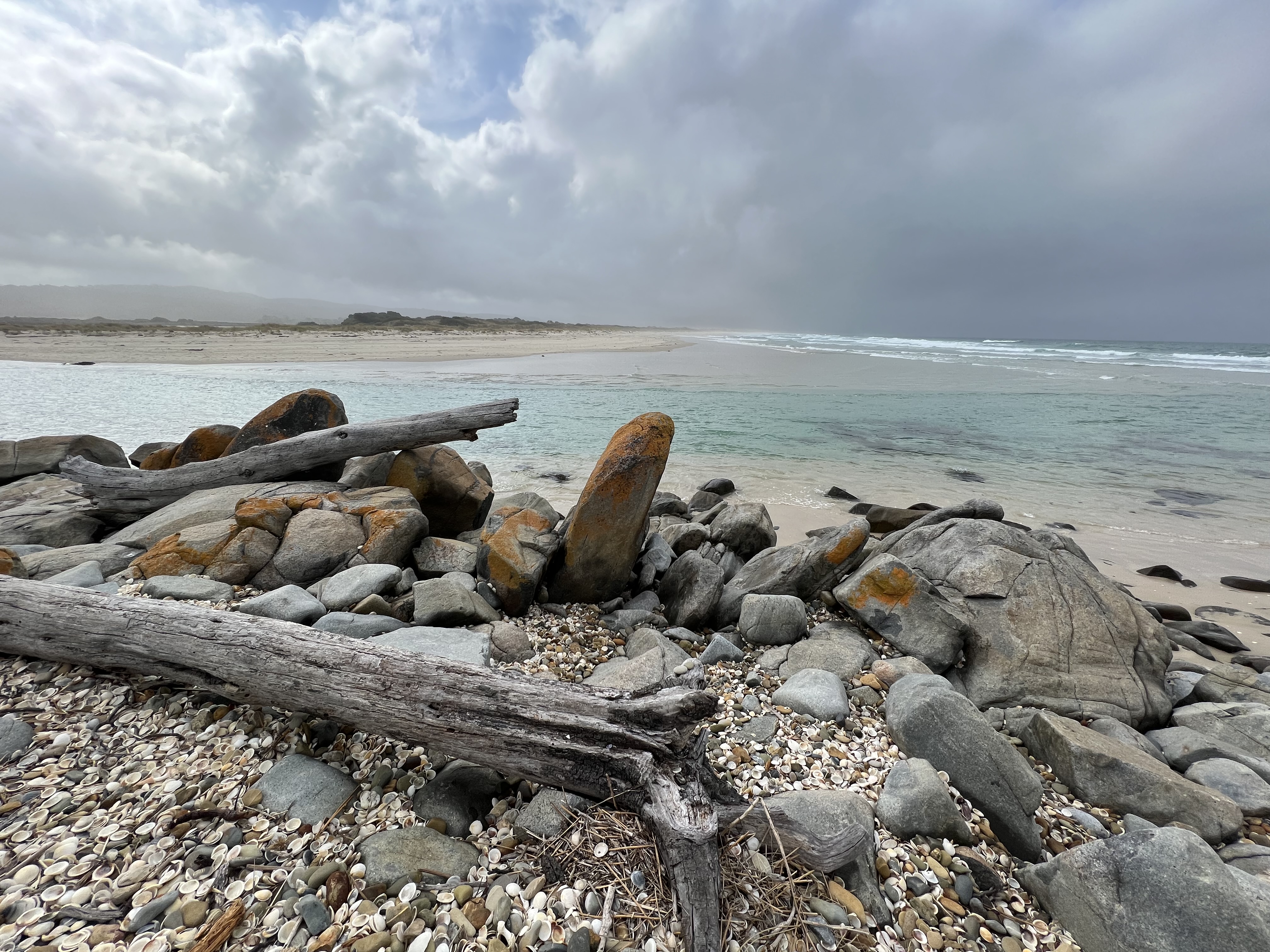
Tassie Beaches – sand, stones or shells – or all three – always sensational

Weather has been perfect so far, much warmer than expected. Well, except for the odd day.

Heading inland, towards the west coast. I’ve just started looking at cycle days ahead…Stayed tuned for what happens on this day below!

It Don’t Come Easy

  • Day 41 Wanaka to Arrowtown 57 km 820 m
  • Day 42 Arrowtown to Queenstown 37 kms 350 m
  • Day 43 Queenstown to Mossburn 119 kms 847 m
  • Day 44 Mossburn to Invercargill 100 kms 120m
  • Day 45 Invercargill to Bluff and back 71kms 211 m
  • TOTAL TE AOTEAROA 3000 kms 25,672 m

We arrived at the last segment of our ride and, really, in spite of some “sporty” weather, a few logistical issues and a bit of Auckland traffic, all was good. But then…….the worst day of our entire ride. It started off with bright blue sky – promising, after 3 days of hiding out in Wanaka in the comfort of a dry bnb out of a persistent rain cycle. Then we saw the snow line in the surrounding mountains was low. VERY low. In Fernie, this is great news. In Wanaka – on the day we climb to the highest point of the entire trail – not so much. We donned every stitch of clothing we brought and went out to enjoy the sunshine and +6C.

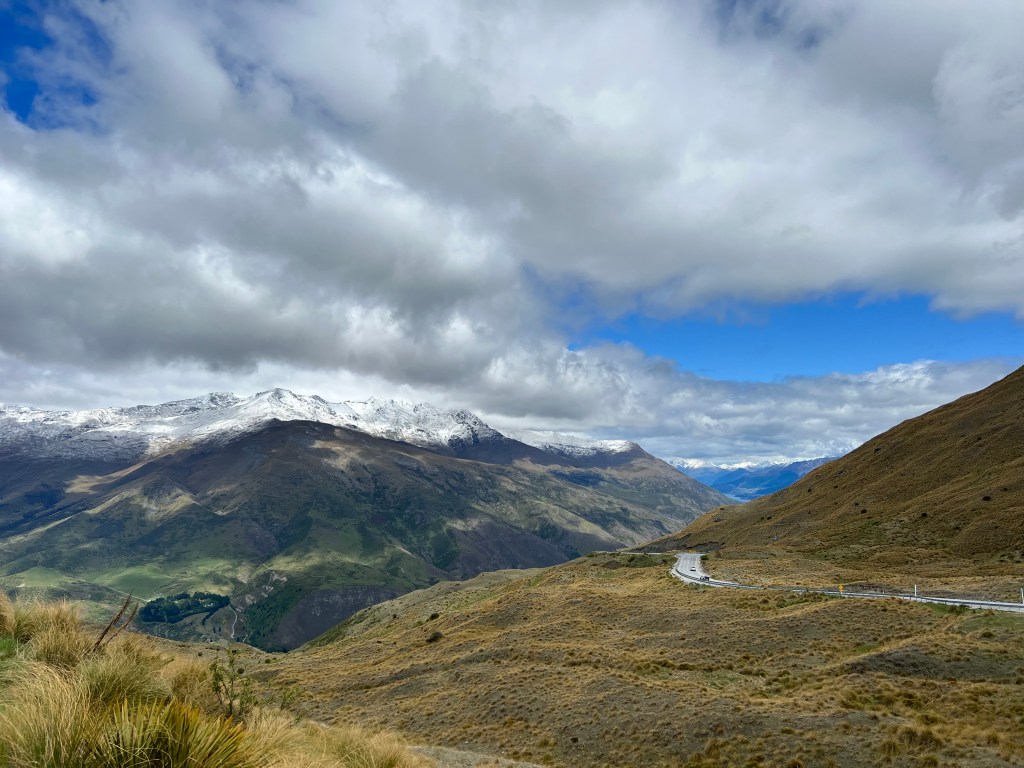
We expected to be riding off highways now, having come through the glacier section of the route. And as we’ve said, those roads weren’t bad, getting a “not terrible” rating from us. And we had no reason to think the road from Wanaka to Arrowtown, a mere 50km, would be anything but a back country road. The state highway veered in the same general direction and, surely, would be the preferred route for motorists. We were wrong. Turns out every rented motor home, every tractor trailer, every tourist behind the wheel chose the windy, narrow, no shoulder, steep scenic summit road, the highest paved road in the country. This was not just normal busy and narrow. The Deerfoot 500 would have been safer to bike on. The 401 even.

There was no painted white line and one cm off the pavement edge was a steep gutter – about a 40 cm drop. With rocks in it. Up close inspection revealed the rocks are Newfoundland sharp. We were buzzed more on that 50km section than in all of our X-Canada and New Zealand riding combined. You might ask, why did you continue? Well, we thought about abandoning that section several times and calling in a shuttle from Wanaka, a helicopter, anything. But, of course, there was no cell reception. We could have activated our InReach with an emergency signal. We thought this would be entirely reasonable. But (perhaps foolishly) we forged on climbing, meter by meter, purging into the gutter often. When we finally reached the top of the highest sealed road in the country, the Crown Range Summit at 1076 m, we were grateful to have our limbs and marriage intact. But, it must be said, this was bad. It had a lingering PTSD effect – Post Traffic Syndrome Disorder. We warned any bike packers we ran into along the way of the understated peril of that section. “Hey Mate, shuttle that section. You’ll thank us later.”

Arrowtown was our reward, a lovely town with cafes and shops, all closed at 2pm. But Blessed are the Kiwis, the liquor store was open.

Still suffering a little PTSD, we unwound on a wonderfully short bike path ride into Queenstown, the tourist capital of the country. Queenstown is comparable to Banff but with more shops. And an international airport. So more tourists. It’s known for jet boating, bungy jumping, zorbing, and any other kind of “adventure” activity kreative kiwis can think of. Our adventure activities were limited to choosing restaurants. A fantastic waterside lunch spot right on the trail served up what Jay says is “the Second Best Fish Chowder in the world”. (Couldn’t beat out Nova Scotia’s – thanks Sue). Dinner, a ridiculous fresh seafood platter, also came with Kiwi entertainment as we watched the staff throw a departing employee in the (freezing, glacier fed) lake for fun. Kiwi humour. Kiwi Tough.

We left Queenstown on a boat across Lake Wakatipu, unfortunately not on the lovely Earnslaw coal powered ship, but on the staff boat, as it left earlier and we knew we would need every minute of the day to reach the first and only accommodation available on our trek further south given the sketchy rain/wind forecast. We expected the 119 km trek to Mossburn (population 210) to be difficult. Fortunately, it was a rather civilized 6 degree grade most of the way – leisurely, but for the 50km headwind, rain squalls and unseasonably cold temperature. We leapfrogged e-bikers who were getting shuttled to an upscale hotel after 60kms. Although openly and obviously not regular bikers, they were helpfully providing us tips on gear and how to stay protected in the rain squalls. “Stay on the lee side of the bushes and trees Mate, that’s the trick”.

The downpour started just when the gravel road became freshly graded, hammering us with loose and wet rock for the last 50kms. We were sinking in the gravel more than we did on 90 Mile Beach. Lucky for us, the head wind persisted and increased to gusts of 60km or so to keep us cool in the 4C temp. We’re talking windy. Now we know why Kiwi birds learned to walk.

At 6pm we dripped into the wonderfully warm lobby of the Mossburn Railway Hotel. Thomas, the Owner, who is well known in the Aotearoa bike community to cater to frostbitten bike packers, gave us a warm Kiwi welcome.

“Youz moost be Dibbie! And youz moost be …”. Gear Guy, “Mr Dibbie”.

“Youz are a bits late but I spect you had soom shallinge on that greevel rood. Weez ave a new grader dreever who don’t knows whats heez doin”, he said sympathetically. And then quicker than a Kiwi wink, Thomas had a beer in our hands and a warm table for us to de-robe our drenched gear around.

Our second last ride day – a flat road south from Mossburn to Invercargill, a bit Canadian prairie like. And a much needed dry day – was blissful.

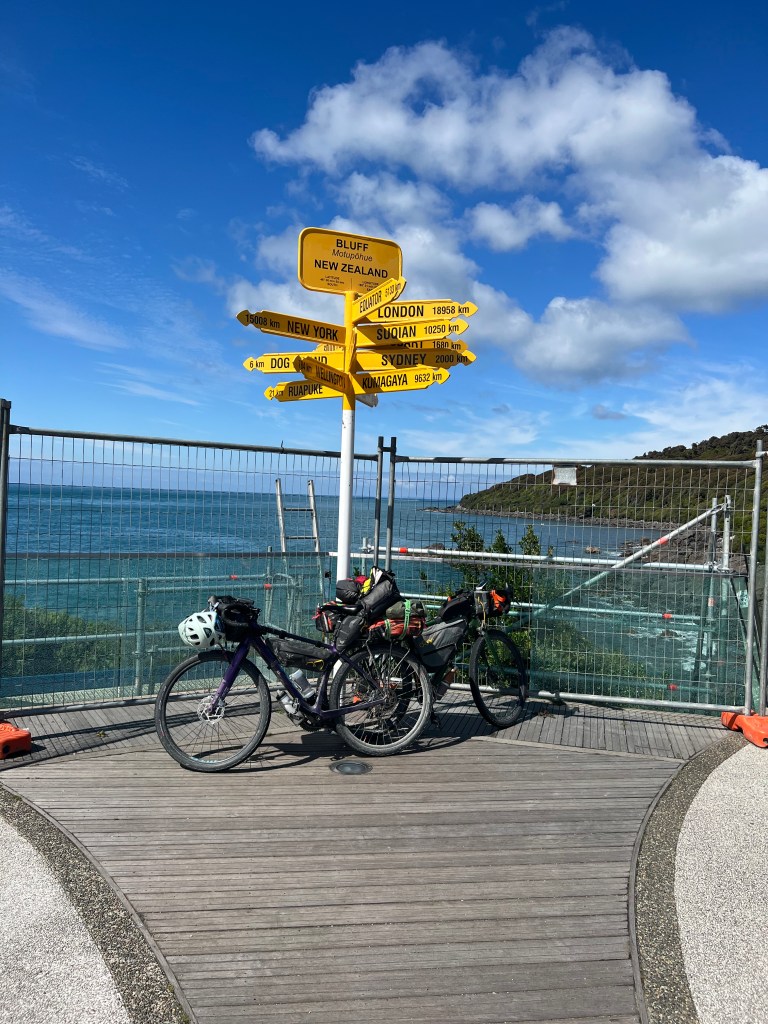
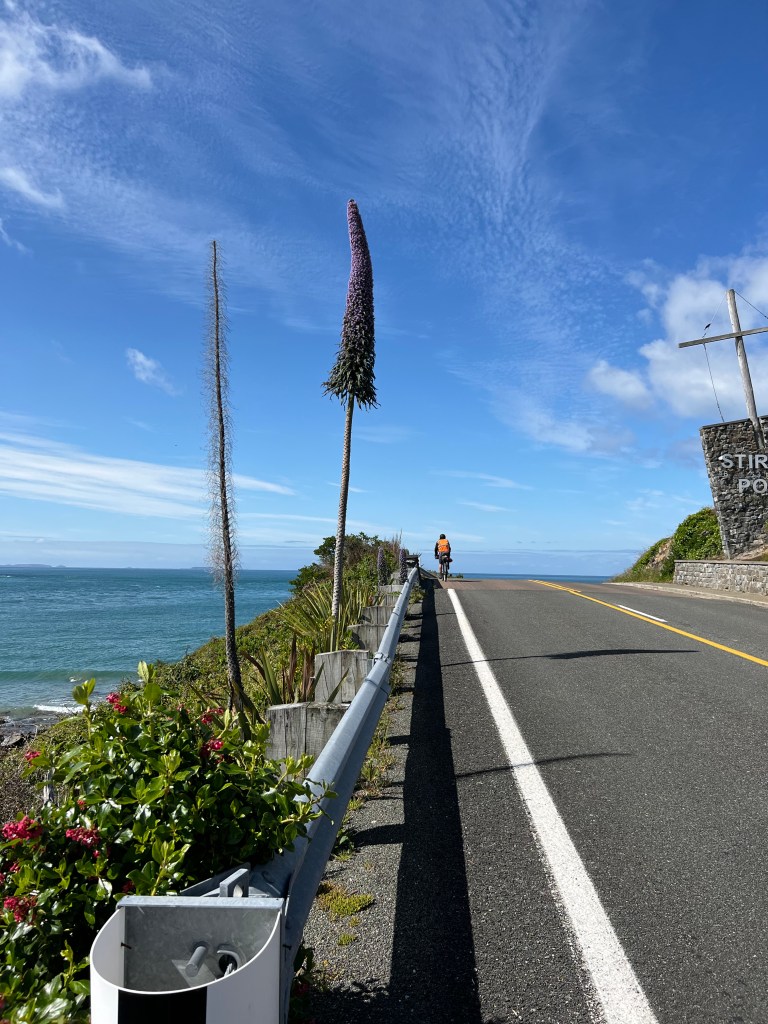
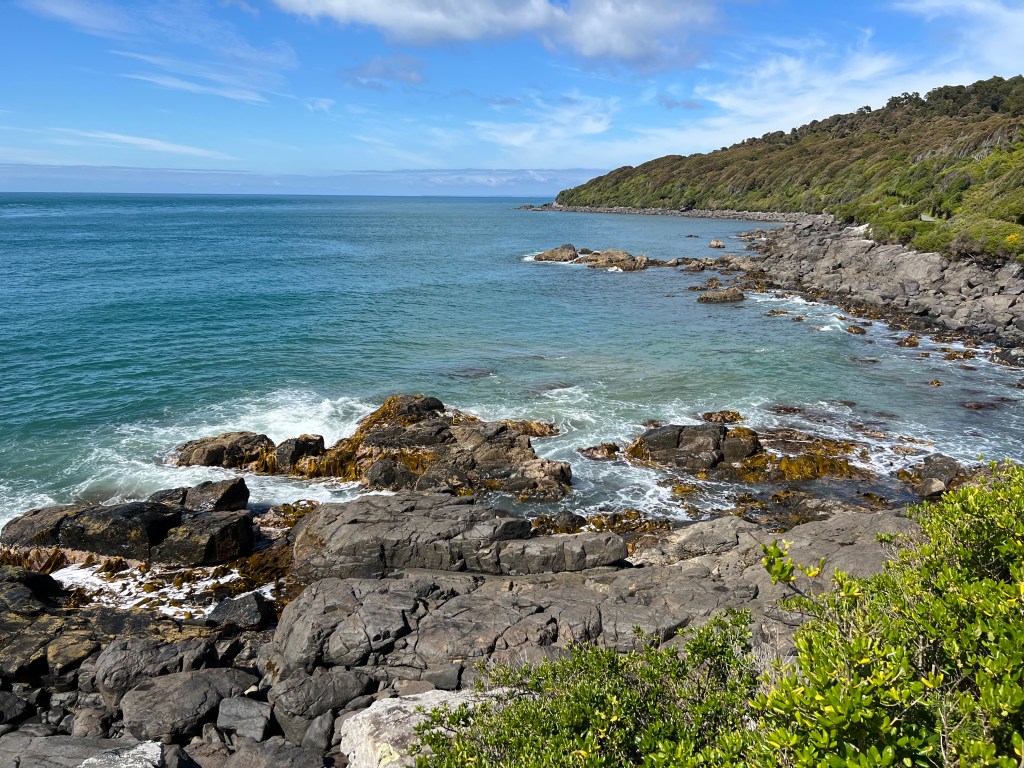
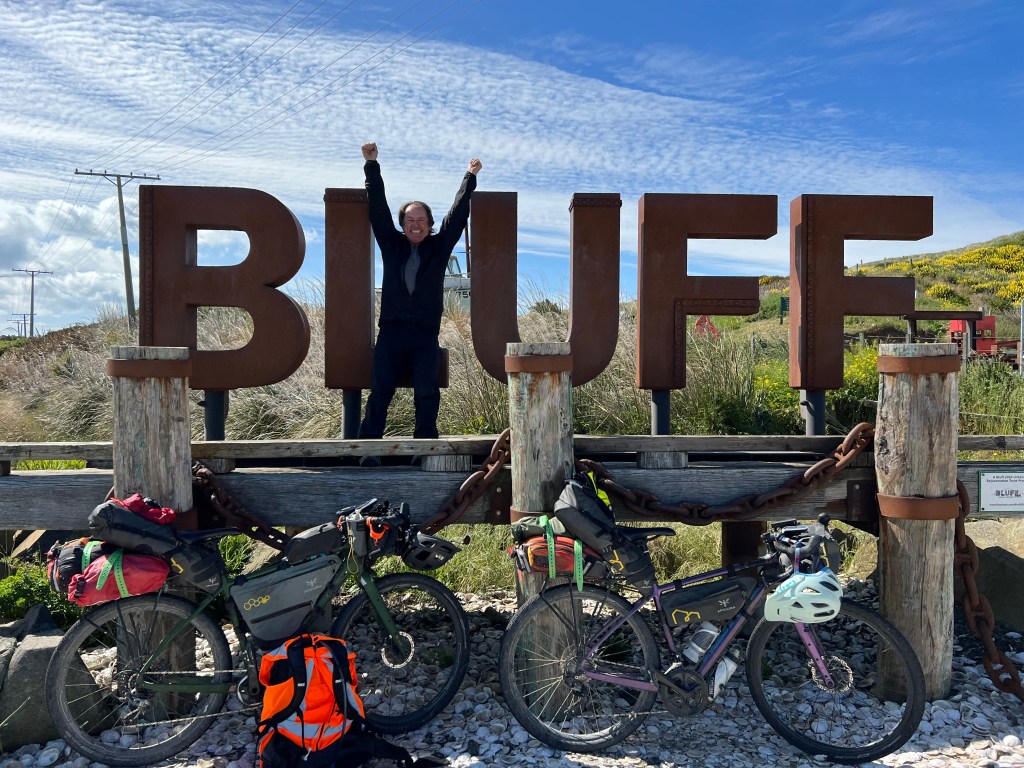
The last ride day was the most promising weather wise in some time. An easy 35 km ride on a new trail off the highway to the southern tip of New Zealand – Bluff.

We had hoped to spend a celebratory evening in the upscale hotel and restaurant there, but to our shock and surprise, both were closed. So we barely survived eating a toastie and the world’s worst meat pie, proudly served by the only open cafe in town. Bluff is not known for its culinary delights. Just oysters. Which are out of season.

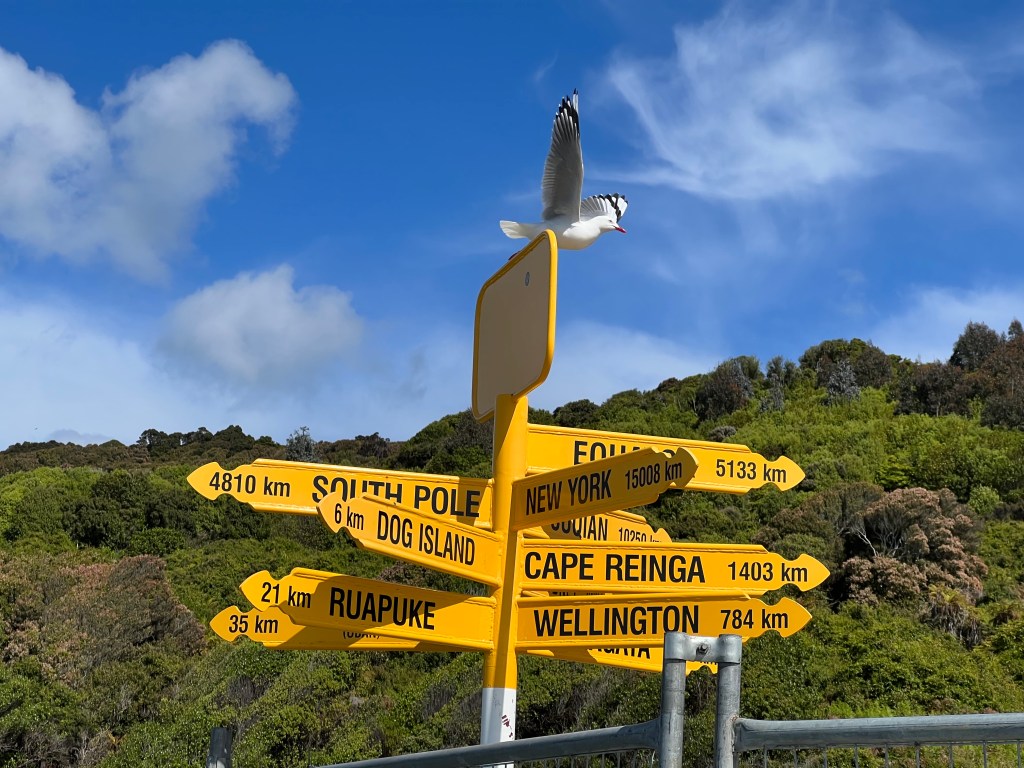
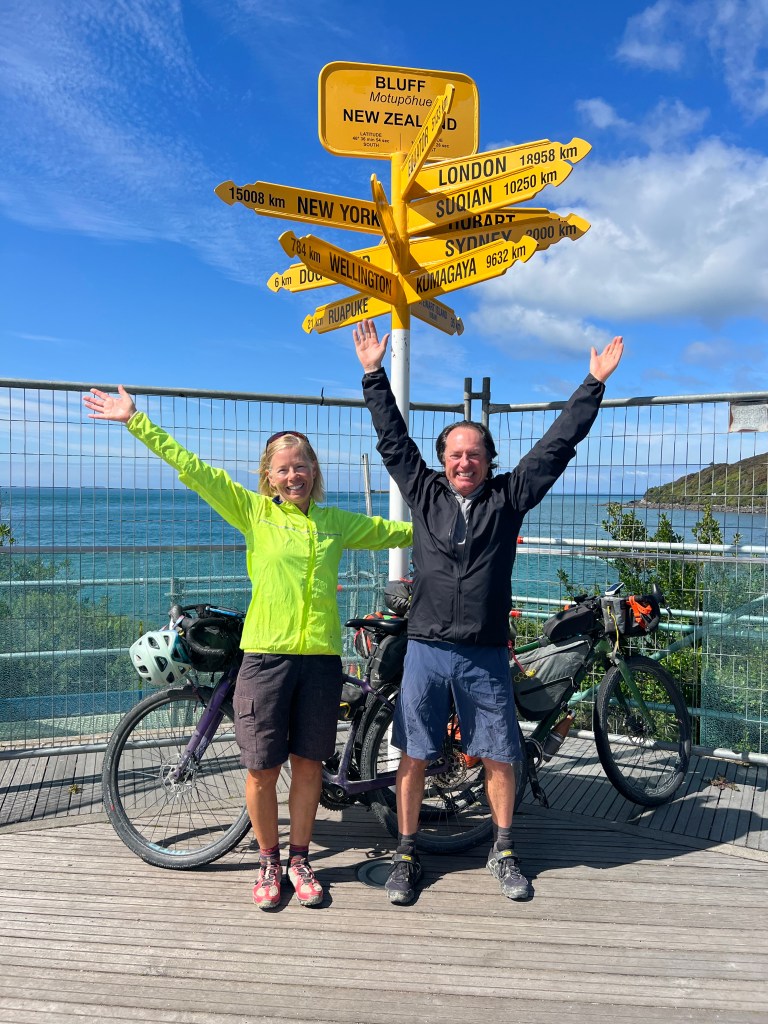
Bluff – slightly closer to the South Pole than the Equator.

The Aotearoa Route – 3000 kms and 25,000 m of vertical.

We often compare this trip to our X-Canada ride. There was more vertical than we expected, in fact 25% more per km than Canada. This surprised us. There was more vertical on the North Island than the South Island, which also surprised us. And the grades are steeper, probably because the Aotearoa Route offers so much single track. It’s like bike packing in BC for 3000 kms.

Make no mistake, the biking routes in New Zealand are phenomenal – millions of Kiwi $$ have been spent on infrastructure. Canada could perhaps take a lesson from them. About a decade ago, the Prime Minister of New Zealand at the time had a vision to create a tip to tip bike route and voila. Today it has created a new sector of tourism. Especially for the E bike revolution of late. We ran into many E Bike tourists out for a day or multi-day tour, more than happy to contribute to the Kiwi economy. Hotel, restaurant and cafe operators time after time thanked us for our business and gratefully told us that the bike routes are a huge contributor to their business.

We are still processing this adventure but have some immediate highlights. Like the 5km flooded walk into 90 mile beach; the Timber Trail and Shangra La lodge; the remote Bridge to Nowhere section; the countless days of endless trails and double track – seeing no one and hearing nothing but the birds and of course Nelson. We loved Nelson. In 3000kms, there are only 50kms we would do differently (see above).

Kiwi people are kind, helpful, friendly, a lot tough and a tad crazy. Like Canadians, only there are less of them. There are a lot of sheep. More than Kiwis – people and birds combined. There are a lot of cows too. But no bears. As strange it this might seem this takes some getting used to when riding on a single track in a dense forest. In Canada, we’d be making noise to give bears, cougars, moose, notice of our presence. Relaxing perhaps, but we missed having an opportunity to see wildlife beyond birds.

Some Logistic highlights: we tried to book accommodation 1 – 2 nights ahead in order to avoid the dreaded tent. We found more upscale accommodations, mostly AirBnB’s, than in Canada, but we did manage to lower the bar for our worst shelter ever. We have now carried our 4 pound tent for 13,000 kms without putting it up. We burned 3 cans of gas for the stove, donned our sleeping bags about 8 nights out of 45 and rarely took off our puff jackets when we weren’t riding. Our bikes and gear held up well, especially the 2” Donnelly tubeless tires. Nary one flat. Gear Guy managed to source 6 of these tires in a REI store in California only a couple of months before we left. Six tires constituted 20% of the entire REI US supply of that tire at the time. Our Kona Libre bikes were great on this trail but the next generation of gravel bikes would have been greater. The amount of single track and steep grades would have been more fun with slightly wider tires, lower gears and a dampened head set to absorb some of the shock. Our next set of bikes is on order.

Like Canada and perhaps everywhere, New Zealand still suffers a Covid hangover with business closures and staff scarcity. Like us, they too wonder where all the workers went. This made our logistics more challenging. But really, we just assumed businesses would be closed and accommodations would be hard to find, and we were seldom disappointed.

We find bike packing a wonderful way of experiencing a country. You miss “typical tourist” sites, but see so much else. Our friend Kennan once offered that it “must be liberating”.  That description certainly resonates. It is simple.  Cathartic is another word.  In short, we don’t really know.  We are not oblivious to the fact of how lucky we are that we both love doing it.  

As we age and become wiser, “it might be time to consider smaller and smaller countries. And flatter ones.”, as suggested by our friend Gord. Roger that.

Thanks to encouragement by many of you, we write about our adventures.  We’ve thought about that and whether we should bother.   But over time, we’ve discovered that writing about our distance rides helps us better understand why we do them in the first place. Because, among the cost, the time, the logistics, there is sometimes unnerving risk that accompanies them. And when things go wrong and adventure becomes misadventure, then you wonder a bit.  

But really, the quest of active pursuits lifts us to a place we would not have otherwise gone.  At the end of the trail, the beer is colder, the food is finer, the music is deeper and our bond is stronger.  Sometimes, “It don’t come easy”. Sharing that with family and friends makes us closer.  It’s riveting how quickly our trips seem to come to an end.  Just as this blog now will, at least for now. Thank you for riding along with us.  

We are happy to be back to our home in beautiful Fernie. The snowline is low and the skiing is great. Life is good. Merry Christmas to you and your families. We wish you good health and great adventure in 2023. Deb and Jay

Civilized Remoteness

  • Picton to Nelson (By Car)
  • Day 27 Nelson to Tapawera 66 kms 489 m
  • Day 28 Tapawera to Lake Rotoroa 63kms 750 m
  • Day 29 Lake Rotoroa to Murchison 32kms 273 m
  • Day 30 Murchison to Maruia Hot Springs and Spa 93kms 1200m
  • Day 31 Maruia Hot Springs to Reefton 60kms 400m
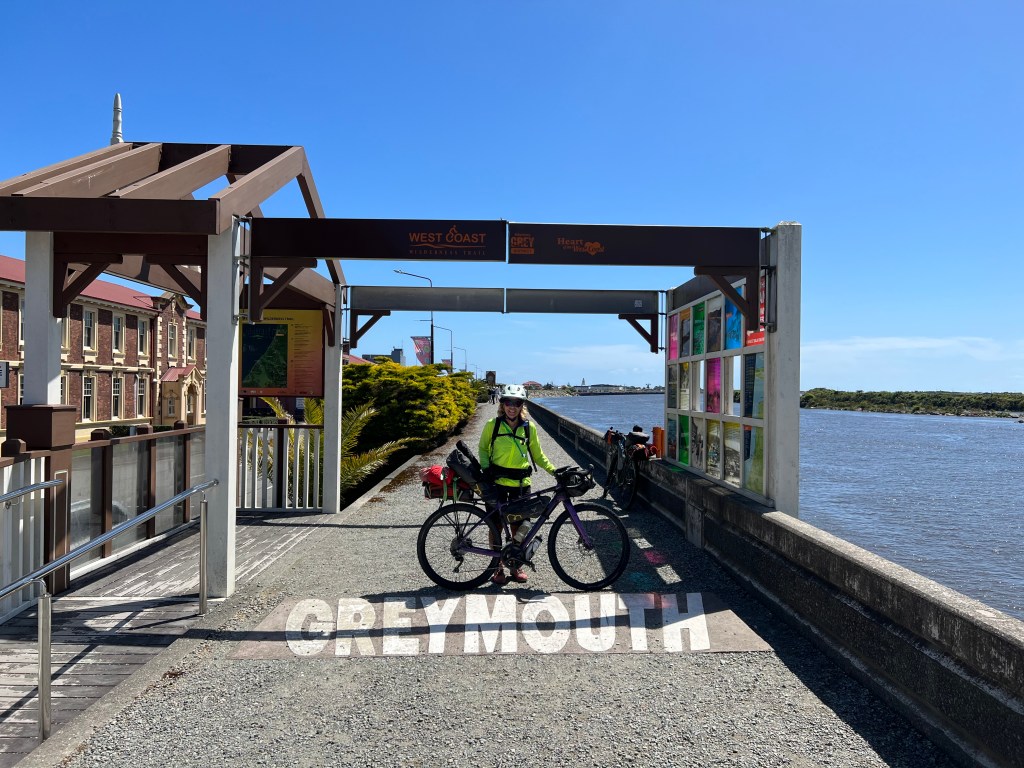
  • Day 32 Reefton to Greymouth 91kms 525 m
  • Day 33 Greymouth to Hokitika 89 kms 780 m
  • Day 34 Hokitika to Ross 34 kms 65 m
  • Day 35 Ross to Hari Hari 47 kms 350 m
  • Day 36 Hari Hari to Franz Josef 66kms 530 m
  • Day 37 Franz Josef to Bruce Bay 71kms 780 m
  • Day 38 Bruce Bay to Haast 76 kms 654 m
  • Day 39 Haast to Makaroa 79 kms 1052 m
  • Day 40 Makaroa to Wanaka 75 kms 700m
  • TOTAL SO FAR 2534 kms 23,324 m

Nelson is inaccessible by bike until mid December. A rain event washed out the trail AND the only highway. The workaround highway is jammed with cars and massive trucks. We rented a car at the ferry terminal and drove through the vineyards of our favorite Marlborough wines. We only stopped at Rimapere, but found they had not yet opened their tasting room. But in typical New Zealand fashion, the staff gave us a tour of the vines and a free tasting of their Reserve Sauvignon Blanc. Sadly, they could not sell us any as they weren’t “open” yet.

We were lucky to enjoy a couple of days with good friends Kate and Stephen and kids Alice and William. They moved to Nelson from Canada 7 years ago mainly because, as Stephen describes, “It’s the most remote, civilized country in the world”. Civilized remoteness. That’s it. That’s what describes a lot of what we’ve been feeling here. Everything feels so remote, but with no predatory animals or plants harmful to us humans, it is so….civilized. Grocery stores and cafes are abundant (when not randomly closed) and still so ….remote.

There is a lot to like about Nelson and the South Island. Just ask William who is a competitive mountain biker, a windsurfer, a free diver, a fisherman and a hunter. Or Alice when, with guitar in hand, she gazes out the window at the amazing seascape and offers, “You kind of get use to it, but it is a pretty special place”. We had such a wonderful time. A trip highlight for sure. What a beautiful home, great hospitality and wonderful visit. Gear Guy, “We should just stay. I could learn about chickens and sheep and stuff.”

Our bikes got a rebuild from The Bike Station – full drive train and brake pads. Gear Guy can’t say enough good things about the Bike Station in Nelson. Not only did they have the expertise, they also had a fully stocked inventory of high end parts and gear. The Aotearoa ride is wonderful but hard on equipment. We attribute the worn out drive trains to the huge amount of single track we did as well as the considerable grade on many rides. For Fernieites, it was sort of like riding on Ridgemont trails for days on a fully packed gravel bike.

Gear guy is enamored with Nelson. Not only because of the multitude of activities available including mountain biking, gravel biking, hiking, kiting, windsurfing, swimming…but because of the impressive bike and gear shops. One of the shops appropriately called “the Gear Shop” offered all the same brands we’ve come to know and love. And like the Bike Station, well stocked with inventory. We picked up several little things (that will stuff into our packs), but the highlight is the spatula. A $10 tiny spatula that will flip our fish filets and omelettes like nobody’s business. Although somewhat expensive, I was reminded – “Good gear is priceless.”

Dragged Jay out of Nelson to head south down the West Coast. We met two Kiwi ladies, Annette and Moira who have cycled most of New Zealand over the years and were currently touring the Nelson area. They sheepishly added “E Boiks, for the first time”. Their tire went flat while we were at the motel in Tapawera and they were confident they would fix it. We checked on them after our dinner and Gear Guy was indispensable in fixing it. “We would have figured it out – would have just taken more time.”

Kiwi Tough – Annette and Moira
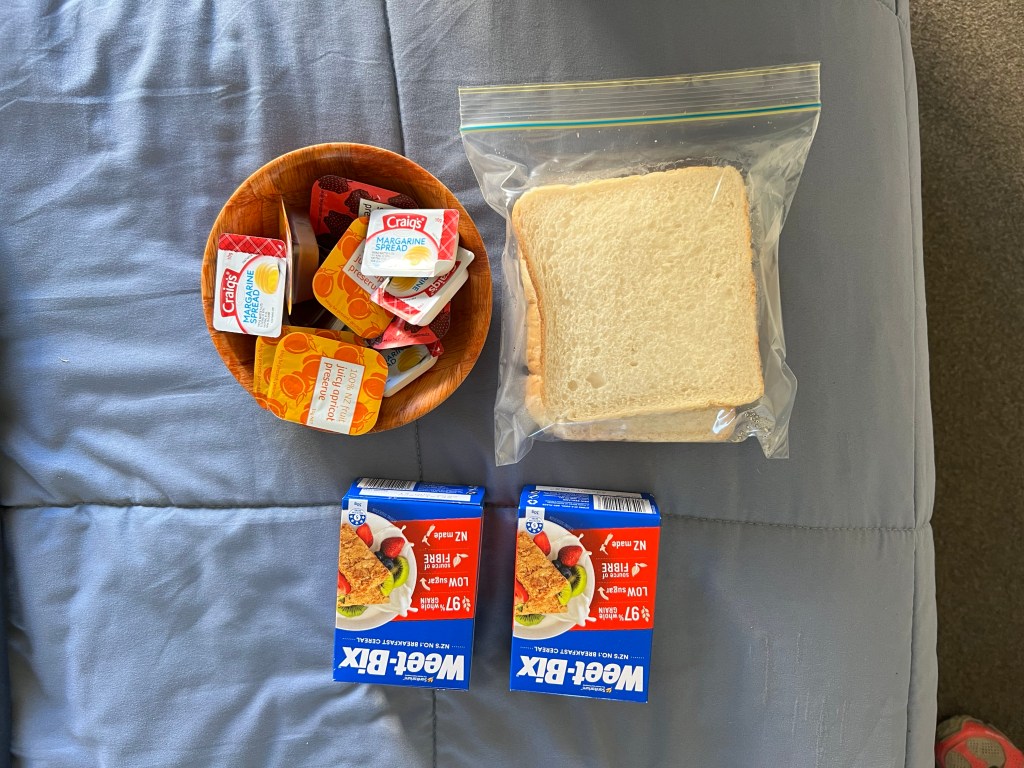
Continental Breakfast – some are better than others

We stayed at a Backpackers in Lake Rotoroa hosted by Louise and Tony. “Pensioners”, they described themselves. But it would be hard to keep up with Louise. Louise ran the backpackers and had made us a huge delicious breakfast, was doing laundry, delivered a caged possum to a neighbour “to take care of” and was out walking our bike trail. All ahead of us leaving. A bit like trying to keep up with our local legend Linda S. Tony offered up some great fact and folklore of the area. It included a drunk fisherman who fell off his boat and was never seen again. Divers were called in to search for his body and did not find it but refused to go back in the lake. “Why?” The simpleton tourist in me asked. “Not sures, may have been the eels.” Down to the lake we went and watched the local kids jump in and swim around. “Of course they bites. It can hurt. But they usually prefer tourists”. Ahh. Kiwi humour. I skipped the swim.

There was only one accommodation near our next destination – an upscale hot springs spa and it was 14kms out of the way – each way. I don’t typically do “out of the way” (except to Jay’s cousin “Yukon’s” place). No matter, the spa was just what we needed following a longer than expected into the wind ride. Outdoor natural hot pools with hot circulating water, a lovely restaurant, a yoga class and a massage. It’s not all tough.

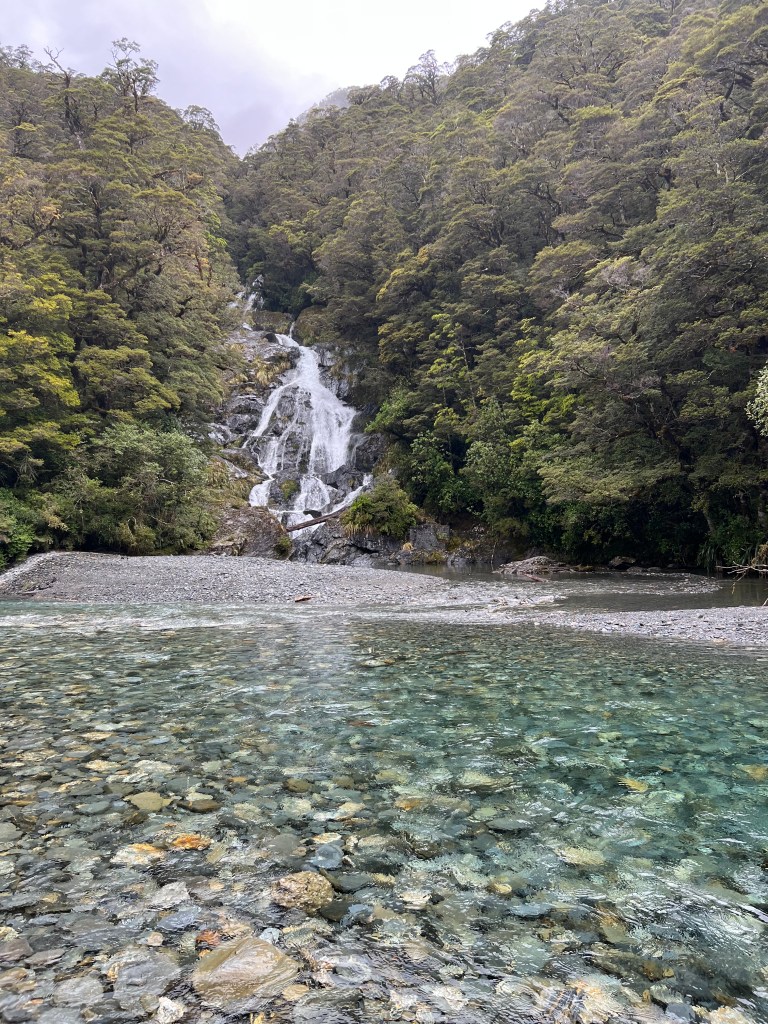
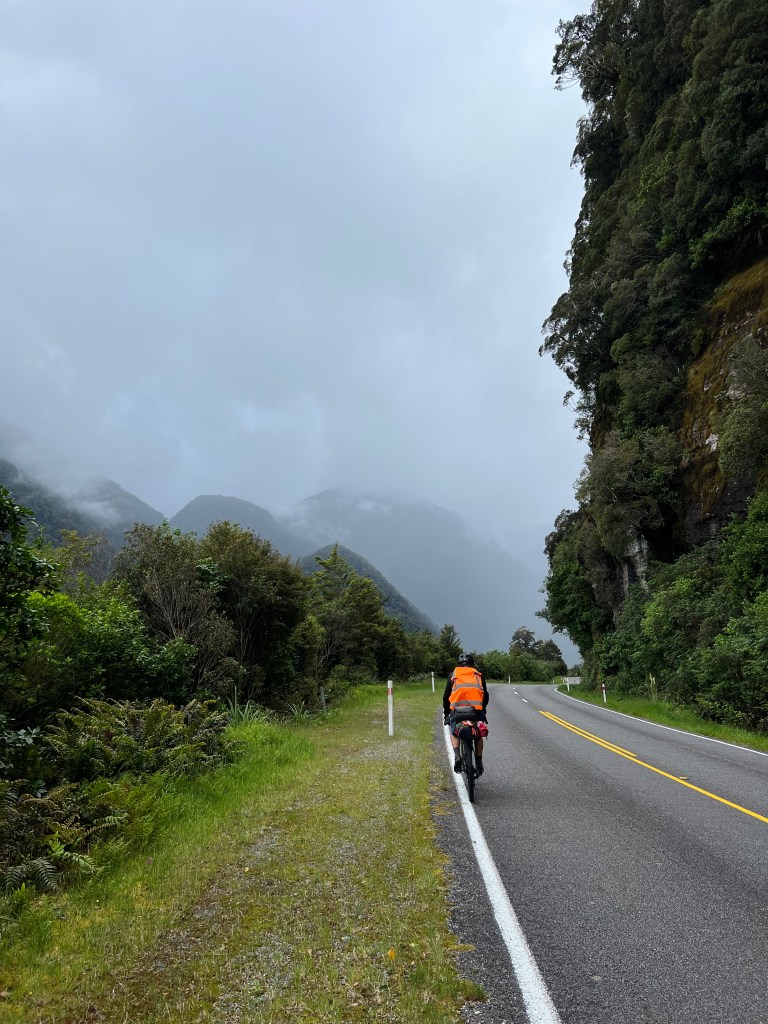
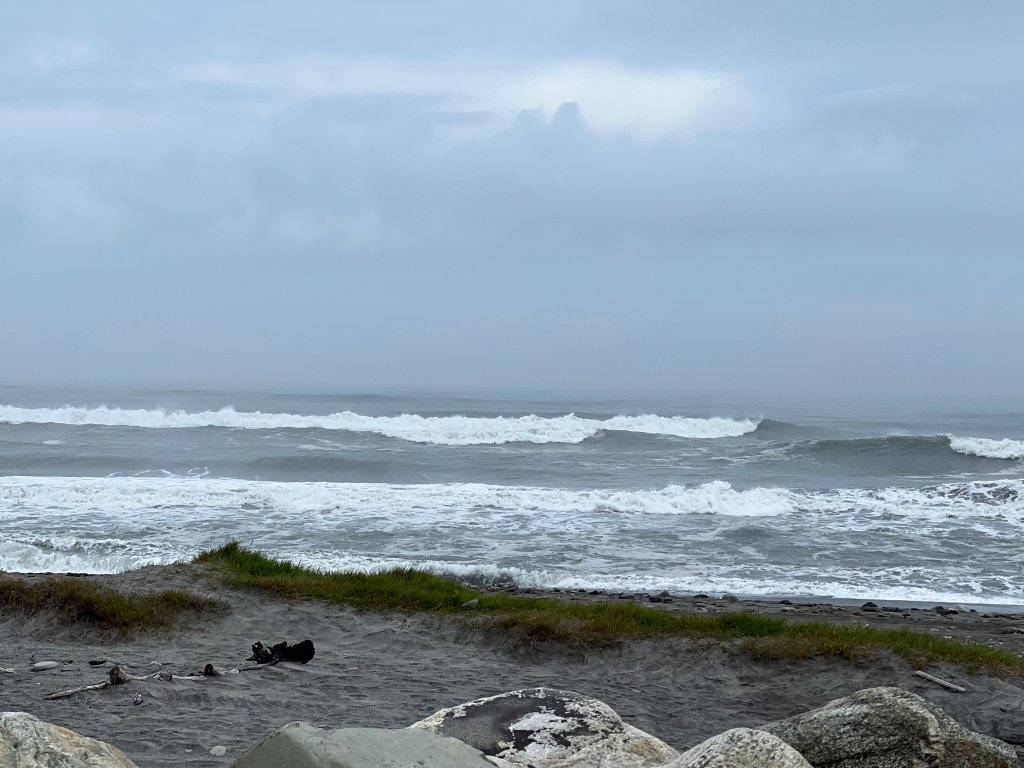
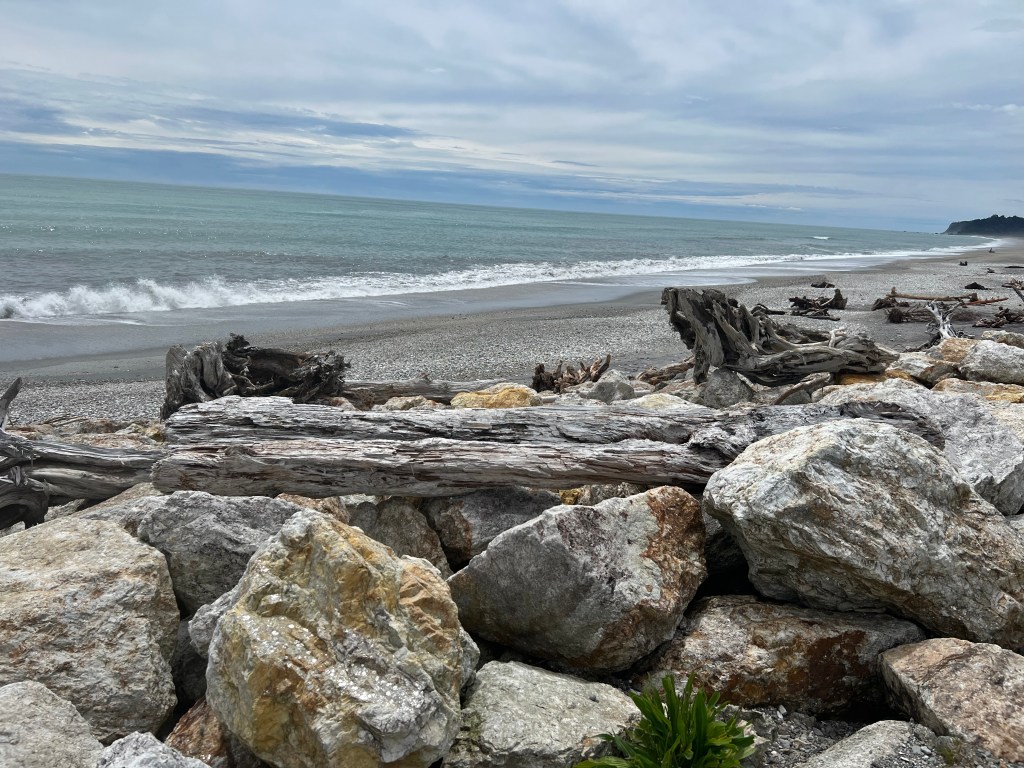
We now crossed into the West Coast – a unique part of New Zealand – squished against the Tasman Sea by the Southern Alps. Known for spectacular coast line. And rain. Lots of rain. The only benefit of the rain is the endless spectacular rainforest that we biked through. The people of the West Coast are unique – laid back, friendly and speaking a foreign English language. Think Newfie in Kiwi.

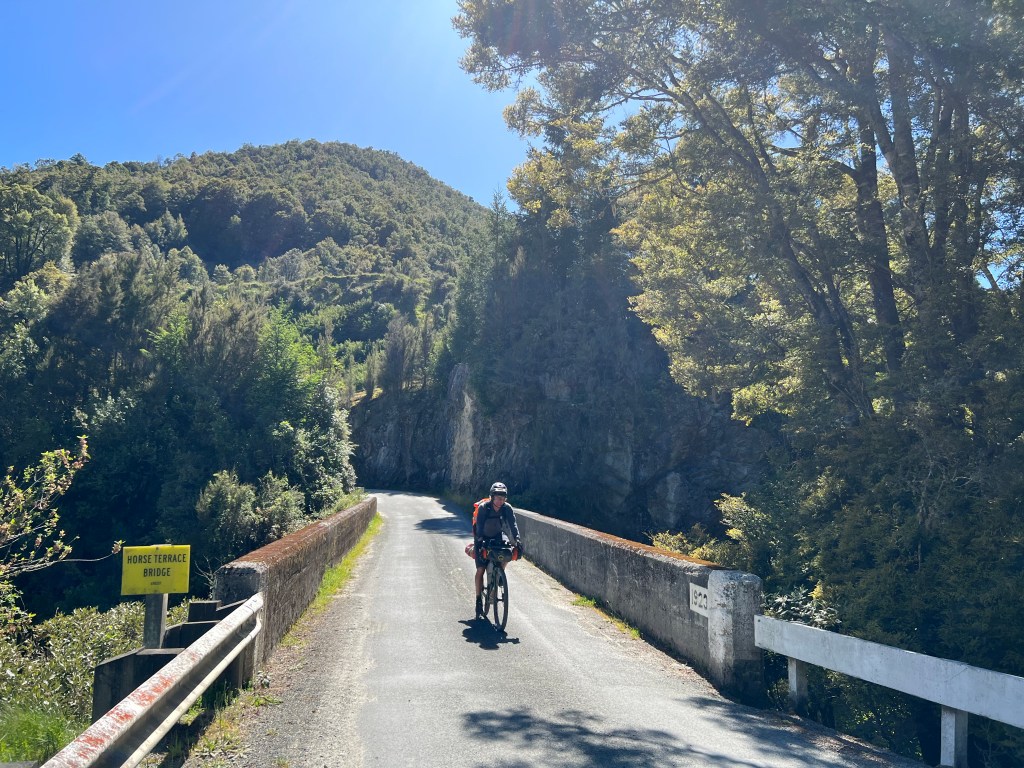
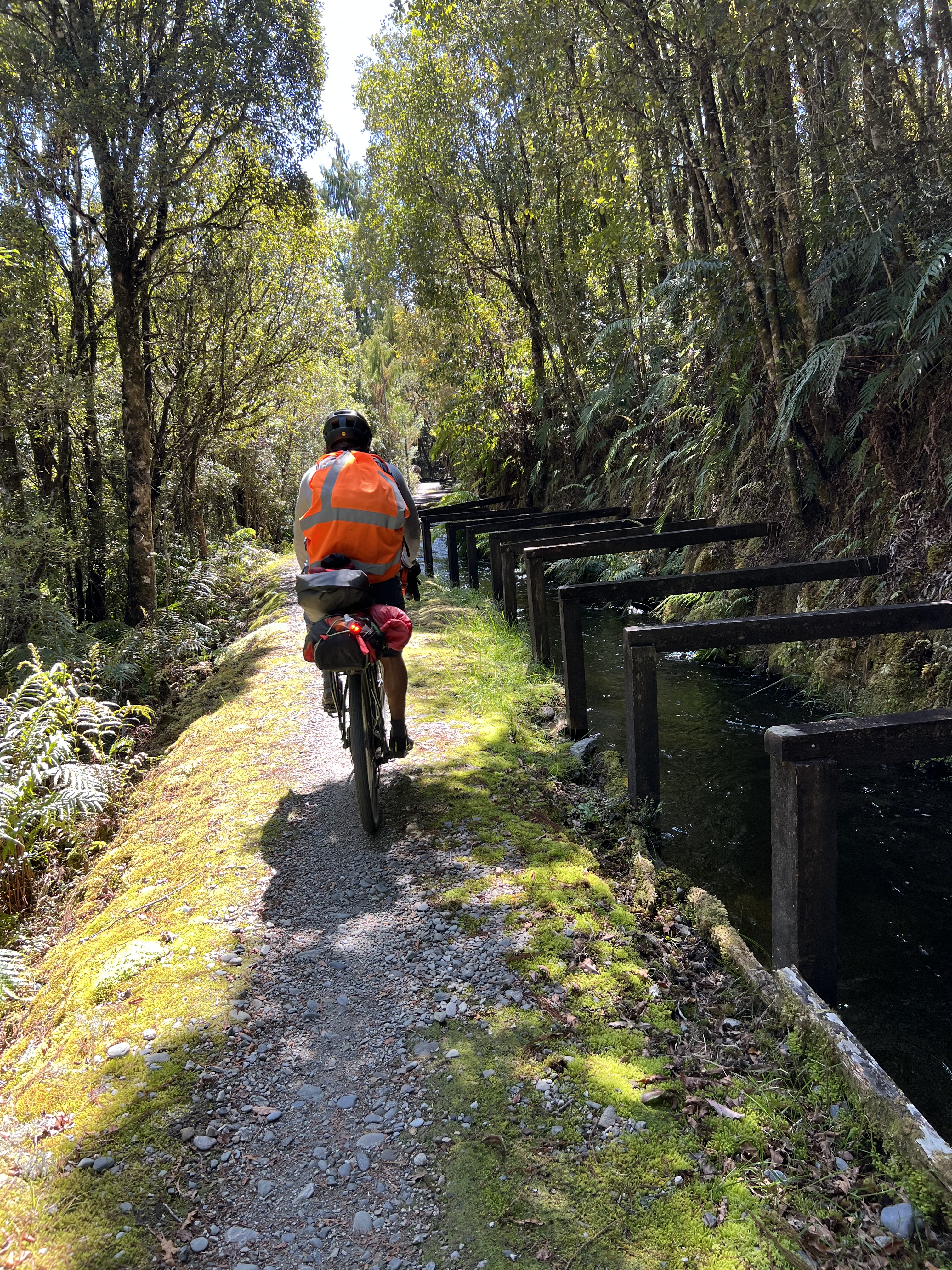
We take every route we can to avoid the milk hauling double tankers and other highway traffic. The West Coast Wilderness Trail is a Great Ride we are glad we did not miss – it crossed our minds due to the extra 50kms, elevation and single track! What a spectacular ride. Rest stops can be tricky as another thing the West Coast is known for is sandflies – voracious – vicious – just like our Canadian blackflies. They seem to have an affinity to me. I have been missing Terese who is usually the target.

Everywhere we ride we see “poison” signs on the side of road. This is the country’s attempt to eradicate pests by 2050. Pests are any non-domesticated mammal that did not exist when humans arrived – which is everything but the brown bat. Rats, stoats, possums, hedgehogs and rabbits are the main targets of the program. Our statistical survey of road kill would indicate that the possum is the largest problem. The very same endemic possum that is endangered and protected in Australia. In New Zealand there are no predators and they are rampant and impacting the native bird population. There are a lot of merino / possum garments available here!

Our next stretch took us on a State Highway (6) for 6 days, leading us through the glaciers. There is no other way. Helicopter. That’s a way. But it’s a bike trip.

Summer is arriving in New Zealand – evident not by the weather but by the heaps of rental motor homes now on the road. But in fact, the highway gets a “not terrible” rating from us because most of the many bridges are one lane in width – slowing all traffic down but especially nervous motor home drivers. There was no paved shoulder, but plenty of grass that we used for the occasional truck. Gotta love those 2 inch tires of ours. We also adopted an 8 am departure schedule; which did not get immediate cheery acceptance by all members of the team. But it was apparent that motor home driving tourists also prefer to sleep in. That and the regular wind and rain squalls seem to occur more frequently in the afternoon. So, early departure it is. We’ve been wet and we’ve been dry. Dry is better.

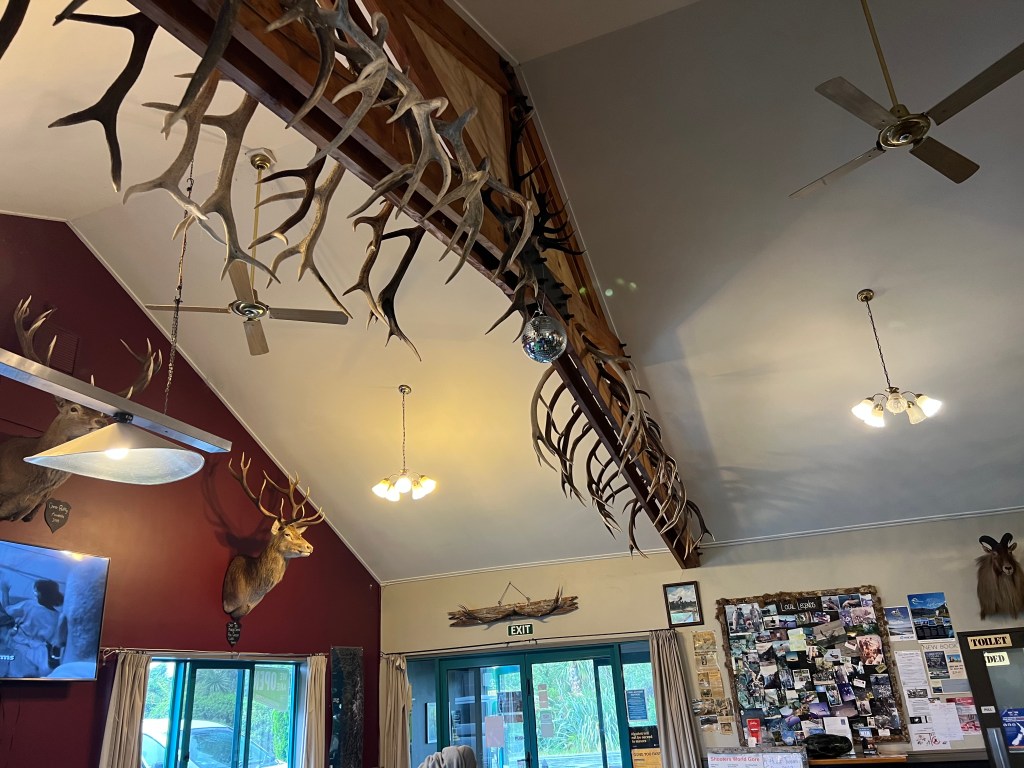
After taking the obligatory photos of Franz Josef and Fox Glaciers we were chatting with locals who told us they were going to Haast specifically for the best venison burger “in the World”. Skeptical but curious, we pulled into Haast anxious to try the local cuisine. The Hard Antler Bar and Grill, as you might expect, is a classic Kiwi bar complete with pool tables, dart boards, dead animals…and 70’s disco balls that light up the surrounding carcasses. But the decor was surpassed only by the awesomeness of the Classic Hard Antler Venison Burgers. If you are ever near Haast, you must, you must, have one of these as they may actually meet the claim of the locals.

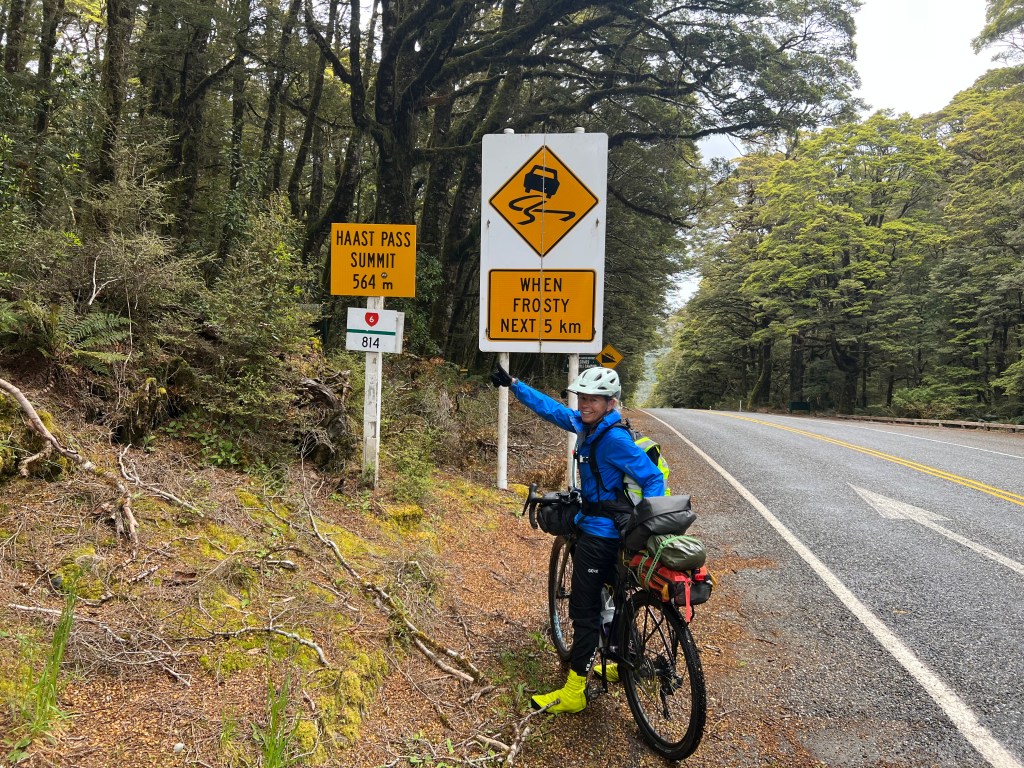
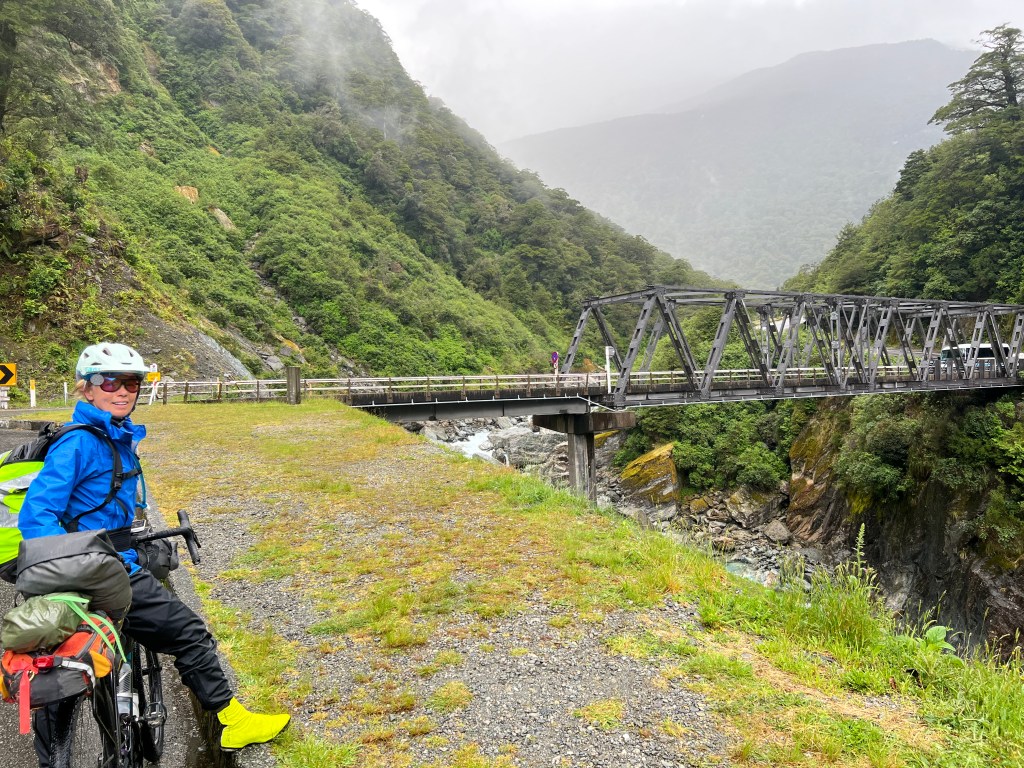
The Haast Pass is one of the three routes to get from the west side to the east side of the South Island. The west side, as I may have mentioned is notoriously known for being wet. The annual average of rain on the west side is 2,640 mm. The east side by comparison gets an annual average of about 300 mm. And the west side has swarms of sand flies while the east side, none. So you might ask, “Why in the world would you cycle down the west side?” Well, because it’s beautiful and the trails are spectacular. But you pay a price. And we paid it in spades on the Haast Pass. Wet, cold, windy and steep with 13% grades. We were astonished to find a rest site with a shelter to change wet cycling clothes and warm up with soup. But whatever goes up must come down and the road down was wonderfully less wet to our stop for the night, a Tee Pee. Still, no tent.

Wanaka – the Canmore to Queenstown. Perfect town for a 2 day rest after a 10 day cycle streak. Especially perfect given the forecasted heavy rain materialized for most of our 2 days there. Airbnb house kept us dry and warm – a tent would not have been fun. In the home stretch of the southern tip!

Kiwi Tough (in the background)
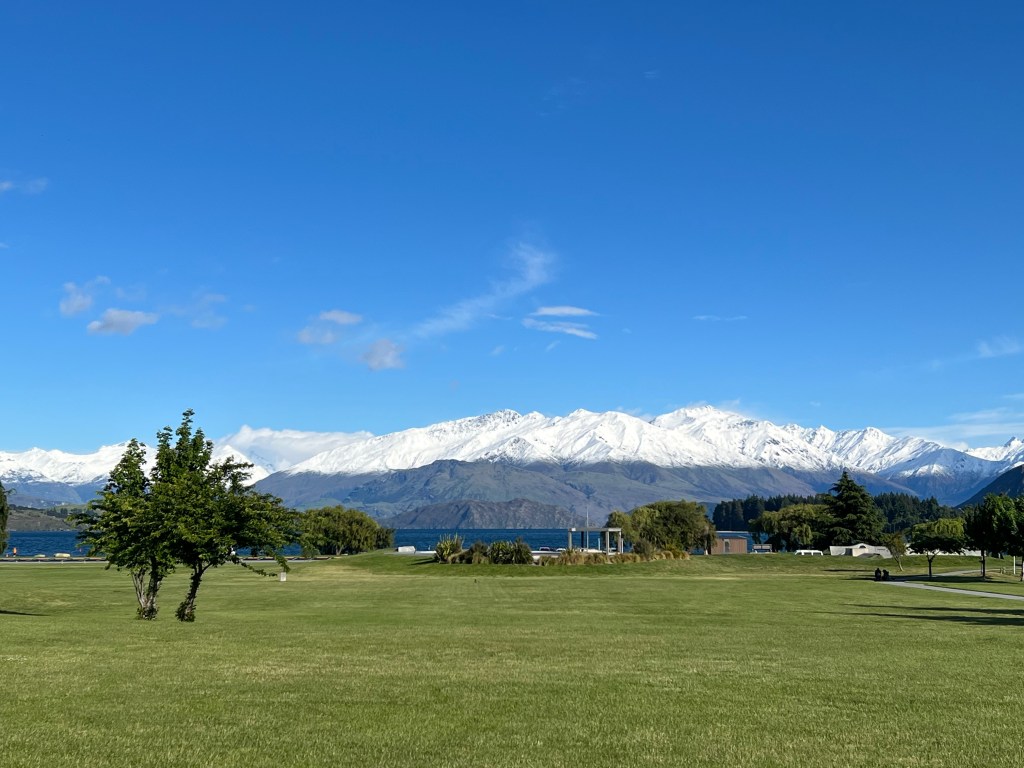
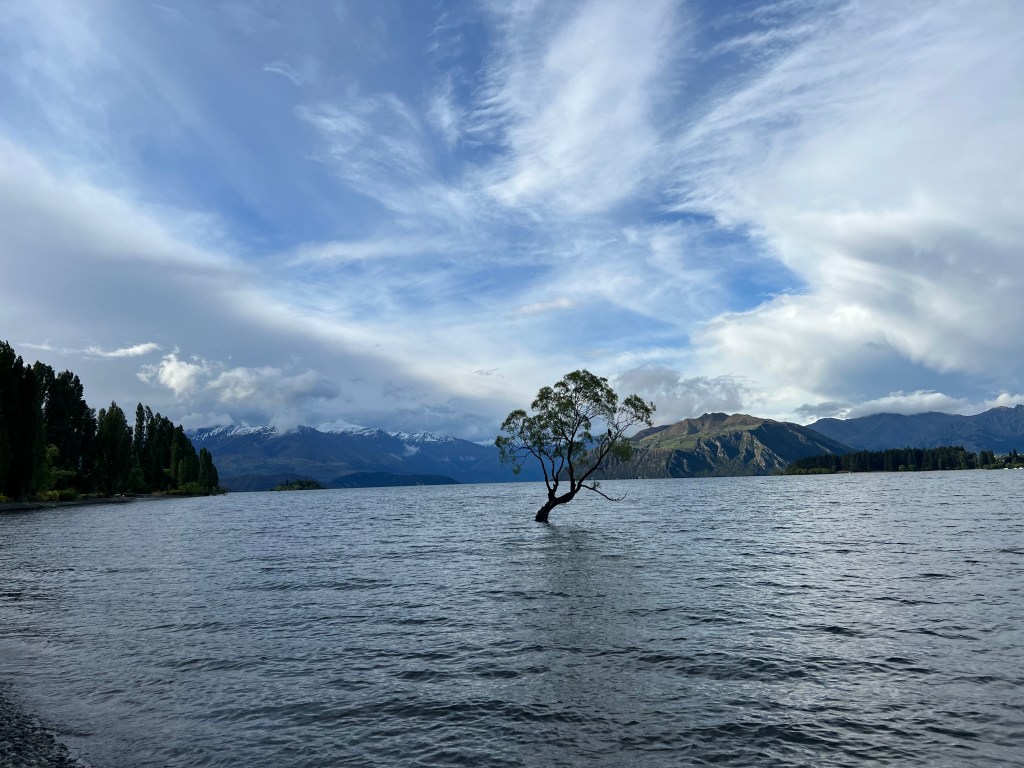
#That Wanaka Tree – famous for being famous.

Bikepackers Paradise, even if you are going Nowhere

  • Day 11 South Auckland to Kaiaua 67 kms 459 m
  • Day 12 Kaiaua to Paeroa 70 kms 11 m
  • Day 13 Paeroa to Te Aroha 45 kms 121 m (side trip on Karangahake Canyon)
  • Day14 Te Aroha to Matamata 38 kms 57 m
  • Day 15 Matamata to Mangakino 103 kms 1326 m
  • Day 16 Mangakino to Pureora 47 kms 888 m
  • Day 17 Pureora to Timber Trail Lodge 42 kms 787 m
  • Day 18 Timber Trail Lodge to Taumarunui 71kms 720 m
  • Day 19 Taumarunui to Whakahoro 66 kms 1085 m
  • Day 20 Whakahoro to Pipiriki 40kms 0 m (Jet Boat! Around the trail closure due to “slip”, stopping at the Bridge to Nowhere.)
  • Day 21 Pipiriki to Whanganui 76 kms 670 m
  • Day 22 Whanganui to Palmerston North 132 kms 885 m
  • Day 23 Palmerston North to Le Gra Winery 106kms 1240m
  • Day 24. Le Gra Winery to Martinborough 58 kms 374 m
  • Day 25 Martinborough to Lower Hut (Wellington) 87 kms 640 m
  • Day 26 Lower Hut to Interislander ferry 15 kms 2m
  • TOTAL NORTH ISLAND – 1592 kms 14,776 m

The missing link is where we took the jet boats.

After leaving the hilly northland and mazing through the complicated Auckland mass, we were rewarded with 5 days of fabulous rail trail on Hauraki Great Ride. Not great ride. It’s “Great Ride”. New Zealand has categorized and sub-categorized many bike routes: 1. 23 Great Rides – “showcasing must see sites”; 2. 16 Heartland Rides – connectors of the Great Rides (mostly); 3. Bikepacking Rides – selected rides elsewhere; and 4. Others. But there can be no denying this – all of the rides we’ve been on are truly great rides.

Hauraki Ride – Thames Valley along the Firth of Thames at the foot of Coromandel Peninsula

Each ride is made up of many individual rides, so when the Arataki ride is closed due to a slip and you spend hours choosing a reroute, and then departure time arrives and the local motel owner says “it’s no problem mate, just go through – she’ll be right”. We asked, “Does it matter that the Department of Conservation (DOC) have been turning bikers back?” Kiwi guy blasted, “Just tell em to piss off!”. And being turned back would mean at least a two day workaround. We went anyway as any self respecting Fernie rider would do.

Many of the rides are technical single track which, for loaded gravel bikes, are awesome but can be a bit challenging, or “sporty”, as you know who would say. So far we’ve managed with only one slight mishap resulting in one bent derailer hanger. Gear Guy replaced it with one of the dozen extras he brought.

Our accommodations have varied greatly. More than for our x-Canada ride. The highs are perhaps higher but the lows are undeniably lower. Heading into the Timber Trail ride in the town of Mangakino we hit a new all time low – beating the record set in Moosimin, Saskatchewan in 1999. The owner toured us down a dark corridor and showed us our room, where at least three cockroaches rested peacefully – dead on the floor. The lounge was adorned with aged overstuffed filthy faded flower couches. The washroom was decorated with a cobweb and cockroach theme. Still, no tent policy endures.

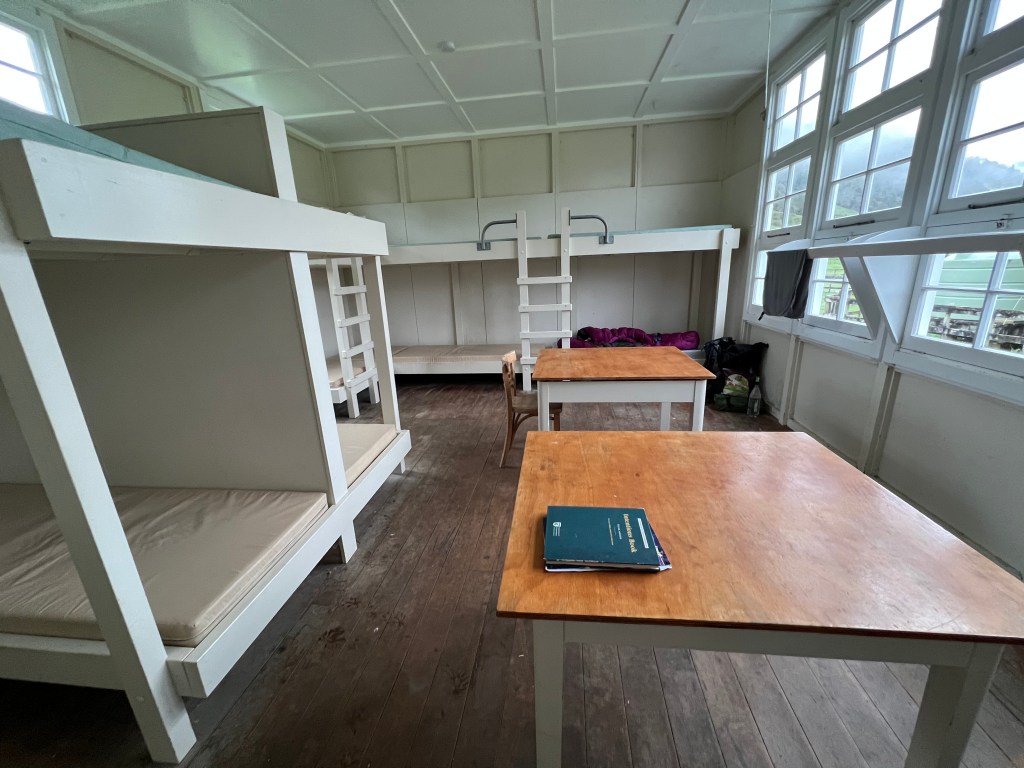
Next ride, the Mountain to Sea Ride, presented logistics – no internet, limited accommodations, a slip to work around, and multiple jet boat bookings. On that trail we overnighted in a DOC bunk house that felt like a Fairmont compared to the Coachroach Cabin. Gear Guy was not enthused about it and considered breaking out the tent until it was apparent that a hiker, young Sarah from Austria, was also staying in the same hut. Gear Guy: “I’ve changed my mind. Let’s stay in the hut.”

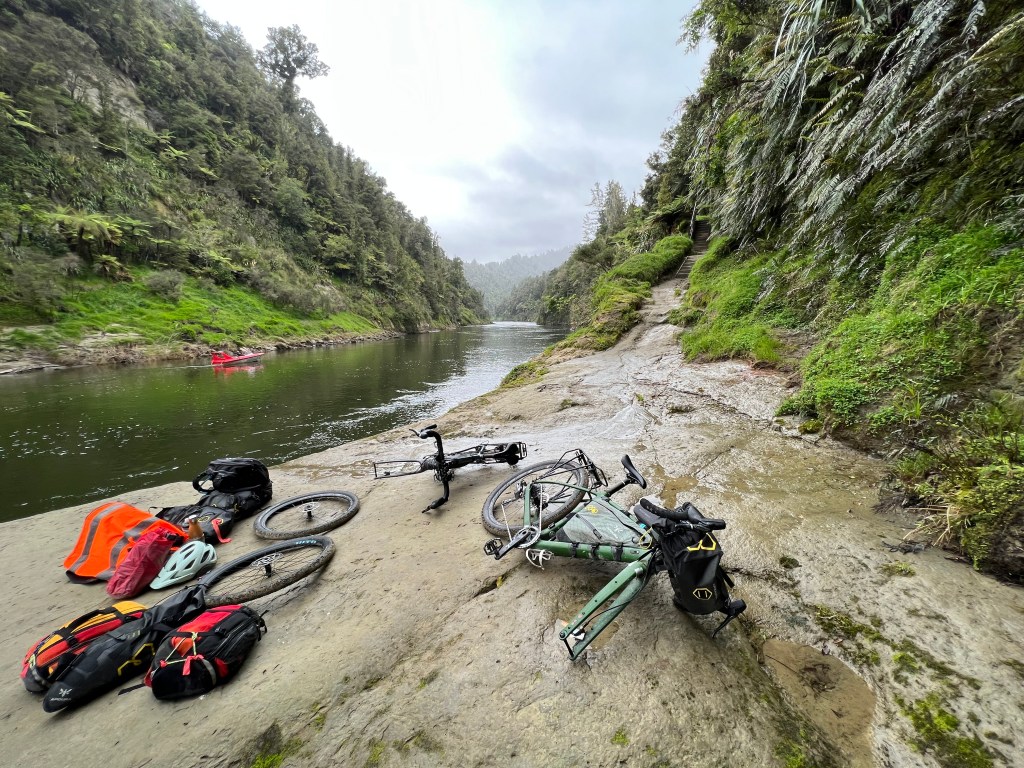
The Mangapurua Ride (on the Mountain to Sea Great Ride) was also closed because of a major slip. We wondered if we could sneak through this one too. But all seemed to agree, this one was “Unpassable Mate”. The only way around was to organize two jet boat rides, with two different companies. No phone, no wifi, no people, no signs to the first jet boat ride that was scheduled to leave at 7am. We knocked on the door of a farmhouse to get directions to where the guy is with a jet boat. “Just out back Mate”. Of course he is. And amazingly somehow Michael, the jet boat driver, got our messages and was waiting to jet us down the river around the slip.

Killing some kilometers on the Whanganui River

Michael is really a hunter who drives jet boats so he can afford to go hunting again. So it was a bit suspicious when Michael dropped us off at a seemingly random rock ledge; no dock, no building, no signs of any inhabitants and as he pulled away, he yells “Yous guys arroinged for pick up right?” We did, but had not received confirmation as we had no internet for 3 days. We figured out that we were dropped at the trailhead to the Bridge to Nowhere. Which was appropriate because that is exactly what it felt like.

Several hours and a few cold rain squalls later our next jet boat ride finally did arrive. With 18 seniors destined to walk to The Bridge to Nowhere. In fact, they looked rather ill equipped for the squally weather. But Kiwis are tough. And Senior Kiwis even tougher. No problem for them to make the uphill 5km hike to the Bridge to Nowhere and back to the rock to be picked up by the jet boat. We joined them and had a marvelous day.

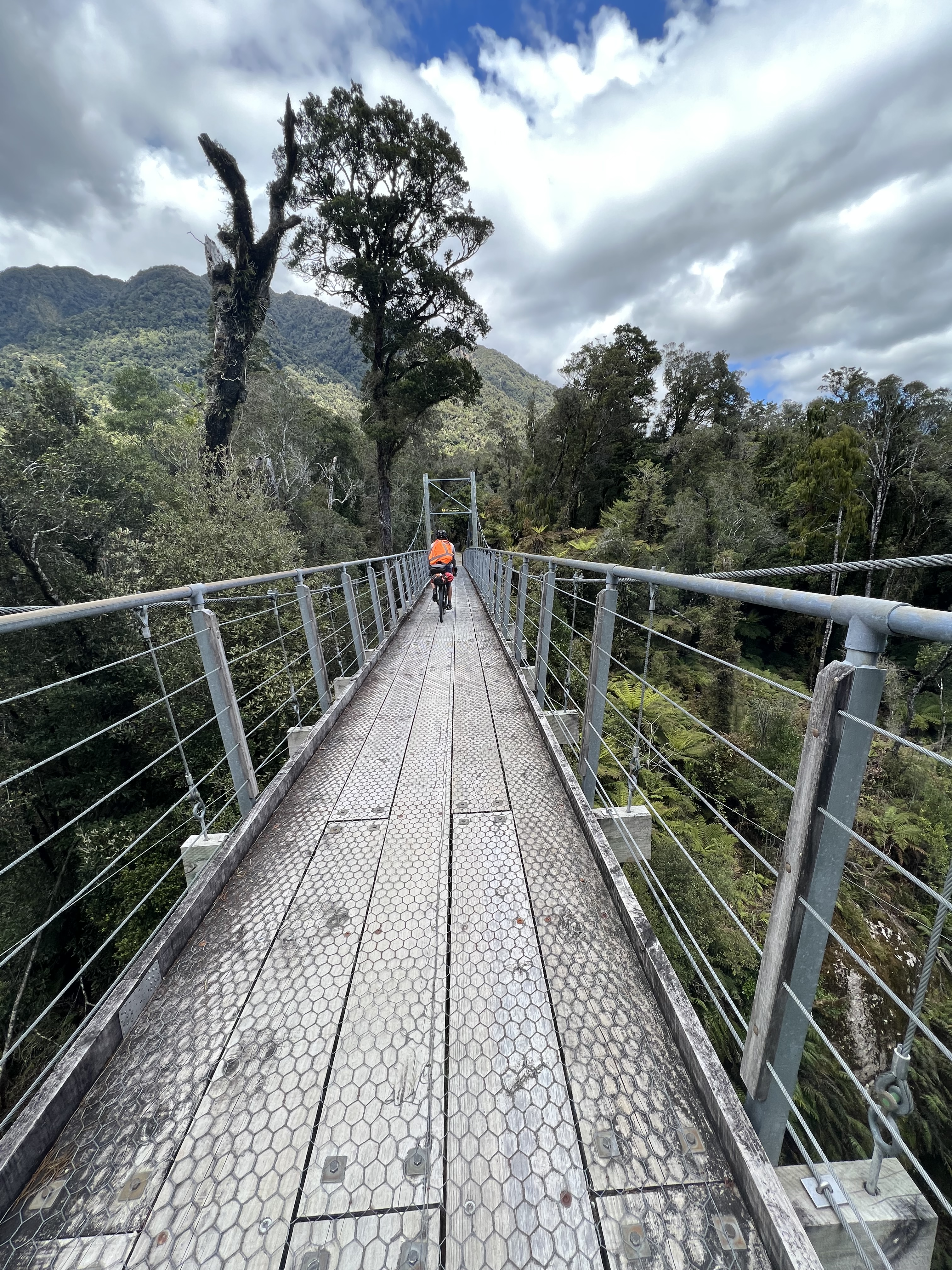
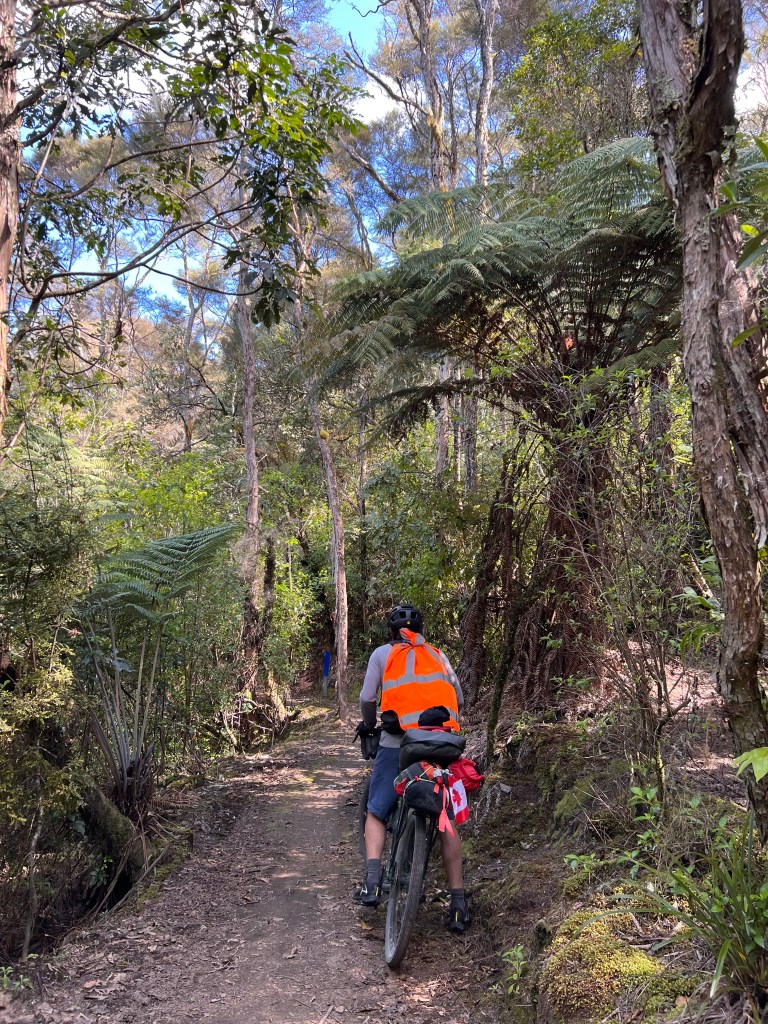
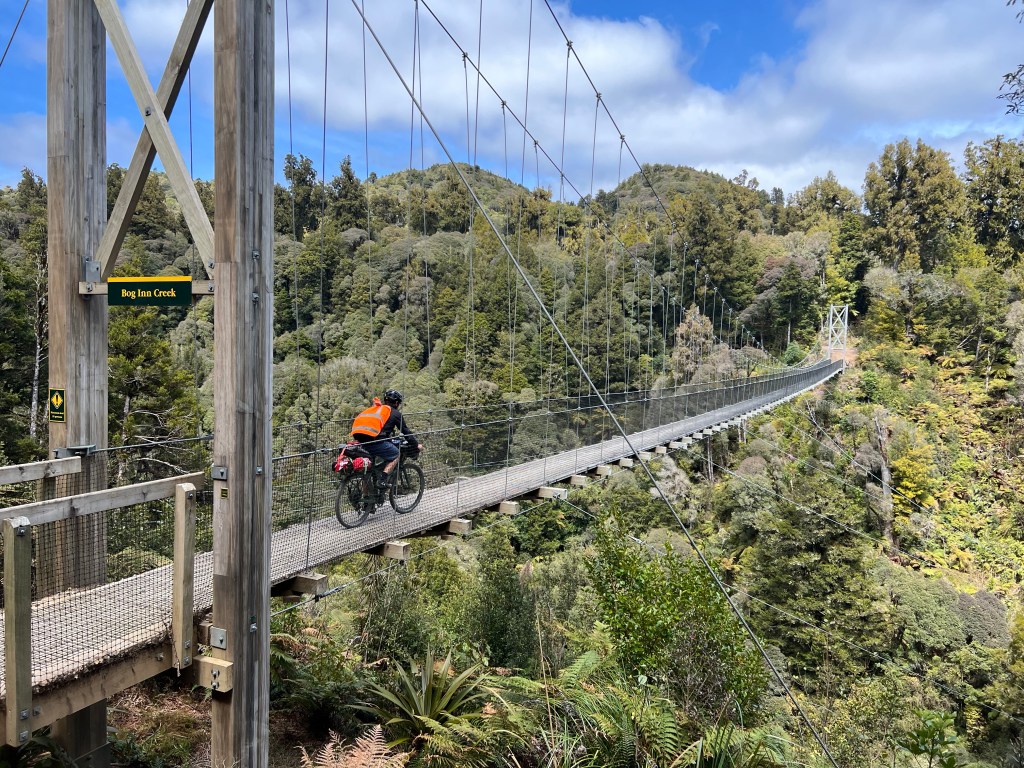
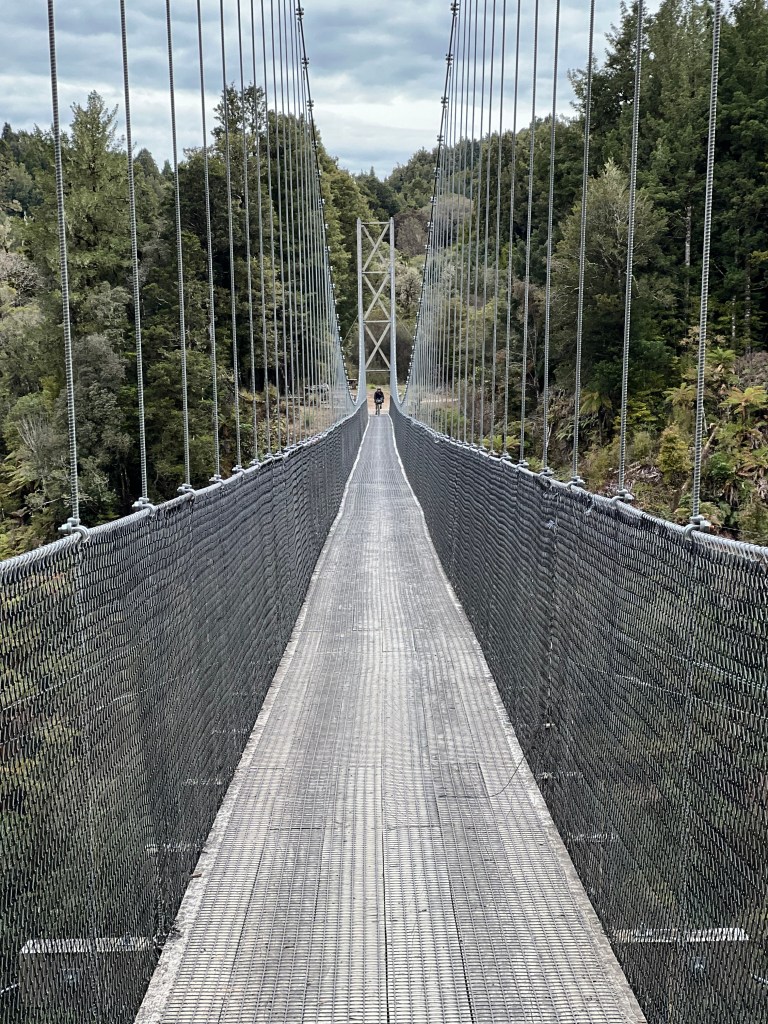
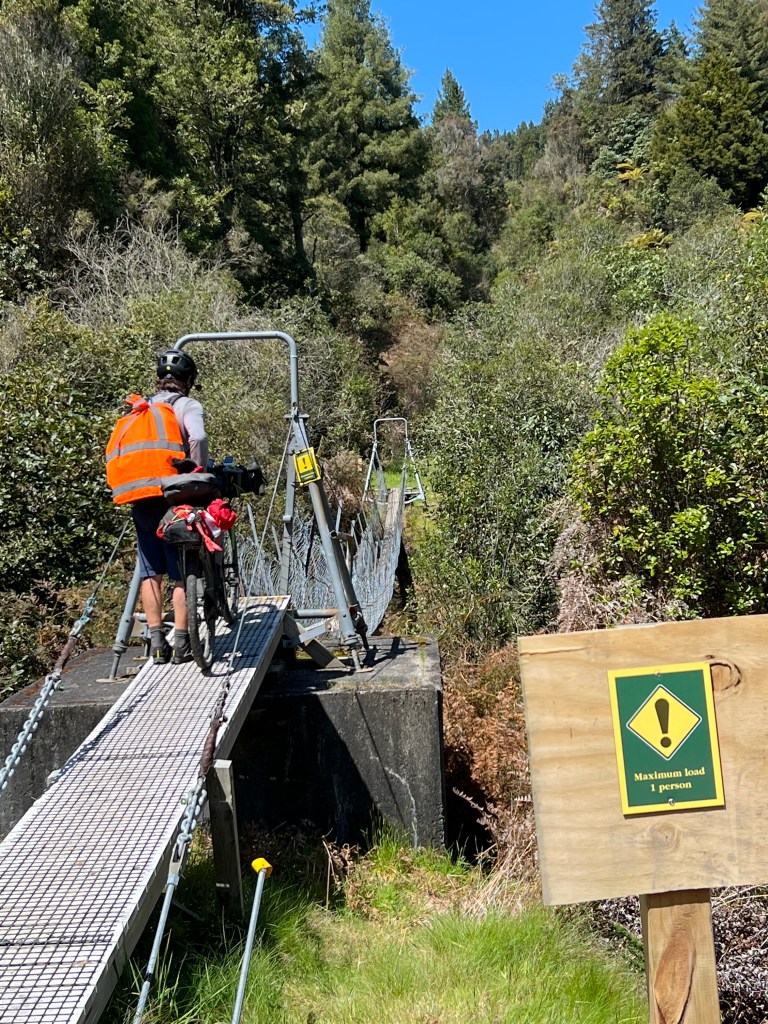
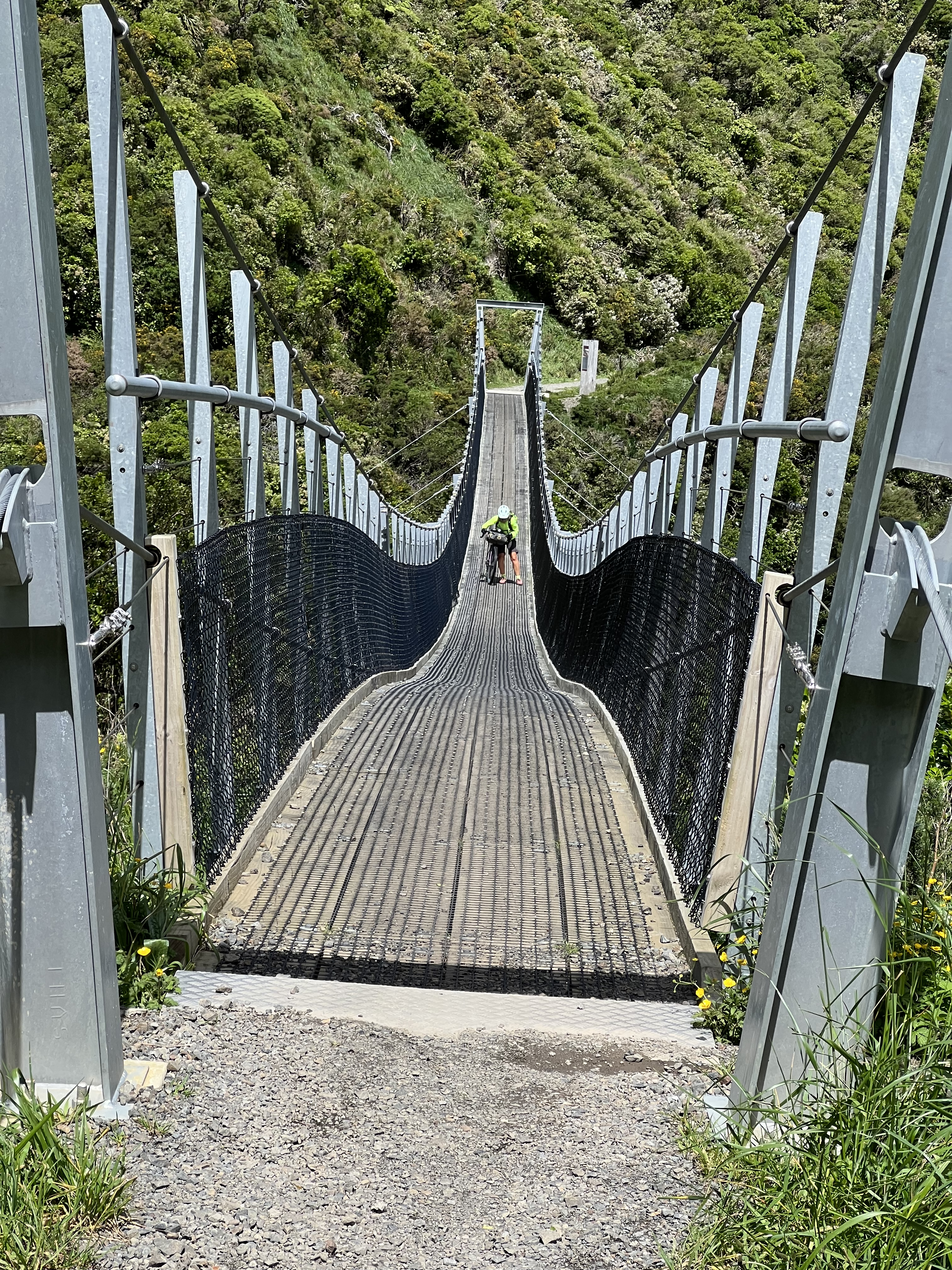
The Timber Ride is a highlight so far. The sights are mesmerizing. The sounds are tranquilizing. The scents are intoxicating. This Great Ride is a 84-kilometre cycleway only opened in 2013, with 35 bridges, including eight large suspension bridges. The longest of which is 141 meters long and perched above a massive gorge. The trail winds through virgin rainforest, endless unique bird songs and a fantastic, if challenging for loaded gravel bikes, pathway. And if that isn’t enough, there is a Shangra La type of Lodge that appears out of nowhere. We would do this again. And again. Incidentally, you might notice our bright colours on our backs. We wear those not just for the little traffic but also for hunters. Hunting is year round in New Zealand. Mainly for deer, wild bore and goats.

After 5 days of single track and no internet, we were surprisingly happy to bike on tarmac and return to civilization for two days off which coincided with a heavy rainfall forecast and Jay’s birthday.

Bacon and Eggs – Birthday Breakfast

Next segment we deviated from the Te Aotearoa Trail and use Gaia and Nav Man as our navigational tools. Big mistake. As there was no or little shoulder, we spent the day pulling off the road to allow massive double trailer trucks thunder by. We arrived at our destination town 130km later at 7pm. But then Nav Man detoured us to the furthest grocery store in town – adding an extra 10 kms. A sugar low no doubt. There are no future plans to deviate from the tour trail again. Ever.

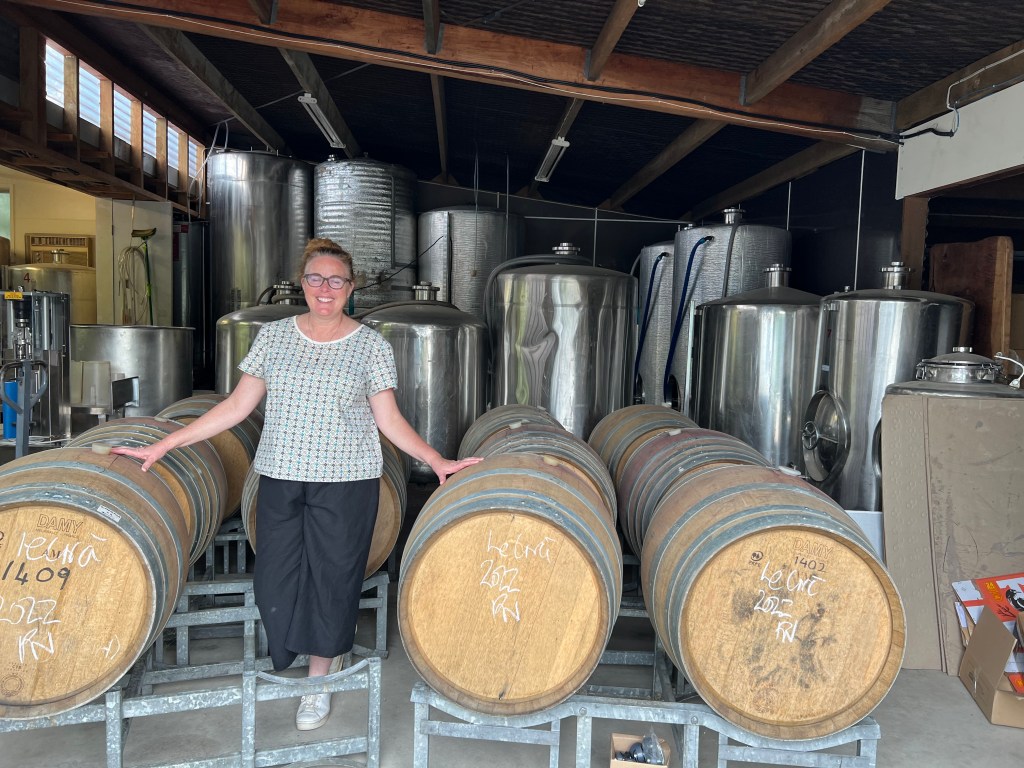
What a treat to stay at Le Gra Vineyard in the Martinborough wine district. Brian, Nicky and Orlaith Geary were a joy to visit with and we had a tour of their lovingly manual wine production – from hand picked grapes to hand labeled bottles! We savoured 2 of their 10,000 annual bottle production. Our left overs once again replaced water on our bikes.

Heading towards Wellington and our eyes on the South Island, we got clobbered by the 80kmph wind gusts which knocked us over several times, but we forged on hoping the Remutaku Great Ride would be more protected. It wasn’t and we had to push our bikes sections of the rail trail tiny grade of 3%.

This was a calm spot for a short break…

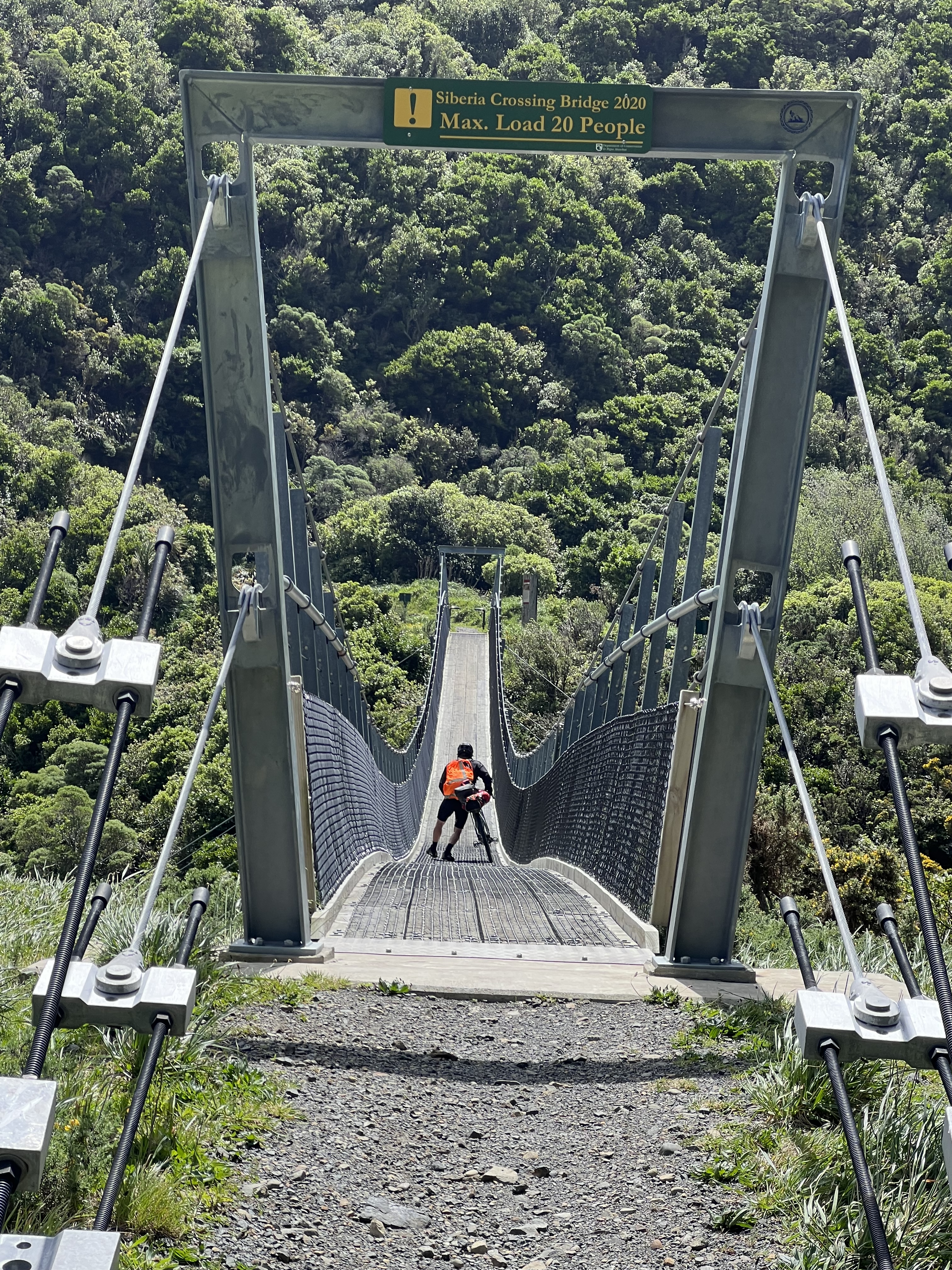
The long tunnels were fine, but there was no mention of the Siberia Gully Bridge. Gear Guy intentionally stood in front of a historic marker so I couldn’t see the monument commemorating the tragic incident where 3 rail cars were blown off this bridge by the 150 kmph “harrowing winds that frequent this area”. This was a terrifying, mind over matter, one step at a time, get my butt across this bridge. Close to tears once over, I took a long swig from my “water” bottle.

Gear Guy’s wind shedding technique was more effective than mine, and I was pushed into the side several times.

1600 kms and almost 15,000 vertical meters – Farewell to the North Island. Bring on the South!

“Not all those who wander are lost.” — Bilbo Baggins

Bikepacking Cape Reinga to Bluff

New Zealand, or Aotearoa, the country of the great white cloud, home of Hobitton, my favorite Marlborough wine, glow worms, penguins and more sheep than people. Also home to a bikepacking route that stretches about 3,000 km starting on the northernmost tip of the North Island (Cape Reinga) and winding to the Southernmost tip of the South Island (Bluff). And I do mean “winding”. The entire length of New Zealand is only 1600 kms.

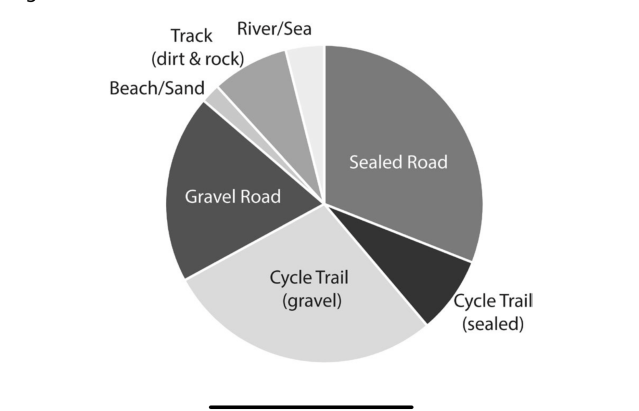
We have not seen a “River/Sea” segment on any other gravel bike trail – conjures up a vision of needing Moses like powers.

Most details will be figured out day to day. I expect it will take a few days and perhaps a few kms before Nav Guy has honed his skills again. But it is a fairly narrow country and we are already expecting to cycle twice the length of the entire Country. So really, how many wrong turns can we make? Did you know that Dunedin has the steepest street in the world at 19 degrees? Not that I lack confidence, but I will route us completely around Dunedin.

There are organized groups of cyclists that do the route – in January or February. Using our hurricane experience from Newfoundland has led us to ignore this glaring fact and book our flights for early October. Whatever.
3000 kms in 10 weeks. Allowing for logistics and days off, that should average about 60kms a day. We averaged 90 kms a day on our X-Canada trip. We think this is a reasonable goal. But who knows. We need time for Hobitton, glow worms, and Marlborough wine (lots of it). So our Christmas cards will be late. And who writes Christmas cards anyway?
First cycle day is on 90 Mile Beach. We hope to stop at a lodge along the beach but they, and in fact every accommodation I have emailed, have not replied. Apparently it is off season in New Zealand. I am concerned about my flawless record of not setting up a tent. But it would appear that a lot has to go right in order for there not to be a tent night or two in the first few days. So we packed 4 days of food and lots of Red Rose tea. I suspect there is a flask of scotch hidden somewhere too.

Friends and family have asked whether we’ve been training. Definitely – Transcona Training. Cold beer; gin martinis; wine on deck at 4:17 pm. We’ll get our real training in the first few hundred kms.

We will bring our experienced Kona gravel bikes with us. We ordered next generation gravel bikes 8 months ago. They haven’t arrived yet and no word on when they will. A lingering Covid supply hangover apparently. But we did manage to find new tires and a lower gearing for both bikes. Something to do with aging joints says Gear Guy. Must be talking about a bike part.

There are alot more logistics to long term bike-packing internationally – notably no support network like we had in Canada – family and friends in every province supplying us with cold beer, hot showers and clean wash. But interestingly, as soon as we committed to the trip and started telling people, we have made some wonderfully unexpected connections. Perhaps it is how desperately unprepared and unorganized we look? Our friends Kate and Stephen who moved to Nelson, New Zealand about 7 years ago offered us their home as a refuge and a bike part cache. And it only took a little wine when they visited us in Fernie this summer! We also ran into a server at Island Lake who is from Invercargill, the exact southern town that we plan to fly from after completing our ride. She offered up lots of useful intel. And we also just learned Thorna’s nephew is a bike mechanic in Auckland. Speed dial Will for parts.

This is our blog to chronicle our adventures. Feel free to “unfollow” if you are busy with say, reading your junk mail, cleaning baseboards, counting tractors in farm yards or any other more engaging pastimes. Except you Mom(s) – you both have to follow us.

And so starts our adventure. Going in the wrong season, with old bikes and questionable maps in a covid free world. Jay just tested positive.

¡Kia Ora! (Which means see ya down the road Mate!)